Monday, February 28, 2011

Immune Molecule Regulates Brain Connections

ScienceDaily (Feb. 27, 2011) — The number of connections between nerve cells in the brain can be regulated by an immune system molecule, according to a new study from UC Davis. The research, published Feb. 27 in the journal Nature Neuroscience, reveals a potential link between immunity, infectious disease and conditions such as schizophrenia or autism.

Schizophrenia, autism and other disorders are associated with changes in connectivity in the brain, said Kimberley McAllister, associate professor in the Center for Neuroscience and Departments of Neurology and Neurobiology, Physiology and Behavior at UC Davis. Those changes affect the ability of the brain to process information correctly.

"Certain immune genes and immune dysregulation have also been associated with autism and schizophrenia, and the immune molecules that we study in brain development could be a pathway that contributes to that altered connectivity," McAllister said.

The study does not show a direct link between immune responses and autism, but rather reveals a molecular pathway through which a peripheral immune response or particular genetic profile could alter early brain development, McAllister said.

The researchers looked at a protein called Major Histocompatibility Complex type 1 (MHC type I). In both rodents and humans, these proteins vary between individuals, and allow the immune system to distinguish between 'self' and 'non-self.' They play a role, for example, in rejecting transplanted organs and in defending against cancer and virus infections.

In this and another recently published study, McAllister's group found that MHC type I molecules are present on young brain cells during early postnatal development. To test their function, they studied mice lacking MHC type I on the surface of neurons, as well as isolated neurons from mice and rats with altered levels of MHC type I. They found that when the density of these molecules on the surface of a brain cell goes up, the number of connections, or synapses, it has with neighboring brain cells goes down. The reverse was also true: decreased MHC expression increased synaptic connections.

"The effect on synapse density was mediated through MHC type I proteins," McAllister said.

"But these immune proteins don't just regulate synapse density, they also determine the balance of excitation and inhibition on young neurons -- a property critical for information processing and plasticity in young brains."

Expression of MHCI on neurons was itself regulated by neural activity, the team found, and MHCI mediated the ability of neural activity to alter synaptic connections.

About 10 years ago, other researchers discovered that MHC type I is involved in elimination of connections during a critical period of late postnatal brain development.

"We have now found that there is another role for MHC type I in establishing connections during early postnatal development of the brain," McAllister said.

The other coauthors on the paper were: former graduate student Marian Glynn, graduate students Bradford Elmer and Paula Garay, researcher Xiao-Bo Liu, postdoctoral researcher Leigh Needleman, and research associate Faten El-Sabeawy.

Funding for the work was provided by grants from several foundations, including Cure Autism Now, the John Merck Fund, the March of Dimes, and the National Alliance for Research on Schizophrenia and Depression; a pilot grant from the UC Davis MIND Institute, and the National Institute for Neurological Disorders and Stroke.


Story Source: The above story is reprinted (with editorial adaptations by ScienceDaily staff) from materials provided by University of California - Davis, via EurekAlert!, a service of AAAS.

Advanced Degrees Add Up To Lower Blood Pressure

ScienceDaily (Feb. 27, 2011) — Freshmen on the eve of finals and graduate students staring down a thesis committee may not feel this way, but the privilege of obtaining an advanced education correlates with decades of lower blood pressure, according to a study led by a public health researcher at Brown University. The benefit appears to be greater for women than for men.

Eric Loucks, assistant professor of community health, says the analysis of nearly 4,000 patient records from the 30-year Framingham Offspring Study may help explain a widely documented association in developed countries between education and lower risk of heart disease. The paper was published online in the open access journal BMC Public Health.

"Does education influence heart disease?" said Loucks, who came to Brown in 2009 from McGill University in Montreal, where he did his analysis. "One of the ways to get at that is to see if education is related to the biological underpinnings of heart disease, and one of those is blood pressure."

The difference education makes

Controlling just for age, Loucks and his co-authors found that women who completed 17 years of schooling or more had systolic blood pressure readings that were, on average, 3.26 millimeters of mercury (mmHg) lower than women who did not finish high school. Women who went to college, but did not pursue graduate studies, had a 2 mmHg benefit compared to less educated women. For men, going to graduate school versus not finishing high school made a 2.26 mmHg difference, with a lesser benefit for going to college.

Even after controlling for influences such as smoking, drinking, obesity and blood pressure medication, the benefit persisted, although at a lower level (graduate school gave a benefit of 2.86 mmHg for women and 1.25 mmHg for men).

Loucks then went even further in his analysis by indexing the blood pressure readings to make them all equal at the beginning of the 1971-2001 Framingham study period. This statistical maneuver allowed him to determine whether the analysis measured a static difference apparent early on in life or whether the differences increased at all over time. For women, they did. The most educated group retained a 2.53 mmHg benefit over the least educated. In men, the difference was much less, only 0.34 mmHg.

That the gender differences are so pronounced and appear to become more so as life goes on suggests that education may have a greater impact on women's health over their lifetime than on men's health, Loucks said. That could be because of the correlation between low educational attainment and other health risk factors found in other studies of women.

"Women with less education are more likely to be experiencing depression, they are more likely to be single parents, more likely to be living in impoverished areas and more likely to be living below the poverty line," Loucks said.

One caveat, he said, is that the population in the study, drawn from the suburban community of Framingham, Mass., decades ago, is disproportionately white and that the conclusions might not generalize to other races.

Education and public health

Loucks said the study adds to a chorus of others suggesting that policy makers who want to improve public health and are struggling to do it in other ways, might want to look at improving access to education.

"Socioeconomic gradients in health are very complex," he said. "But there's the question of what do we do about it. One of the big potential areas to intervene on is education."

In addition to Loucks, other authors of the study are researchers Michal Abrahamowicz of McGill, Yongling Xiao of the University of South Australia, and John Lynch of the University of Bristol. Funding for the research came from the Canadian Institutes of Health.

Story Source: The above story is reprinted (with editorial adaptations by ScienceDaily staff) from materials provided by Brown University.

Brain's 'Reward' Center Also Responds To Bad Experiences


Roller coaster. New findings may help explain the "thrill" of thrill-seeking behavior or maybe just the thrill of surviving it. (Credit: iStockphoto/Chaim Danzinger)

ScienceDaily (Feb. 28, 2011) — The so-called reward center of the brain may need a new name, say scientists who have shown it responds to good and bad experiences. The finding, published in PLoS One, may help explain the "thrill" of thrill-seeking behavior or maybe just the thrill of surviving it, according to scientists at Georgia Health Sciences University and East China Normal University.

Eating chocolate or falling off a building -- or just the thought of either -- can evoke production of dopamine, a neurotransmitter that can make the heart race and motivate behavior, said Dr. Joe Z. Tsien, Co-Director of GHSU's Brain & Behavior Discovery Institute.

Scientists looked at dopamine neurons in the ventral tegmental area of the mouse brain, widely studied for its role in reward-related motivation or drug addiction. They found essentially all the cells had some response to good or bad experiences while a fearful event excited about 25 percent of the neurons, spurring more dopamine production.

Interestingly neuronal response lasted as long as the event and context was important, Tsien said. Scientists used a conditioned tone to correlate a certain setting with a good or bad event and later, all it took was the tone in that setting to evoke the same response from the dopamine neurons of mice.

"We have believed that dopamine was always engaged in reward and processing the hedonic feeling," Tsien said. "What we have found is that dopamine neurons also are stimulated or respond to negative events."

Just how eating chocolate or jumping off a building induces dopamine production remains a mystery. "That is just the way the brain is wired," Tsien said. He notes that genetics can impact the number of cells activated by bad events -- and while interpretation of the findings needs more work -- they could help explain inappropriate behaviors such as drug addiction or other risky habits.

In a second paper in PLoS One, Tsien and his colleagues at Boston University have provided more insight into how brains decide how much to remember good or bad. Inside the hippocampus, where memory and knowledge are believe to be formed, recordings from hundreds of mouse brain cells in a region called CA1 showed all are involved in sensing what happens, but not in the same way.

They found among most cells a big event, such as a major earthquake, evoked a bigger sensory response than a mild earthquake. But slightly less than half the cells involved logged a more consistent neural response to all events big and small. These are called invariant cells because of their consistent firing regardless of event intensity. Tsien said these cells are critical in helping the brain remember those events.

The initial muted sensory response was followed by the cells replaying what they just experienced. It's that reverberation that corresponds with learning and memory. "If they play it over and over, you can remember it for a long time," Tsien said of these memory makers.

But these invariant cells vary in that some keep replaying specific memories while the majority focus on more general features of what occurred. "The general-knowledge cells have the 'highest volume,'" Tsien said. "So we walk away with general knowledge that will guide your life, which is more important than the details."

As with the number of dopamine cells that respond to bad or risky behavior, genetics likely plays a role in an individual's specific ratio of cells involved in encoding general versus more detailed memories, Tsien said. A person with a photographic memory likely has more of the specific memory makers while those with autism or schizophrenia, who have difficulty coping in society, may have fewer of the general memory makers that help provide correct context and understanding of complex relationships.

Story Source: The above story is reprinted (with editorial adaptations by ScienceDaily staff) from materials provided by Georgia Health Sciences University.

Strong Link Found Between Victimization, Substance Abuse

ScienceDaily (Feb. 24, 2011) — A strong link between victimization experiences and substance abuse has been discovered by researchers at the University of Illinois at Chicago.

The correlation is especially prevalent among gays, lesbians and bisexuals -- more so than in heterosexuals, says Tonda Hughes, professor and interim head of health systems science in the UIC College of Nursing. Hughes is lead author of the study, published in the journal Addiction.

Researchers compared victimization experiences of unwanted sexual activity, neglect, physical violence, and assault with a weapon, across four sexual-identity subgroups -- heterosexual, gay or lesbian, bisexual, or "not sure." The study used data collected nationally from 34,635 adults from the National Epidemiologic Survey on Alcohol and Related Conditions.

Hughes and her research team wondered if sexual-minority women and men are at a heightened risk for victimization. The results, Hughes said, showed that they are.

Lesbian and bisexual women were more than twice as likely as heterosexual women to report any victimization over their lifetime. Lesbians, gay men and bisexual women also reported a greater number of victimization experiences than did heterosexuals. Three times as many lesbians as heterosexual women reported childhood sexual abuse.

One possible explanation for this disproportionality, Hughes said, is that lesbians are more willing to acknowledge and report this experience.

"Gays and lesbians tend to be more self-reflective," she said. "This means they are more likely to think about and report negative or stigmatizing life experiences. Heterosexuals may not be inclined to do so."

Gay men also had high rates of victimization, with about half of them reporting any lifetime victimization. They reported significantly higher rates of childhood sexual abuse, childhood neglect, partner violence and assault with a weapon than heterosexual men.

Not only are there higher rates of violence and victimization among sexual minorities, but there is also a higher rate of substance abuse, Hughes said.

Regardless of sexual identity, women who reported two or more victimization experiences had two to four times the prevalence of alcohol dependence, drug abuse or drug dependence as women who reported no victimization, she said.

The research also concluded that gay, lesbian and bisexual youth may use substances to cope with adverse psychological and interpersonal effects of victimization, increasing the risk for further victimization from others, she said.

The study was funded through grants from the National Institute on Drug Abuse and the National Institute on Alcohol Abuse and Alcoholism, two of the National Institutes of Health.

Other authors on the Addiction paper were Sean Esteban McCabe, Brady West and Carol Boyd of the University of Michigan and Sharon Wilsnack of the University of North Dakota.

Story Source: The above story is reprinted (with editorial adaptations by ScienceDaily staff) from materials provided by University of Illinois at Chicago.

Planning And Visualization Lead To Better Food Habits

ScienceDaily (Feb. 27, 2011) — If you want to improve the way you eat, the best way to do so is to both make an action plan and visualize yourself carrying it out, according to McGill researchers.

"Telling people to just change the way they eat doesn't work; we've known that for a while," says Bรคrbel Knรคuper of McGill's Department of Psychology."But research has shown that if people make a concrete plan about what they are going to do, they are better at acting on their intentions. What we've done that's new is to add visualization techniques to the action plan."

In a study recently published in Psychology and Health, Knรคuper and her students asked 177 students at McGill's New Residence Hall to set themselves the goal of consuming more fruit for a period of seven days. All the students in the study ended up consuming more fruit over the course of the week than they had before hand. But those who made a concrete plan, wrote it down and also visualized how they were going to carry out the action (i.e. when, where and how they would buy, prepare and eat fruit) increased their fruit consumption twice as much as those who simply set out to eat more fruit without visualizing and planning how they were going to do it.

These kinds of visualization techniques are borrowed from sports psychology. "Athletes do lots of work mentally rehearsing their performances before competing and it's often very successful. So we thought having people mentally rehearse how they were going to buy and eat their fruit should make it more likely that they would actually do it. And this is exactly what happened," says Bรคrbel Knรคuper. This research points to a simple yet effective means of changing eating habits.

This research was funded by the Social Sciences and Humanities Research Council of Canada.

Story Source: The above story is reprinted (with editorial adaptations by ScienceDaily staff) from materials provided by McGill University.

This Weak In History - From Feb 28 To Mar 06

February 28, 1919

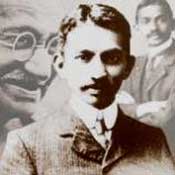
Mohandas Gandhi launched his campaign of non-cooperation with Imperial British control of India. He called his overall method of nonviolent action Satyagraha, formed from satya (truth) and agraha, used to describe an effort or endeavor. This translates roughly as "Truth-force." A fuller rendering, though, would be "the force that is generated through adherence to Truth."

Gandhi, 1919

February 28, 1958

The Campaign for Nuclear Disarmament (CND) was founded in London by philosopher Sir Bertrand Russell, then 86 years old, and the Rev. Canon (Lewis) John Collins of St. Paul's Cathedral.

The peace symbol was originally developed for CND.


February 28, 1989

The Nevada-Semipalatinsk Movement to Stop All Nuclear Testing was founded in the USSR (Union of Soviet Socialist Republics). Olzhas Suleimenov, a popular Kazakh poet, was chosen to lead this first anti-nuclear non-governmental organization in Kazakhstan, formerly part of the USSR. Nevada-Semipalatinsk ended nuclear arms tests at the Semipalatinsk Polygon. Organizers had been inspired by the large Nevada Test Site anti-nuclear demonstrations and encampments outside Las Vegas in the mid-to-late 1980s.
a Semipalatinsk test >
< demo at Semipalatinsk, 1990

February 29, 1968

U.S. District Judge Miles W. Lord held the officers of A.H. Robins Company personally liable for the injuries caused by the intrauterine contraceptive device they had produced and sold, the Dalkon Shield. Eighteen women had died, and more than 300,000 ultimately claimed injury.
Miles W. Lord
The top three executives had to pay $4.6 million personally, and the company paid out $220 million in compensatory and $13 million in punitive damages to thousands of women. Judge Lord: "The whole cost-benefit analysis is warped. They say, well you can kill so many people if the benefits are great enough . . . Once they put a price on human life, all is lost. Life is sacred. Life is priceless."
He also criticized Robins's legal strategy of requiring witnesses to discuss their sex lives: "You exposed these women, and ruined families and reputations and careers, in order to intimidate those who would raise their voices against you," he said. "You introduced issues that had no relationship whatsoever to the fact that you implanted in the bodies of these women instruments of death, mutilation and of disease."
Judge Lord was called before a review panel for his professional and judicial conduct in the case but the charges were dismissed and he continued to serve until retirement.


February 29, 1968

The National Advisory Commission on Civil Disorders (Kerner Commission) warned that racism was causing America to move "toward two societies, one black, one white – separate and unequal." Former Illinois Gov. Otto Kerner and his commission were charged by Pres. Lyndon Johnson to look into the causes of the many riots that had taken place in recent years.
 

March 1, 1954


Nuclear Free and Independent Pacific Day, or Bikini Day, marks the anniversary of the explosion of the largest-ever U.S. nuclear weapon which contaminated major parts of the Marshall Islands [see February 28, 1954]. The land and people of the south Pacific have been exposed to numerous nuclear bomb tests and their radioactive aftermath.
In addition to the 67 atmospheric U.S. tests at Bikini and Eniwetok Atolls, France tested 193 weapons in French Polynesia, 46 in the
atmosphere. The U.K. exploded 34 devices on Malden and Christmas Islands.

The day is also intended to call attention to the potential danger of the increasing trans-oceanic shipment of hazardous nuclear materials, and the need of nuclear and shipping nations to consider the rights and health of the indigenous peoples of the region.

March 1, 1956

The University of Alabama permanently expelled Autherine Lucy, the first African-American person ever admitted to the University (following a federal court's ordering her admission).

She was met with rioting by thousands of students and others (none of whom were either disciplined or arrested). She charged in court that University officials had been complicit in allowing the disorder, as a means of avoiding compliance with the court order. The trustees expelled her for making such "baseless, outrageous and unfounded charges of misconduct on the part of the university officials."


Burning desegregation litgerature at the University of Alabama. Students, adults and even groups from outside of Alabama shouted racial epithets, threw eggs, sticks and rocks, and generally attempted to block her way.


Autherine Lucy Foster receives her master's degree from University of Alabama in 1992.


March 1, 1961

President John F. Kennedy issued Executive Order 10924 establishing the Peace Corps as a new agency within the Department of State. The same day, he sent a message to Congress asking for permanent funding for the agency, which would send trained American men and women to foreign nations to assist in development efforts. The Peace Corps captured the imagination of the U.S. public, and during the week following its creation, thousands of letters poured into Washington from young Americans hoping to volunteer.


March 2, 1807

The U.S. Congress sought to end international slave trade by passing an act to make it unlawful "to import or bring into the United States or the territories thereof from any foreign kingdom, place, or country, any negro, mulatto, or person of colour, with intent to hold, sell, or dispose of such negro, mulatto, or person of colour, as a slave, or to be held to service or labour." Domestic traffic in slaves, however, was still legal and unregulated.

The first shipload of African captives to North America had arrived at Jamestown, Virginia, in August 1619, and the first American slave ship, named Desire, sailed from Marblehead, Massachusetts, in 1637. In total, nearly 15 million Africans were transported as slaves to the Americas. The African continent, meanwhile, lost approximately 50 million human beings to slavery and related deaths. Despite the federal prohibition and because the slave trade was so profitable, an additional 250,000 slaves would be "imported" illegally by the time the Civil War began in 1861.


March 2, 1955

Nine months before Rosa Parks made headlines, teenager Claudette Colvin was arrested in Montgomery, Alabama, for refusing to give up her bus seat to a white person. She was active in the Youth Council of the local NAACP (National Association for the Advancement of Colored People). Though the Montgomery Bus Boycott was begun after Ms. Parks's arrest, Clovin's legal case became part of the basis for a federal court challenge to Alabama's segregation laws. Colvin became one of four plaintiffs in Browder v. Gayle, in which the Supreme Court ultimately struck down the law under which she was arrested for merely sitting down in a bus seat.

Claudette Colvin later in life

March 3, 1863

In the midst of the Civil War, Pres. Abraham Lincoln signed a conscription act that created the first draft lottery of American citizens. The act called for registration of all males between the ages of 20 and 35, and unmarried men up to 45, including aliens with the intention of becoming citizens, by April 1. Exemptions from the draft could be bought for $300 or by finding a substitute draftee. Many objected to this provision describing the war as a "rich man's war, but poor man's fight." Black Americans were also not eligible for the draft because they weren't considered citizens.

Bounties for New York military "volunteers" during the Civil War


March 3, 1913

The day before Woodrow Wilson's inauguration as president, 8000 from the National American Woman Suffrage Association (NAWSA), representing every state, marched in Washington, D.C. to call for a constitutional amendment granting women the right to vote.
Organized by Alice Paul and Lucy Burns, who had been inspired by the parades, pickets and speeches of the British suffragists, the march drew hundreds of thousands of spectators. Though some of the marchers were attacked by onlookers, the march focused attention on the suffrage issue.
[see
March 4, 1917 below]
 

March 3, 2003

In the first-ever worldwide theatrical act of dissent, there were at least 1029 stagings of Lysistrata, the 2400-year-old anti-war comedy by Greek playwright Aristophanes. Conceived and organized in just two months by Kathryn Blume and Sharron Bower, the performances all occurred on the same day to express opposition to the U.S. invasion of Iraq.


Staged in 59 countries (including Iraq), the bawdy play tells of Athenian and Spartan women who unite to deny their lovers sex in order to stop the 22-year-long Peloponnesian War between the two city-states. Desperate for intimacy, the men finally agree to lay down their swords and see their way to achieving peace through diplomacy.

About the organizer, Kathryn Blume >
Kathryn Blume Sharron Bower
 

March 4, 1917

Montana elected Republican Jeanette Rankin as the first woman to sit in the U.S. House of Representatives three years before American women nationwide could legally vote. A persistent advocate for women's rights, particularly suffrage, Rankin voted in Congress against American entry into both world wars, and late in life led marches against the Vietnam war.


Rep. Jeannette Rankin with her colleagues in the 61st Congress.


March 4, 1933

Franklin Delano Roosevelt was sworn in as president in the midst of the Great Depression. From his inaugural address:
"This is preeminently the time to speak the truth, the whole truth, frankly and boldly. Nor need we shrink from honestly facing conditions in our country today. This great Nation will endure, as it has endured, will revive and will prosper.
So, first of all, let me assert my firm belief that the only thing we have to fear is fear itself -- nameless, unreasoning, unjustified terror which paralyzes needed efforts to convert retreat into advance. In every dark hour of our national life, a leadership of frankness and of vigor has met with that understanding and support of the people themselves which is essential to victory."

Pres. Franklin Delano Roosevelt delivering his first inaugural address
 

March 4, 1965

Moved to action by Pres. Lyndon Johnson's sustained bombing of North Vietnam beginning two months before, Vietnam Day was declared by the Universities Committee, led by Wayne State University Prof. Otto Feinstein. At about 100 college campuses nationwide, faculty, students and others gathered for lectures and meetings about the war. This occurred just three weeks before the first "teach-in" at the University of Michigan.

March 4, 1969


The Union of Concerned Scientists (UCS) was founded.

From its founding document: "Misuse of scientific and technical knowledge presents a major threat to the existence of mankind. Through its actions in Vietnam our government has shaken our confidence in its ability to make wise and humane decisions. There is also disquieting evidence of an intention to enlarge further our immense destructive capability..."


March 5, 1970

The Nuclear Non-Proliferation Treaty went into effect after ratification
by 43 nations.

The agreement sought to prevent the spread of nuclear weapons and weapons technology, to promote cooperation in the peaceful uses of nuclear energy, and to further the goal of achieving nuclear disarmament, as well as general and complete disarmament. It has since been joined by 189 countries, and is enforced through the United Nations International Atomic Energy Agency.


March 5, 1994

Ukraine, having voluntarily agreed to give up its nuclear weapons following the collapse of the Soviet Union, began their transfer to Russia. Ukraine, which had the world's third largest weapons stockpile, 130 SS-19 missiles, 46 SS-24 missiles and dozens of strategic bombers, rid itself of all 1300 warheads within about two years.


Schoolchildren preparing to turn the keys to destroy the last missile silo in the Ukraine. October 30, 2001


March 6, 1857

The U.S. Supreme Court handed down the Dred Scott decision (Dred Scott v. Sandford) which declared that an escaped slave, Scott, could not sue for his freedom in federal court because he was not a citizen. Those of African descent could never be considered citizens but "as a subordinate and inferior class of beings," according to the Court.

Chief Justice Roger Taney stated in his opinion that the "unhappy Black Race . . . had no rights which the white man was bound to respect; and that the negro might justly and lawfully be reduced to slavery for his benefit. He was bought and sold and treated as an ordinary article of merchandise and traffic, whenever profit could be made by it."


Dred Scott Chief Justice Roger Taney

March 6, 1884
Susan B. Anthony and more than 100 delegates from the National Woman Suffrage Association met with Pres. Chester Alan Arthur concerning women's right to vote. Anthony asked him, "Ought not women have full equality and political rights?" He responded, "We should probably differ on the details of that question."
Susan B. Anthony Pres. Chester Alan Arthur

March 6, 1957

Ghana became the first black African country to become independent from colonial rule.
Dr. Kwame Nkrumah became independent Ghana's first leader.


Ghana's flag


Dr. Kwame Nkrumah

March 6, 1967

Muhammad Ali was ordered by the Selective Service to be inducted into military service. He refused, citing his religious beliefs that precluded him from killing others.

"I ain't got no quarrel with those Vietcong."

< Top Black athletes gather to hear Muhammad Ali (formerly Cassius Clay) give his reasons for rejecting the draft, United States, June 4, 1967.


March 6, 1982

The University for Peace near San Jose, Costa Rica, was founded. UPeace, the U.N.-mandated graduate school of peace and conflict studies had been chartered by the General Assembly for research and the dissemination of knowledge specifically aimed at training and education for peace.


The monument on campus sculpted by Cuban artist Thelvia Marรญn in 1987,
is the world's largest peace monument.

Wisconsin Help Wanted Ads

Hundred Schools Of Thought

This article contains Chinese text. Without proper rendering support, you may see question marks, boxes, or other symbols instead of Chinese characters.

The Hundred Schools of Thought (simplified Chinese: ่ฏธๅญ็™พๅฎถ; traditional Chinese: ่ซธๅญ็™พๅฎถ; pinyin: zhลซzว bวŽijiฤ; Wade–Giles: chu-tzu pai-chia; literally "all philosophers hundred schools") were philosophers and schools that flourished from 770 to 221 BC, an era of great cultural and intellectual expansion in China. Even though this period - known in its earlier part as the Spring and Autumn period and the Warring States period (ๆ˜ฅ็ง‹ๆˆฐๅœ‹ๆ™‚ไปฃ/ๆ˜ฅ็ง‹ๆˆ˜ๅ›ฝๆ—ถไปฃ) - in its latter part was fraught with chaos and bloody battles, it is also known as the Golden Age of Chinese philosophy because a broad range of thoughts and ideas were developed and discussed freely. This phenomenon has been called the Contention of a Hundred Schools of Thought (็™พๅฎถ็ˆญ้ณด/็™พๅฎถไบ‰้ธฃ; bวŽijiฤ zhฤ“ngmรญng; pai-chia cheng-ming; "hundred schools contend"). The thoughts and ideas discussed and refined during this period have profoundly influenced lifestyles and social consciousness up to the present day in East Asian countries. The intellectual society of this era was characterized by itinerant scholars, who were often employed by various state rulers as advisers on the methods of government, war, and diplomacy. This period ended with the rise of the Qin dynasty and the subsequent purge of dissent.

Confucianism and its derivatives

Confucianism (ๅ„’ๅฎถ; Rรบjiฤ; Ju-chia; "School of scholars") is the body of thought that arguably had the most enduring effects on Chinese life. Its written legacy lies in the Confucian Classics, which later became the foundation of traditional society. Confucius (551–479 BC), or Kongzi "Master Kong", looked back to the early days of the Zhou dynasty for an ideal socio-political order. He believed that the only effective system of government necessitated prescribed relationships for each individual: "Let the ruler be a ruler and the subject a subject". Furthermore, he contended that a king must be virtuous in order to rule properly. To Confucius, the functions of government and social stratification were facts of life to be sustained by ethical values; thus his ideal human was the junzi, which is translated as "gentleman" or "superior person".

Mencius (371–289 BC), or Mengzi, formulated his teachings directly in response to Confucius.

The effect of the combined work of Confucius, the codifier and interpreter of a system of relationships based on ethical behavior, and Mencius, the synthesizer and developer of applied Confucianist thought, was to provide traditional Chinese society with a comprehensive framework by which to order virtually every aspect of life.

There were many accretions to the body of Confucian thought, both immediately and over the millennia, from within and without the Confucian school. Interpretations adapted to contemporary society allowed for flexibility within Confucianism, while the fundamental system of modeled behavior from ancient texts formed its philosophical core.

Diametrically opposed to Mencius, in regards to human nature (ๆ€ง), was the interpretation of Xunzi (c. 300–237 BC), another Confucian follower. Xunzi preached that man is not innately good; he asserted that goodness is attainable only through training one's desires and conduct.

Legalism

The School of Law or Legalism (ๆณ•ๅฎถ; FวŽjiฤ; Fa-chia; "School of law") doctrine was formulated by Han Feizi (d. 233 BC) and Li Si (d. 208 BC), who maintained that human nature was incorrigibly selfish; accordingly, the only way to preserve the social order was to impose discipline from above, and to see to a strict enforcement of laws. The Legalists exalted the state above all, seeking its prosperity and martial prowess over the welfare of the common people.

Legalism greatly influenced the philosophical basis for the imperial form of government. During the Han Dynasty, the most practical elements of Confucianism and Legalism were taken to form a sort of synthesis, marking the creation of a new form of government that would remain largely intact until the late 19th century.

Taoism

Philosophical Taoism or Daoism (้“ๅฎถ; Dร ojiฤ; Tao-chia; "School of the Way") developed into the second most significant stream of Chinese thought. Its formulation is often attributed to the legendary sage Laozi ("Old Master"), who is said to predate Confucius, and Zhuangzi (369–286 BC). The focus of Taoism is on the individual within the natural realm rather than the individual within society; accordingly, the goal of life for each individual is seeking to adjust oneself and adapting to the rhythm of the natural (and the supernatural) world, to follow the Way (tao) of the universe, and to live in harmony. In many ways the opposite of rigid Confucian morality, Taoism was for many of its adherents a complement to their ordered daily lives. A scholar serving as an official would usually follow Confucian teachings, but at leisure or in retirement might seek harmony with nature as a Taoist recluse.

Mohism

Mohism or Moism (ๅขจๅฎถ; Mรฒjiฤ; Mo-chia; "School of Mo") was developed by followers of Mozi (also referred to as Mo Di; 470–c.391 BC). Though the school did not survive through the Qin Dynasty, Mohism was seen as a major rival of Confucianism in the period of the Hundred Schools of Thought. Its philosophy rested on the idea of universal love: Mozi believed that "everyone is equal before heaven", and that people should seek to imitate heaven by engaging in the practice of collective love. His epistemology can be regarded as primitive materialist empiricism; he believed that human cognition ought to be based on one's perceptions – one's sensory experiences, such as sight and hearing – instead of imagination or internal logic, elements founded on the human capacity for abstraction.

Mozi advocated frugality, condemning the Confucian emphasis on ritual and music, which he denounced as extravagant. He regarded offensive warfare as wasteful and advocated pacifism or at the most, defensive fortification. The achievement of social goals, according to Mozi, necessitated the unity of thought and action. His political philosophy bears a resemblance to divine-rule monarchy: the population ought always to obey its leaders, as its leaders ought always to follow the will of heaven. Mohism might be argued to have elements of meritocracy: Mozi contended that rulers should appoint officials by virtue of their ability instead of their family connections. Although popular faith in Mohism had declined by the end of the Qin Dynasty, its views are said to be strongly echoed in Legalist thought.

School of Yin-yang

The School of Naturalists or Yin-yang (้™ฐ้™ฝๅฎถ/้˜ด้˜ณๅฎถ; Yฤซnyรกngjiฤ; Yin-yang-chia; "School of Yin-Yang") was a Warring States era philosophy that synthesized the concepts of yin-yang and the Five Elements. Zou Yan is considered the founder of this school. Their theories attempted to explain the universe in terms of basic forces in nature: the complementary agents of yin (dark, cold, female, negative) and yang (light, hot, male, positive) and the Five Elements or Five Phases (water, fire, wood, metal, and earth). In its early days, these theories were most strongly associated with the states of Yan and Qi. In later periods, these epistemological theories came to hold significance in both philosophy and popular belief. This school was absorbed into Taoism's alchemic and magical dimensions as well as into the Chinese medical framework. The earliest surviving recordings of this are in the Ma Wang Dui texts and Huang Di Nei Jing.

Logicians

The School of Names or Logicians (ๅๅฎถ; Mรญngjiฤ; Ming-chia; "School of names") grew out of Mohism, with a philosophy that focused on definition and logic. It is said to have parallels with that of the Ancient Greek sophists or dialecticians. The most notable Logician was Gongsun Longzi.

Other Schools

The Taishigong Zixu (ๅคชๅฒๅ…ฌ่‡ชๅบ) of Shiji (ๅฒ่จ˜/ๅฒ่ฎฐ) lists the above six major philosophies within the Hundred Schools of Thought. The Yiwenzhi (่—ๆ–‡ๅฟ—/่‰บๆ–‡ๅฟ—) of Hanshu (ๆผขๆ›ธ/ๆฑ‰ไนฆ) adds four more into the Ten Schools (ๅๅฎถ; Shijia).

The School of Agriculture (่พฒๅฎถ/ๅ†œๅฎถ; Nongjia) encouraged farming and agriculture and taught farming and cultivation techniques, as they believed that agricultural development was the way to have enough food for the country. For example, Mencius once criticized Xu Xing (่จฑ่กŒ) for advocating that rulers should work in the fields with their subjects.

The School of Diplomacy or School of Vertical and Horizontal [Alliances] (็ธฑๆฉซๅฎถ/็บตๆจชๅฎถ; Zonghengjia) specialized in diplomatic politics; Zhang Yi and Su Qin were representative thinkers. This school focused on practical matters instead of any moral principle, so it stressed political and diplomatic tactics, and debate and lobbying skill. Scholars from this school were good orators, debaters and tacticians.

The Miscellaneous School (้›œๅฎถ/ๆ‚ๅฎถ; Zajia) integrated teachings from different schools; for instance, Lรผ Buwei found scholars from different schools to write a book called Lรผshi Chunqiu (ๅ‘‚ๆฐๆ˜ฅ็ง‹) cooperatively. This school tried to integrate the merits of various schools and avoid their perceived flaws.

The School of "Minor-talks" (ๅฐ่ชชๅฎถ/ๅฐ่ฏดๅฎถ; Xiaoshuojia) was not a unique school of thought. Indeed, all the thoughts which were discussed by and originated from non-famous people on the street were included into this school. At that time, there were some government officials responsible for collecting ideas from non-famous people on the street and report to their senior. This was where this school originated from. This also explains its Chinese name, which literally means "school of minor-talks".

Another group is the School of the Military (ๅ…ตๅฎถ; Bingjia) that studied warfare and strategy; Sunzi and Sun Bin were influential leaders. However, this school was not one of the "Ten Schools" defined by Hanshu.

History and origins

The Yi Wen Zhi of the Book of Han claims that the officials working for the government during the early Zhou Dynasty lost their position when the authority of the Zhou rulers began to break down in the Eastern Zhou period. In this way, the officials spread all over the country and started to teach their own field of knowledge as private teachers. In this way the schools of philosophy were born. In particular, the School of Scholars (i.e. the Confucian School) was born from the officials of the Ministry of Education; the Taoists came from the historians; the Ying Yang School was born from the astronomers; the Legalist School from the Ministry of Justice; the School of Names from the Ministry of Rituals; the Mohist School from the Guardians of the Temple; the School of Diplomacy from the Ministry of Embassies; the School of Miscellaneous from the government counselors; the School of Agriculture from the Ministry of the Soil and Wheat; the School of Minor Talks from the minor officials.

Although the details are unclear, the
Burning of books and burying of scholars during the Qin was the end of the period of open discussion.

It should be stressed that only the Ru, or Confucians and the Mohists were actual organized schools of teachers and disciples during this period. All the other schools were invented later to describe groups of texts that expressed similar ideas. There was never an organized group of people describing themselves as "Legalists," for example, and the term "Daoist" was only coined in the Eastern Han.

See also

  • Hellenistic philosophy
  • Hundred Flowers Campaign

    References

  • Graham, A.C., Disputers of the Tao: Philosophical Argument in Ancient China (Open Court 1993). ISBN 0-8126-9087-7

  • This article is copied from an article on Wikipedia® - the free encyclopedia created and edited by online user community. The text was not checked or edited by anyone on our staff. Although the vast majority of the Wikipedia® encyclopedia articles provide accurate and timely information please do not assume the accuracy of any particular article. This article is distributed under the terms of GNU Free Documentation License.

    Chinese Philosophy

    Chinese philosophy is philosophy written in the Chinese tradition of thought. Chinese philosophy has a history of several thousand years; its origins are often traced back to the Yi Jing (the Book of Changes), an ancient compendium of divination, which uses a system of 64 hexagrams to guide action. This system is attributed to King Wen of Zhou (1099–1050 BCE) and the work reflects the characteristic concepts and approaches of Chinese philosophy. The Book of Changes evolved in stages over the next eight centuries, but the first recorded reference is in 672 BCE.[1]

    The Tao Te Ching (Dร o dรฉ jฤซng, in pinyin romanisation) of Lao Tzu (LวŽo zว) [2] and the Analects of Confucius (Kว’ng fลซ zว; sometimes called Master Kong) [3] both appeared around the 6th century BCE, slightly ahead of early Buddhist philosophy in Northern India and slightly after pre-Socratic philosophy in Ancient Greece.

    Confucianism represents the collected teachings of the Chinese sage Confucius, who lived from 551 to 479 BCE. His philosophy concerns the fields of ethics and politics, emphasizing personal and governmental morality, correctness of social relationships, justice, traditionalism, and sincerity. The Analects stress the importance of ritual, but also the importance of 'ren', which loosely translates as 'human-heartedness,[4]Confucianism, along with Legalism, is responsible for creating the world's first meritocracy, which holds that one's status should be determined by ability instead of ancestry, wealth, or friendship.[3] Confucianism was and continues to be a major influence in Chinese culture, the state of Chinaand the surrounding areas of Southeast Asia.

    Throughout history, Chinese philosophy has been molded to fit the prevailing schools of thought and circumstances in China. The Chinese schools of philosophy, except during the Qin Dynasty, can be both critical and yet relatively tolerant of one another. Even when one particular school of thought is officially adopted by the ruling bureaucracy, as in the Han Dynasty, there may be no move to ban or censor other schools of thought. Despite and because of the debates and competition, they generally have cooperated and shared ideas, which they would usually incorporate with their own. For example, Neo-Confucianism was a revived version of old Confucian principles that appeared around the Song Dynasty, with Buddhist, Taoist, and Legalist features in the religion.

    During the Industrial and Modern Ages, Chinese philosophy had also began to integrate concepts of Western philosophy, as steps toward modernization. By the time of the Xinhai Revolution in 1911, there were many calls, such as the May Fourth Movement, to completely abolish the old imperial institutions and practices of China. There have been attempts to incorporate democracy,republicanism, and industrialism into Chinese philosophy, notably by Sun Yat-Sen (Sลซn yรฌ xiฤn, in one Mandarin form of the name) at the beginning of the 20th century. Mao Zedong blendedMarxism with Confucianism and Taoism and other communist thought to create what is sometimes known today as "Maoism".[5] The government of the People's Republic of China encourageSocialism with Chinese characteristics. Although, officially, it does not encourage some of the philosophical practices of Imperial China, the influences of past are still deeply ingrained in the Chinese culture. As in Japan, philosophy in China has become a melting pot of ideas. It accepts new concepts, while attempting also to accord old beliefs their due.

    Chinese philosophy has spread around the world in forms such as the New Confucianism and New Age ideas (see for example Chinese traditional medicine). Many in the academic community of the West remain skeptical, and only a few assimilate Chinese philosophy into their own research, whether scientific or philosophical. However, it still carries profound influence amongst the people of East Asia, and even Southeast Asia.

    Brief history

    Early beliefs

    Early Shang Dynasty thought was based upon cyclicity. This notion stems from what the people of the Shang Dynasty could observe around them: day and night cycled, the seasons progressed again and again, and even the moon waxed and waned until it waxed again. Thus, this notion, which remained relevant throughout Chinese history, reflects the order of nature. In juxtaposition, it also marks a fundamental distinction from western philosophy, in which the dominant view of time is a linear progression. During the Shang, fate could be manipulated by great deities, commonly translated as Gods. Ancestor worship was present and universally recognized. There was also human and animal sacrifice.

    When the Shang were overthrown by the Zhou, a new political, religious and philosophical concept was introduced called the "Mandate of Heaven". This mandate was said to be taken when rulers became unworthy of their position and provided a shrewd justification for Zhou rule. During this period, archaeological evidence points to an increase in literacy and a partial shift away from the faith placed in Shangdi (the Supreme Being in traditional Chinese religion), with ancestor worship becoming commonplace and a more worldly orientation coming to the fore.

    Hundred Schools of Thought

    In around 500 BCE, after the Zhou state weakened and China moved in to the Spring and Autumn Period, the classic period of Chinese philosophy began (it is an interesting fact that this date nearly coincides with the emergence of the first Greek philosophers). This is known as the Hundred Schools of Thought (่ซธๅญ็™พๅฎถ; zhลซzว bวŽijiฤ; "various philosophers hundred schools"). This period is considered the golden age of Chinese philosophy. Of the many schools founded at this time and during the subsequent Warring States Period, the four most influential ones wereConfucianism, Daoism (often spelled "Taoism"), Mohism and Legalism.

    Qin and Han Dynasty

    The short founder Qin Dynasty, where Legalism was the official philosophy, quashed Mohist and Confucianist schools. Legalism remained influential until the emperors of the Han Dynasty adopted Daoism and later Confucianism as official doctrine. These latter two became the determining forces of Chinese thought until the introduction of Buddhism.

    Confucianism was particularly strong during the Han Dynasty, whose greatest thinker was Dong Zhongshu, who integrated Confucianism with the thoughts of the Zhongshu School and the theory of the Five Elements. He also was a promoter of the New Text school, which considered Confucius as a divine figure and a spiritual ruler of China, who foresaw and started the evolution of the worldtowards the Universal Peace. In contrast, there was an Old Text school that advocated the use of Confucian works written in ancient language (from this comes the denomination Old Text) that were so much more reliable. In particular, they refuted the assumption of Confucius as a godlike figure and considered him as the greatest sage, but simply a human and mortal

    Xuanxue and Buddhism

    The III and IV centuries saw the rise of the Xuanxue (mysterious learning), also called Neo-Taoism. The most important philosophers of this movement were Wang Bi, Xiang Xiu and Guo Xiang. The main question of this school was whether Being came before Not-Being (in Chinese, ming and wuming). A peculiar feature of these Taoist thinkers, like the Seven Sages of the Bamboo Grove, was the concept of feng liu (lit. wind and flow), a sort of romantic spirit which encouraged following the natural and instinctive impulse.

    Buddhism arrived in China around the I century AD, but it was not until the Northern and Southern, Sui and Tang Dynasties that it gained considerable influence and acknowledgement. At the beginning, it was considered a sort of Taoist sect, and there was even a theory about Laozi, founder of Taoism, who went to India and taught his philosophy to Buddha. Mahayana Buddhism was far more successful in China than its rival Hinayana, and both Indian schools and local Chinese sects arose from the V century. Two chiefly important monk philosophers were Sengzhao and Daosheng. But probably the most influential and original of these schools was the Chan sect, which had an even stronger impact in Japan as the Zen sect.

    In the mid-Tang Buddhism reached its peak, and reportedly there were 4,600 monasteries, 40,000 hermitages and 260,500 monks and nuns. The power of the Buddhist clergy was so great and the wealth of the monasteries so impressive, that it instigated criticism from Confucian scholars, who considered Buddhism as a foreign religion. In 845 Emperor Wuzong ordered the Great Anti-Buddhist Persecution, confiscating the riches and returning monks and nuns to lay life. From then on, Buddhism lost much of its influence.

    From Neo-Confucianism to late Imperial Era

    Neo-Confucianism was a revived version of old Confucian principles that appeared around the Song Dynasty, with Buddhist, Taoist, and Legalist features. The first philosophers, such as Shao Yong, Zhou Dunyi and Chang Zai, were cosmologists and worked on the Yi Jing. The Cheng brothers, Cheng Yi and Cheng Hao, are considered the founders of the two main schools of thought of Neo-Confucianism: the School of Principle the first, the School of Mind the latter. The School of Principle gained supremacy during the Song Dynasty with the philosophical system elaborated byZhu Xi, which became mainstream and officially adopted by the government for the Imperial examinations under the Yuan Dynasty. The School of Mind was developed by Lu Jiuyuan, Zhu Xi's main rival, but was soon forgotten. Only during the Ming Dynasty was the School of Mind revived by Wang Shouren, whose influence is equal to that of Zhu Xi. This school was particularly important in Japan.

    During the Qing Dynasty many philosophers objected against Neo-Confucianism and there was a return to the Han Dynasty Confucianism, and also the reprise of the controversy between Old Text and New Text. In this period also started the penetration of Western culture, but most Chinese thought that the Westerners were maybe more advanced in technology and warfare, but that China had primacy in moral and intellectual fields.

    Modern Era

    During the Industrial and Modern Ages, Chinese philosophy had also begun to integrate concepts of Western philosophy, as steps toward modernization. By the time of the Xinhai Revolution in 1911, there were many calls, such as the May Fourth Movement, to completely abolish the old imperial institutions and practices of China. There have been attempts to incorporate democracy,republicanism, and industrialism into Chinese philosophy, notably by Sun Yat-Sen (Sลซn yรฌ xiฤn, in one Mandarin form of the name) at the beginning of the 20th century. Mao Zedong (Mรกo zรฉ dลng) added Marxism, Stalinism, and other communist thought.

    When the Communist Party of China took over power, previous schools of thought, excepting notably Legalism, were denounced as backward, and later even purged during the Cultural Revolution. Their influence on Chinese thought, however, remains. The current government of the People's Republic of China is trying to encourage a form of market socialism.

    Since the radical movement of the Cultural Revolution, the Chinese government has become much more tolerant with the practice of traditional beliefs. The 1978 Constitution of the People's Republic of China guarantees "freedom of religion" with a number of restrictions. Spiritual and philosophical institutions have been allowed to be established or re-established, as long they are not perceived to be a threat to the power of the CPC. (However, it should be noted that those organizations are heavily monitored by the state.) The influences of the past are still deeply ingrained in the Chinese culture. As in Japan, philosophy in China has become a melting pot of ideas. It accepts new concepts, while attempting also to accord old beliefs their due.

    See also: Chinese nationalism, Maoism, Culture of the People's Republic of China

    Main Schools of Thought

    Confucianism

    Enlarge picture
    Kong Fuzi (Latin: Confucius)

    Confucianism is a philosophical school developed from the teachings of the sage Confucius (Kongzi ๅญ”ๅญ, 551 – 479 BCE), collected in the Analects of Confucius. It is a system of moral, social, political, and religious thought that has had tremendous influence on Chinese history, thought, and culture down to the 21st century. Some Westerners have considered it to have been the "state religion" of imperial China. Its influence also spread to Korea and Japan.

    The major Confucian concepts include rรฉn (humanity or humaneness), zhรจngmรญng (rectification of names; e.g. a ruler who rules unjustly is no longer a ruler and may be dethroned), zhลng (loyalty), xiร o (filial piety), and lว (ritual). Confucius taught both positive and negative versions of the Golden Rule. The concepts Yin and Yang represent two opposing forces that are permanently in conflict with each other, leading to perpetual contradiction and change. The Confucian idea of "Rid of the two ends, take the middle" is a Chinese equivalent of Hegel's idea of "thesis, antithesis, and synthesis", which is a way of reconciling opposites, arriving at some middle ground combining the best of both.

    Neo-Confucianism

    Despite Confucianism losing popularity to Taoism and Buddhism, Neo-Confucianism combined those ideas into a more metaphysical framework. Its concepts include li (principle, akin to Plato's forms), qi (vital or material force), taiji (the Great Ultimate), and xin (mind).

    New Confucianism

    New Confucianism is an intellectual movement of Confucianism that began in the early 20th century in Republican China, and revived in post-Mao era contemporary China. It is deeply influenced by, but not identical with, the Neo-Confucianism of the Song and Ming dynasties.

    Taoism
    Enlarge picture
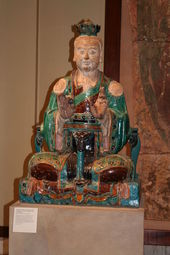
    Chinese glazed stoneware statue of a Taoist deity, from the Ming Dynasty, 16th century.

    Taoism (Daoism) is a philosophy and later also developed into a religion based on the texts the Tao Te Ching (Dร o Dรฉ Jฤซng; ascribed to Laozi) and theZhuangzi (partly ascribed to Zhuangzi). The character Tao ้“ (Dao) literally means "path" or "way". However in Daoism it refers more often to a meta-physical term that describes a force that encompasses the entire universe but which cannot be described nor felt. All major Chinese philosophical schools have investigated the correct Way to go about a moral life, but in Taoism it takes on the most abstract meanings, leading this school to be named after it. It advocated nonaction (wu wei), the strength of softness, spontaneity, and relativism. Although it serves as a rival to Confucianism, a school of active morality, this rivalry is compromised and given perspective by the idiom "practise Confucianism on the outside, Taoism on the inside." But its main motto is: "If one must rule, rule young" Most of Taoism's focus is on what is perceived to be the undeniable fact that human attempts to make the world better, actually make the world worse. Therefore it is better to strive for harmony.

    Legalism

    Legalism is a pragmatic political philosophy synthesized by Shang Yang and Han Fei. With an essential principle like "when the epoch changed, the ways changed", it upholds the rule of law and is thus a theory of jurisprudence.

    A ruler should govern his subjects by the following trinity:

    1. Fa (ๆณ• fa3): law or principle.
    2. Shu (่ก“ shรน): method, tactic, art, or statecraft.
    3. Shi (ๅ‹ข shรฌ): legitimacy, power, or charisma.

    Legalism was the chosen philosophy of the Qin Dynasty. It was blamed for creating a totalitarian society and thereby experienced decline. Its main motto is: "Set clear strict laws, or deliver harsh punishment". Both Shang Yang and Han Fei promoted the absolute adherence to the rule of law, regardless of the circumstances or the person. The ruler, alone, would possess the authority to dispense with rewards and punishments. Ministers were only to be rewarded if their words matched the results of their proposals, and punished if it did not; regardless if the results were worse or better than the claims. Legalism, in accordance with Han Fei's interpretation, could encouraged the state to be a militaristic autarky. The philosophy was highly progressive, and extremely critical of the Confucian and Mohist schools. This would be used to justify Li Si's large scale persecutions of the other schools of thought during the Qin dynasty, and the invariable denunciation by Confucian scholars from the Han dynasty and onwards.

    Buddhism

    Enlarge picture
    The Sakyamuni Buddha, by artist Zhang Shengwen, 1173-1176 CE, Song Dynasty.

    Buddhism is a religion, a practical philosophy, and arguably a psychology, focusing on the teachings of Gautama Buddha, who lived on the Indian subcontinent most likely from the mid-6th to the early 5th century BCE. When used in a generic sense, a Buddha is generally considered to be someone who discovers the true nature of reality.

    Although Buddhism originated in India, it has had the most lasting impact on China. Since Chinese traditional thought focuses more on ethics rather than metaphysics, it has developed several schools distinct from the originating Indian schools. The most prominent examples with philosophical merit areSanlun, Tiantai, Huayan, and Chรกn (a.k.a. Zen). They investigate consciousness, levels of truth, whether reality is ultimately empty, and how enlightenment is to be achieved. Buddhism has a spiritual aspect that compliments the action of Neo-Confucianism, with prominent Neo-Confucians advocating certain forms of meditation.

    Mohism

    Mohism (Moism), founded by Mozi (ๅขจๅญ), promotes universal love with the aim of mutual benefit. Everyone must love each other equally and impartially to avoid conflict and war. Mozi was strongly against Confucian ritual, instead emphasizing pragmatic survival through farming, fortification, and statecraft. Tradition is inconsistent, and human beings need an extra-traditional guide to identify which traditions are acceptable. The moral guide must then promote and encourage social behaviors that maximize general benefit. As motivation for his theory, Mozi brought in the Will of Heaven, but rather than being religious his philosophy parallels utilitarianism.

    Logicians

    The logicians (School of Names) were concerned with logic, paradoxes, names and actuality (similar to Confucian rectification of names). The logician Hui Shi was a friendly rival to Zhuangzi, arguing against Taoism in a light-hearted and humorous manner. Another logician, Gongsun Long, told the famous When a White Horse is Not a Horse dialogue. This school did not thrive because the Chinese regarded sophistry and dialectic as impractical.

    Great philosophical figures

    • Confucius, seen as the Great Master but sometimes ridiculed by Taoists.
      • Mencius, Confucius' follower having idealist inspiration
      • Xun Zi, another Confucius' follower, closer to realism, teacher of Han Fei and Li Si
      • Zhu Xi, founder of Neo-Confucianism
      • Wang Yangming, most influential proponent of xinxue or "state of mind."
    • Lao Zi, the chief of Taoist school.
      • Zhuangzi, said to be the author of the Zhuangzi.
      • Liezi, said to be the author of the Liezi.
    • Mozi, the founder of Mohist school.
    • Shang Yang, Legalist founder and pivotal Qin reformer
    • Han Fei, one of the most notable theoreticians of Legalism
    • Li Si, major proponent and practitioner of Legalism
    • Huineng, The 6th buddhist patriarch of the Chan (Zen) School in China, he established the concept of "no mind".

    Concepts within Chinese philosophy

    Although the individual philosophical schools differ considerably, they nevertheless share a common vocabulary and set of concerns.

    Among the terms commonly found in Chinese philosophy are:

    • Tao (the Way, or one's doctrine)
    • De (virtue, power)
    • Li (principle)
    • Qi (vital energy or material force)
    • The Taiji (Great Heavenly Axis) forms a unity of the two complimentary polarities, Yin and Yang. The word Yin originally referred to a hillside facing away from the sun. Philosophically, it stands the dark, passive, feminine principle; whereas Yang (the hillside facing the sun) stands for the bright, active, masculine principle. Yin and Yang are not antagonistic, they alternate in inverse proportion to one another—like the rise and fall of a wave.

    Among the commonalities of Chinese philosophies are:

    • The tendency not to view man as separate from nature.
    • Questions about the nature and existence of a monotheistic deity, which have profoundly influenced Western philosophy, have not been important in Chinese philosophies or a source of great conflict in Chinese traditional religion.
    • The belief that the purpose of philosophy is primarily to serve as an ethical and practical guide.
    • The political focus: most scholars of the Hundred Schools were trying to convince the ruler to behave in the way they defended.

    See also

    References

    1. ^ page 60, Great Thinkers of the Eastern World, edited Ian McGreal Harper Collins 1995, ISBN 0062700855
    2. ^ Lao Tze (Laozi) (2002). Stephen Hodge (Translator). ed. Tao Te Ching. Barron's Educational Series. ISBN 0-7641-2168-5.
    3. ^ a b Kung Fu Tze (Confucius) (1998). D. C. Lau (Translator). ed. The Analects. Penguin Classics. ISBN 0-14-044348-7.
    4. ^ Yuli Liu, 'Confucius', in Essentials of Philosophy and Ethics, Hodder Arnold 2006 ISBN 0340900288
    5. ^ 'Maoism', in Essentials of Philosophy and Ethics, Hodder Arnold 2006 ISBN 0340900288

    Further reading

    External links

    This article is copied from an article on Wikipedia® - the free encyclopedia created and edited by online user community. The text was not checked or edited by anyone on our staff. Although the vast majority of the Wikipedia® encyclopedia articles provide accurate and timely information please do not assume the accuracy of any particular article. This article is distributed under the terms of GNU Free Documentation License.