Monday, May 30, 2011

Planning & Implementing 5S By Brice Alvord

Planning & Implementing 5S

Planning & Implementing 5S
By Brice Alvord

Price: $27.99 & eligible for FREE Super Saver Shipping on orders over $25. Details

Availability: Usually ships in 24 hours
Ships from and sold by Amazon.com

Product Description

The Planning & Implementing 5S program shows you how to create a 5S program based on Management committment and business needs. You will learn how to organize a 5S tean, select target areas and develop plans and schedules for your project. This book covers how to analyze the workplace, how to plan a facility-wide improvement program, and how to sustain your efforts.New and Improved! This book has been revised with sections added to the original.

Product Details
  • Amazon Sales Rank: #1484474 in Books
  • Published on: 2010-07-10
  • Released on: 2010-07-10
  • Original language: English
  • Binding: Paperback
  • 180 pages
 

Advanced 5S Implmentation By Brice Alvord

Advanced 5S Implmentation

Advanced 5S Implementation
By Brice Alvord

Price: $29.95 & eligible for FREE Super Saver Shipping on orders over $25. Details

Availability: Usually ships in 24 hours
Ships from and sold by Amazon.com

Product Description

Advanced 5S Implementation explains the tools and techniques required to help your Basic 5S program evolve into a powerful and effective tool for continuous improvement and increased performance. It provides the information necessary to identify chronic embedded waste and to develop a means of reducing it.

Product Details
  • Amazon Sales Rank: #1986887 in Books
  • Published on: 2010-06-28
  • Original language: English
  • Binding: Paperback
  • 256 pages
 

Building 5S Teams By Brice Alvord

Building 5S Teams

Building 5S Teams
By Brice Alvord

Price: $17.99 & eligible for FREE Super Saver Shipping on orders over $25. Details

Availability: Usually ships in 24 hours
Ships from and sold by Amazon.com

Average customer review:
(1 customer reviews)

Product Description

Building 5S Teams explains what a 5S Team needs to know in order to function properly. This book covers how to form a team, write a charter, how to run the team once it is created. this book provides a foundation for teamwork and continuous improvement activities.

Product Details
  • Amazon Sales Rank: #3281491 in Books
  • Published on: 2010-06-28
  • Original language: English
  • Binding: Paperback
  • 72 pages
Customer Reviews

Most helpful customer reviews

0 of 0 people found the following review helpful.
2Vague and General
By Big Mete
This book is entirely too vague to be useful. No examples of the points that it tries to make.


Return On Investment In Training And Performance Improvement Programs, Second Edition (Improving Human Performance) By Jack J. Phillips PhD

Return on Investment in Training and Performance Improvement Programs, Second Edition (Improving Human Performance)

Return on Investment in Training and Performance Improvement Programs, Second Edition (Improving Human Performance)
By Jack J. Phillips PhD in Human Resource Management.

List Price: $65.95
Price: $53.19 & eligible for FREE Super Saver Shipping on orders over $25. Details

Availability: Usually ships in 24 hours
Ships from and sold by Amazon.com

28 new or used available from $38.22

Average customer review:
(5 customer reviews)

Product Description

The second edition of this bestselling book, 'Return on Investment in Training and Performance Improvement Programs,' guides you through a proven, results-based approach to calculating the Return on Investment in training and performance improvement programs.

Jack Phillips has composed user-friendly ROI calculations, plus:
*ten post-program data collection methods
*ten strategies for determining the amount of improvement that is directly linked to training programs
*ten techniques for converting both hard and soft data to monetary values

'Return on Investment in Training and Performance Improvement Programs, Second Edition' continues as a primary reference for learning how to utilize ROI to show the contribution of training, education, learning systems, performance improvement, and change initiatives throughout organizations.

The book also details implementation issues, provides worksheets, and pinpoints non-monetary program benefits. A case study takes the reader through the ROI process step-by-step.

* Applies the well-known ROI method to training programs
* Provides you with the tools to identify the key indicators for measurement and how to measure them effectively
* Summarizes in simple language everything practitioners need to do to sell, defend, or expand training initiatives to senior management

Product Details
  • Amazon Sales Rank: #255843 in Books
  • Published on: 2003-05-19
  • Original language: English
  • Number of items: 1
  • Binding: Hardcover
  • 344 pages
Editorial Reviews

Review
"Wow! Jack Phillips has delivered another must-read masterpiece for everyone who is involved in corporate learning. This is essential reading for all who are focused on assessing the value-added contribution of learning in the workplace. It includes brilliantly focused chapters on thoughtful concepts, and how-to approaches for measuring training in the workplace. If you only read one book, this is the one."
- Frank J. Anderson, Jr., President, Defense Acquisition University

"Return on Investment in Training & Performance Improvement Programs is extremely useful in that it provides a proven approach to measuring and evaluating training & development initiatives. I have found Jack Phillips' ROI methodology invaluable. It provides a framework for conducting impact studies that has enabled my training & development department to quantify the value add of our development initiatives. The book is an easy-to-use reference and comes off of my bookshelf often!"
- Lynn Schmidt, Director, Leadership Institute, Nextel Communications

"When you think ROI in training and development, you think Jack Phillips. This book represents decades of expertise, and is the de facto standard for anyone trying to calculate ROI in the HRD field today."
- Kevin Oakes, CEO & Chairman, Click2learn, Inc.

Praise for the previous edition:
"The only work today which provides a step-by-step process for conducting meaningful and shatter-proof return on investment analyses." - Toni Hodges, Manager, Measurements, Bell Atlantic Network Services, Inc.

"'Return on Investment in Training and Performance Improvement Programs' is an answer to what executives are asking for- sound measurement of return on training investments. Jack Phillips summarizes everything a practitioner needs to know and do." - William C. Byham, President and CEO, Development Dimensions International, Author of 'Zapp! The Lightning of Empowerment' and 'HeroZ!'

"In this important new book, Jack Phillips provides a comprehensive and cutting-edge treatment for ROI in training. The book is a 'must' for the library of any Training and Development or Human Performance Improvement practitioner." - William J. Rothwell, Ph.D, Professor, Human Resource Development, Penn State University

From the Publisher
Any human resource manager knows they contribute to their organization's bottom line--here's how to prove it.This groundbreaking book guides the reader through a proven, results-based approach to calculating the Return on Investment in training and performance improvement programs. Jack Phillips has composed user-friendly ROI calculations, plus:* ten post-program data collection methods* ten strategies for determining the amount of improvement that is directly linked to training programs* ten techniques for converting both hard and soft data to monetary valuesThis book also details implementation issues, provides worksheets, and pinpoints non-monetary program benefits. A case study takes you through the ROI process step-by-step.Don't wait for the budget axe. With this book, you get the strategy you need to turn your training/HRD department into a visible, indispensable profit center.

From the Back Cover
"Wow! Jack Phillips has delivered another must-read masterpiece for everyone who is involved in corporate learning. This is essential reading for all who are focused on assessing the value-added contribution of learning in the workplace. It includes brilliantly focused chapters on thoughtful concepts, and how-to approaches for measuring training in the workplace. If you only read one book, this is the one."
- Frank J. Anderson, Jr., President, Defense Acquisition University

"Return on Investment in Training and Performance Improvement Programs is extremely useful in that it provides a proven approach to measuring and evaluating training & development initiatives. I have found Jack Phillips' ROI methodology invaluable. It provides a framework for conducting impact studies that has enabled my training & development department to quantify the value add of our development initiatives. The book is an easy-to-use reference and comes off of my bookshelf often!"
- Lynn Schmidt, Director, Leadership Institute, Nextel Communications

"When you think ROI in training and development, you think Jack Phillips. This book represents decades of expertise, and is the de facto standard for anyone trying to calculate ROI in the HRD field today."
- Kevin Oakes, CEO & Chairman, Click2learn, Inc.

The second edition of this bestselling book, 'Return on Investment in Training and Performance Improvement Programs,' guides you through a proven, results-based approach to calculating the Return on Investment in training and performance improvement programs.

Jack Phillips has composed user-friendly ROI calculations, plus:
* Ten post-program data collection methods
* Ten strategies for determining the amount of improvement that is directly linked to training programs
* Ten techniques for converting both hard and soft data to monetary values

Customer Reviews

Most helpful customer reviews

36 of 36 people found the following review helpful.
4A very useful guide to first timers in the area of ROI
By A Customer
The formula Phillips uses is a good one and he illustrates his model with many practical examples. There is a particularly good chapter on isolating the effects of training and this answers many of the objections raised to this sort of model where dollar amounts are calculated. The problem with the model is that it is mainly retrospective which means that you are closing the stable door after the horse has bolted in some cases. Having said that, it does deal with topics such as the collection of post program data in a thorough and clear way. If you are interested in intangible benefits of training then there is a chapter which deals with this topic. I would recommend that you also read the ASTD publication which Jack Phillips edited called 'Measuring Return On Investment'. Here there are 17 case studies which demonstrate how you can do ROI studies in the real world. Both these books are vital for anybody interested in the whole area of ROI on investment.

42 of 43 people found the following review helpful.
5This book is a GREAT return on your investment
By Stacey L. T. Boyle, Ph.D.
Dr. Phillips has simplified a very complex concept. His step-by-step recommendations to conducting ROI studies are clear and concise. However, caveat emptor! He simplifies ROI so well that it seems relatively easy; but beware: there are great hurdles to leap when conducting ROI studies. While Phillips does cover some of the most serious obstacles one may face, such as getting management buy-in, isolating training effects, and handling soft data, conducting a ROI study is by no means a cake walk. For instance, ROI is more than a fifth level of evaluation after Kirkpatrick's four. It should be conducted at all levels of evaluation, which Phillips does suggest. Furthermore, ROI, or any evaluation effort for that matter, should not be viewed as merely a summative attempt; it should be conducted in an ongoing formative manner. Every project should have an evaluation component that parallels each task through the lifecycle of the project.

Additionally, in my opinion, Dr. Phillips' conservative approach to ROI is the greatest selling point. He accounts for error in all his measurements. For instance, when collecting self-report data, he has the respondent allocate a confidence weighting to their estimates. This confidence value weights the response while taking into account error. Furthermore, when calculating values for hard data or converting soft data (i.e., work habits and attitudes) to monetary benefits, he offers formulas that result in a range and suggests that the lowest, most conservative value is reported. Converting soft data to monetary benefits can be painstaking, but Phillips very eloquently addresses the conversion. By obtaining estimates from stakeholders (with a confidence weighting, of course), soft data can contribute to the overall calculation of return on investment. Therefore, your final conservative monetary return is not only based on hard data, but it is based on the less tangible elements of your organization as well.

If Phillips' approach to calculating ROI is too quantitative or laborious for your organization, you should consider calculating the return on expectations. Return on expectations can be assessed via a concept mapping (a multidimensional scaling approach) technique derived by Dr. Bill Trochium at Cornell University. Visit www.conceptsystems.com to review his technique. With Dr. Trochium's visual approach, you have stakeholders (i.e., stockholders, executive management, clients, employees, etc.) set expectations for your organization and then assess the alignment between set expectations and the actual performance of end groups. The result is a graphic pattern match that is easily interpreted and empowers decision-makers at all levels. Concept mapping has some of the same problems inherent in ROI, such as obtaining management buy-in. However, it is much easier to conduct than an ROI study, is based on a sound measurement techniques, and produces graphical results that, when considered collectively, illustrate the expected bang for your organization's buck

1 of 1 people found the following review helpful.
5This is THE book on training ROI
By Robin A. Lewis
It is the book that the American Society of Training & Development provides to students upon completion of their Basic ROI Certification course. You couldn't do better than this book.


Training Needs Assessment: Methods, Tools, And Techniques (Skilled Trainer) By Jean Barbazette In Human Resource Management

Training Needs Assessment: Methods, Tools, and Techniques (Skilled Trainer)

Training Needs Assessment: Methods, Tools, and Techniques (Skilled Trainer)
By Jean Barbazette

List Price: $47.00
Price: $37.27 & eligible for FREE Super Saver Shipping on orders over $25. Details

Availability: Usually ships in 9 to 14 days
Ships from and sold by Amazon.com

40 new or used available from $26.10

Average customer review:
(3 customer reviews)

Product Description

This book covers the essentials of needs analysis from the emerging trainer's perspective by providing just the right amount of support and knowledge without going too deep into the subject. The topics covered include when and how to do a training needs analysis; using informal and formal analysis techniques; goal, task and population analysis; and how to develop and present a training plan for management approval. Each chapter includes appropriate data gathering tools. The Skilled Trainer series provides practical guidance for those who've had some exposure to training and would like to take their career to the next level.

Product Details
  • Amazon Sales Rank: #122504 in Books
  • Published on: 2006-01-20
  • Original language: English
  • Number of items: 1
  • Binding: Paperback
  • 192 pages
Editorial Reviews

Review
"This is a very handy book to own if one is working in the area of training or performance management." It is particularly suitable for those who are new to the training function and is valuable for students in human factors." (PsycCritiques, 9/5/2007)

Review
"In this volume, Jean Barbazette--a true training pro--shares her tips and tricks for conducting a training needs assessment. Theoretically sound, yet infinitely practical, Barbazette guides trainers through each phase of a needs assessment, from starting the process to reporting the data to management. This book is an essential tool for both trainers who need to learn about needs assessment on-the-job, and students in academic courses on instructional design, needs assessment, and training."
--Saul Carliner, Ph.D., CTDP, assistant professor, Graduate Program in Educational Technology, Concordia University, Montreal, Quebec, Canada

From the Inside Flap
The Art of Great Training Delivery is designed to help trainers move their training and facilitation skills to the next level of performance. Written by Jean Barbazette—an expert in the field of training and development—this vital resource is filled with down-to-earth advice and illustrative examples for selecting and using a variety of training methods.  Her advice helps trainers create the best learning experience that will improve learner retention. The book covers a wealth of topics including how to use case studies, conduct inventories, exercises, games, and simulations, facilitate role plays, as well as conduct effective and safe demonstrations and administer tests. The Art of Great Training Delivery is a volume in The Skilled Trainer series.

Customer Reviews

Most helpful customer reviews

6 of 6 people found the following review helpful.
5Practical
By Mebane Turpin
Other books I considered purchasing on this topic require interpretation of the content or demand a Masters degree in Organizational Development to understand the author's point. Barbazette avoids those traps and instead offers useful methods and tools in a format I found easy to read and easy to implement. Given the multiple ways I have applied what I learned from the book, I consider this book one of my best purchases in the last twelve months.

14 of 17 people found the following review helpful.
5Presents a Proven Three Phase Plan
By John Matlock
First is the collection of information. In order to proceed with any kind of training some information needs to be determined before you can even decide that training is needed. And if it is, what kind of training. Perhaps this is product training for the sales people. Perhaps it is time management. Perhaps the problem being addressed doesn't call for more training but some kind of change in the work flow, the people, or the computer system.

Second is the analysis of the collected information. This may be summaries, complete with charts and tables; this may find something so obvious that you will wonder how it was missed. The end of this phase is to present to the management requesting the study to determine what, if any training is needed.

Finally is the development of a training plan. The author presents a ten part plan that begins with Issue Definition, and ends with an evaluation of the results of the training. These steps have been defined over many years and are a proven approach.

A CD is supplied with the book that includes forms, checklists and other tools that are referenced in the book itself.

5 of 5 people found the following review helpful.
5TNA Essential Tools/Knowledge complete guide
By Machelle Ford Ferry
The methods introduced in this book are simply put, easy to follow and a complete guide to perform a Training Needs Assessment.

The book begins with breaking down who, what, when, why and how of an assessment. It introduces the issue that training is not always the solution to a deficiency and how to identify if there is a need for training or a need for another solution.

There are seven different analyses broken down into separate chapters to guide you in conducting successful analyses.

Feasibility Analysis- The cost of doing something verses the cost of doing nothing to correct a deficiency.

Performance Analysis- Also known as a gap analysis, a look at where your employees are and where you would like them to be.

Goal Analysis - Includes how to write a goal statement. Breaking down vague statements into specific behaviors desired by a company for succes

Task Analysis - The book will guide you in breaking down tasks within a job.

Needs versus Wants Analysis - Why should training be done? Is the deficiency tied to a need or a want? Again looking at finding the proper solution.

Target Population - How to develop an effective training program for the audience. How to identify the audience.

Contextual Analysis - How and when to deliver training successfully.

One very interesting point covered is to always deal with the decision maker during every processes. This will save time and money (yours).

Overall, a complete guide to successful analyses.


CEO Succession 2010: The Four Types Of CEOs

Booz & Company's annual study of turnover among chief executives — now increasingly diverse, as the world's largest companies migrate to emerging economies — suggests that the nature of the job varies with the role of the corporate core.

Every year, Booz & Company takes a long and penetrating look at CEO succession among the world's top 2,500 public companies. Our research now goes back consecutively to 2000, giving us 11 years of perspective on the tenure and position of these global business leaders. Each year we consider a new dimension in our study of CEO succession. This year, we looked at the role of the CEO and its effect on tenure and turnover. How hands-on are the CEO and his or her senior team? How do they engage themselves with the businesses they lead? We found that these factors have a noticeable effect. The more involved headquarters is in operational decision making in any given company, the more tenuous the CEO's tenure is likely to be.

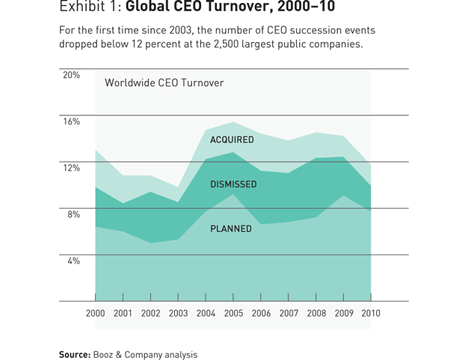
We also found several noteworthy trends this year. There is a steep decline in CEO turnover worldwide: A higher proportion of chief executives are staying in office than we saw in 2009. (See Exhibit 1.) That doesn't mean that governance is growing more relaxed; the rates of CEO turnover are still much higher in general than they were in the 1990s, and the pressure on performance remains as great as ever. But it does suggest that some basic trends in CEO hiring and oversight have solidified as standard practice. Last year, we referred to the 2000s as a "decade of convergence and compression," and this pattern continued in 2010. Around the world, for example, fewer CEOs are also board chairmen this year than was the case the year before, and more CEOs are being appointed from inside companies, rather than from outside.
In one respect, however, the largest public companies are becoming more diverse: They are increasingly based in emerging economies, rather than in the mature economies of the United States, Canada, western Europe, and Japan. For years, in compiling our list of the 2,500 largest publicly held companies in the world (as ranked by their market capitalization), we have observed this gradual migration. (See Exhibit 2.) To explore the implications more closely this year, we divided our study sample over the past 11 years into mature and emerging economies (based on the United Nations' Human Development Index for 2010), and then further broke out the BRIC countries (Brazil, Russia, India, and China). We found that the share of companies from emerging markets in our sample has grown at a compound annual growth rate of 14 percent over the past 11 years; BRIC representation has shot up 24 percent annually. China, in particular, shows staggering growth, accounting for one in five new entries in our sample this year (83 of the 415 new members of the world's 2,500 largest companies).
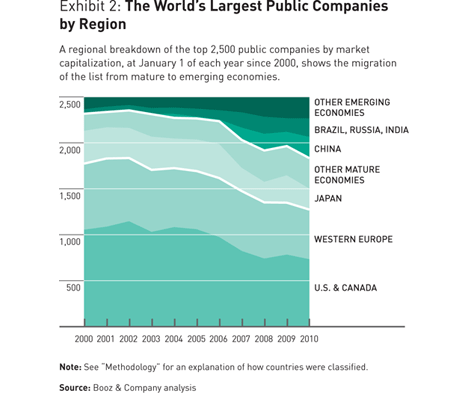
For those who see North America and western Europe as the commercial centers of the world, the news is even more striking; for the first time, almost half the companies on the list are located outside those two regions. In fact, the number of the top 2,500 companies based in the U.S., Canada, and western Europe has fallen some 28 percent altogether since 2000.

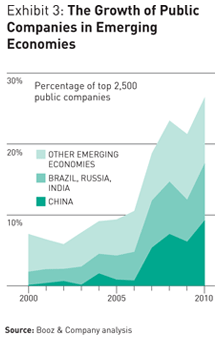
Finally, a significant milestone was reached in 2010: More than one-quarter of the top 2,500 public companies now have their headquarters in emerging economies. Could this suggest that global enterprise is nearing a geographic tipping point? Within a few years, if this pattern continues, the companies in the world's mature Western economies could represent a minority of our sample. Already, the Asian economies (China, Japan, rest of Asia) are the new center of gravity in terms of global market heft, with 895 companies in this year's sample versus North America's 772 companies and Europe's 619 companies.

Global Turnover in 2010

This shift in the mix of companies in our global sample is already influencing CEO succession trends, as companies with new governance structures and different growth arcs come to the fore. (See "A Tipping Point for the Global Economy," by Ivan de Souza and Edward Tse, below.)

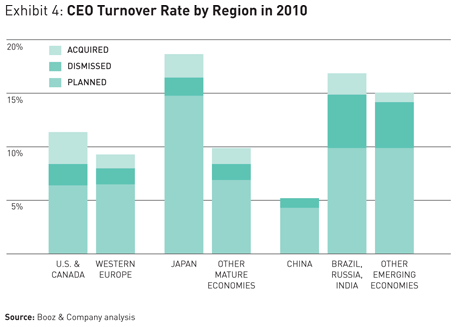
For example, one can surmise that the growing presence of Chinese companies in our sample helped bring down the global rate of CEO turnover this year. Because of their high degree of government ownership, China's biggest companies manifest extremely low CEO turnover — half the global average. In 2010, CEO succession worldwide hit a six-year low of 11.6 percent; Chinese companies' turnover was only 5.2 percent.

However, the overall drop in turnover in 2010 is not solely China's doing; in general, there was a sharp reduction in both forced and planned turnover at the top. There are several possible reasons for this. First, the global recession's lingering effects influenced companies to keep a steady, seasoned hand at the helm. Second, boards have gotten better at selecting CEOs and ensuring their smooth succession. Finally, given the historically high rates of forced turnover in the last few years, there were fewer companies that hadn't made a recent change in chief executives.

Global Governance Trends

We broke down the data to assess what it means for today's boards as well as for sitting and aspiring CEOs. Many long-term trends in governance still hold. Boards around the world increasingly separate the roles of chairman and CEO, especially in North America, where only 14 percent of incoming CEOs were assigned both titles in 2010 (versus 52 percent in 2001). Related to this trend is the practice of appointing an outgoing CEO as board chairman, to apprentice the incoming CEO. We continue to see this model growing in prevalence — except in Japan, where it has long been the norm (it accounts for more than two-thirds of successions there).

Another Japanese tradition, appointing insiders, is also becoming a worldwide phenomenon. Among the 291 succession events we assessed in 2010, insiders ascended to the CEO spot 81 percent of the time. Insiders also last longer — in 2010, those insiders leaving office had lasted on average 7.1 years, versus 4.3 years for outsiders. This is not surprising; insiders have historically produced superior returns for their shareholders. Last year was no exception. Insider CEOs leaving office generated total shareholder returns on a regionally adjusted basis of 4.6 percent as compared with 0.1 percent among outsiders.

On average, compared with 10 years ago, CEOs are being appointed at a later age. The average appointment age among outgoing CEOs in 2010 was 52.2, versus 50.2 in 2000. This suggests that boards continue to value experience in selecting a CEO. In tracking outgoing CEOs, we found that the percentage of chief executives who had previously served as CEOs of a public company has risen markedly over the past 11 years, from 4.3 percent in 2000 to 15.2 percent in 2010. And in 2010's incoming class, more than half (51 percent) of new outsider CEOs came from within the same industry — suggesting that boards are getting more particular about the type of candidates they are seeking.

CEOs are also staying in office for less time, compared with 11 years ago. For outgoing CEOs, the mean tenure was 18 months shorter: 6.6 years in 2010 versus 8.1 in 2000. In particular, the length of planned tenures — in which the CEO departs on a date that has been prearranged with the board — has dropped by 30 percent over the last 11 years, from 10 to seven years. These findings suggest that CEOs are finding the demands of the job more pressing than their predecessors did.

Four Models of Management

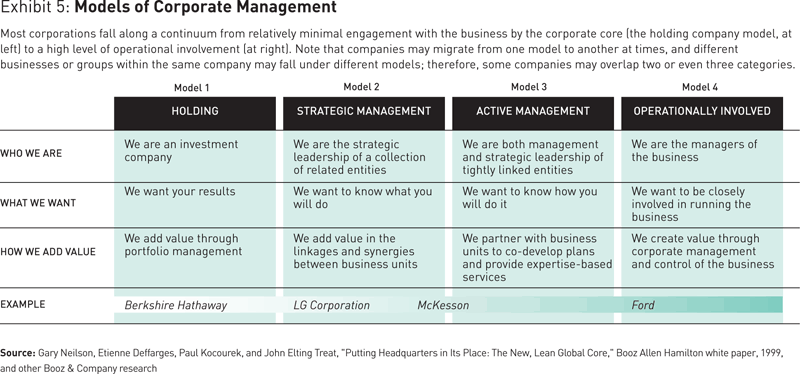
This year we applied an additional lens to our study of CEO succession events at the world's largest companies by examining the impact of the corporate core. The corporate core is made up of the CEO, his or her senior team, and a defined set of support functions necessary for the entire corporation. Back when the senior management team of a typical large company could all have offices in one location, this was known as headquarters. All corporate cores provide leadership, create the context for growth, represent the corporation to the public and investment community, and provide essential services to the business units, which are consigned maximum responsibility for money-making activities. That's where the similarities among companies end. As any CEO can tell you, each corporate core is a unique blend of skills, responsibilities, and personal management styles tailored to the nature of the businesses it oversees and the competitive environment in which it operates. On the basis of our in-depth experience with hundreds of corporations at Booz & Company, we have found that they fall along a spectrum of four different corporate models — defined by the way senior management and the corporate core engage with the rest of the business. (See Exhibit 5.)
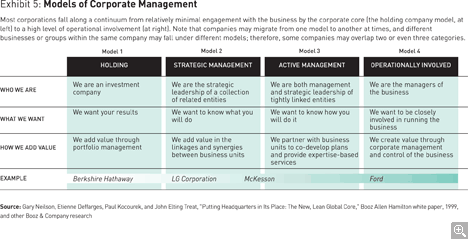
The first model, at one extreme, is the highly diversified holding company — distinguished by its arm's-length approach to managing its subsidiary operations. Holding companies add value through strong portfolio management. The second model is the strategic management company, which offers guidance and leadership on strategic direction and provides expectations of performance for its group of related businesses. The third model involves more active management. These corporate cores oversee more tightly linked businesses and advise on operational issues. The fourth corporate model is the highly operationally involved company, in which senior management plays an active role in day-to-day business decision making.

To briefly sum up each model from the point of view of a business unit leader: Holding companies want your results. Strategic management headquarters want to know what you will do. Active management corporate cores want to know how you will do it. And operationally involved executive teams want to work closely with you in running the business.

As part of our research on CEO succession and related issues, we have interviewed chief executives working within these models. Their experience sheds light on the operation of these models, the patterns of CEO succession that seem to follow the models, and the implications for business leaders.

Holding companies (Model 1) manage their businesses much as a financial fund manager oversees a portfolio of investments. The CEOs of this first group of companies have a minimal degree of involvement in operational decisions. They are primarily interested in results, not in how the results are generated. The corporate core establishes and ensures managerial and financial discipline. Holding company chief executives are a level removed — they focus on portfolio management while the second-tier executives run the businesses. If there is a problem, more often than not, its fallout is felt at that second management tier.

Warren Buffett, CEO of Berkshire Hathaway Inc., typifies this type of management. As he noted in his letter to shareholders in the 2010 annual report, "At Berkshire, managers can focus on running their businesses: They are not subjected to meetings at headquarters nor financing worries nor Wall Street harassment. They simply get a letter from me every two years…and call me when they wish. And their wishes do differ. There are managers to whom I have not talked in the last year, while there is one with whom I talk almost daily. Our trust is in people rather than process. A 'hire well, manage little' code suits both them and me."

Strategic management companies (Model 2) exercise a bit more oversight in managing their operations. The corporate core offers strategic guidance to its local businesses, but not the supervision of operational decision making. A good example is the Korea-based LG Corporation, a US$104 billion company originally known for its brand name Goldstar. (LG once stood for Lucky Goldstar.) At first glance, because of its global operations spanning consumer electronics, mobile communications, home appliances, chemicals, and more, LG might seem to fit the definition of a diversified holding company such as Berkshire Hathaway. But Juno Cho, president and CEO of LG Corporation, notes that the company's corporate core has always operated more in a strategic management model.

Cho describes his role, and that of other senior management, as closely engaged in strategic goal development with executives of subsidiaries such as LG Chemical and LG Electronics, where central core team members often sit on the boards. "We effectively agree on strategic goals and targets with the businesses and give them accountability," says Cho. Once each year the group chairman of LG Corporation conducts a consensus meeting with the presidents of all the business units to discuss, understand, and agree on their annual business plan. "This is the backbone of our communication," says Cho. "Corporate executives chair the board of each business unit, so we have a real-time understanding of performance, but it would be impractical to get deeply involved in operational matters. Since LG is such a big organization, the corporate core limits its voice to brand-building, R&D expenditures, high-level human resources decisions, and capital investment."

Active management companies (Model 3) have a corporate core that starts to share accountability with the business units for major operational decisions and adds value through close guidance and expertise. John H. Hammergren, chairman, president, and CEO of the McKesson Corporation, a leading pharmaceutical distributor and healthcare IT company based in North America, describes his corporate core as moving back and forth between the strategic and active management models.

"We want our businesses to drive the McKesson culture," says Hammergren, "but the corporate executive team also wants to guide the businesses on how they do it. We follow a similar approach when it comes to leadership development — whereas with sales training, we expect the businesses to take the lead, because sales training is more specific to their business."

Hammergren says that the corporate officer group at McKesson performs several key roles. "First, it sets the culture: the tone at the top — for example, what standards we are going to hold for ourselves, both at the executive committee level and in our interactions with the leaders of the business units. Second, corporate upholds a set of principles that ensure all of our business units put the customer at the center of everything we do. Third, we manage the cadence of the management team: in other words, how we plan our strategy; how we conduct our operating reviews; what we expect of the business units; and what processes, like Six Sigma and the corporate calendar, we use to drive results." The top group also establishes the rules of engagement between the corporate core and the business units, determining when businesses should expect that headquarters will be involved, and when they can assume the authority and decision-making power to move forward on their own.

"We manage the corporation through two key management teams," says Hammergren. "The first is the executive committee, comprising my direct reports; the second is an operating team that consists of the presidents of the major businesses. I inspect each major business at least quarterly, and I'm actively involved in the budget-setting process and leadership decisions at the business unit level. The executive committee meets every other week to take up performance within the various businesses, large M&A transactions, Wall Street expectations, deployment of capital, leadership development, succession planning, balance sheet management, board reporting, overall corporate strategy, and those kinds of issues."

Hammergren notes that it would be extremely difficult to move McKesson to a model of full operational involvement. "Given the complexity of our company, it would be impossible for the CEO to call the orders every day on the execution side. I wouldn't be close enough to the fight to know which way to send the troops; and the people who run these businesses would get disenchanted and disheartened, because I would probably not do their jobs as well as they do them."

Operationally involved companies (Model 4) are enterprises in which the corporate core is involved in management more directly. This does not mean that the CEO and top team are involved in every aspect of day-to-day management; execution remains the business units' domain. Rather, the corporate core adds value through the development of cross-company capabilities and functional expertise, and gets involved in strategic decision making for most or all business units. Because of the highly engaged nature of the corporate core in managing the business, these companies are typically focused within a single industry.

Ford Motor Company under CEO Alan Mulally is a good example of an operationally involved corporate core. According to an Economist article published December 9, 2010, Mulally began to convene weekly meetings of his senior team soon after he arrived in September 2006. He pushed the attendees to bring up operational problems and collaborate in solving them. When the head of Ford's operations in the Americas admitted that his group had a serious problem with defective parts, instead of falling from grace, he was applauded by Mulally, who exclaimed, "Great visibility."

To maintain a tighter rein on the carmaker's fundamental business, Mulally and his key lieutenants decided to concentrate on the Ford brand and divest the Premier Automotive Group — a collection of high-end brands that had been acquired under previous regimes. The company quickly sold Aston Martin, Jaguar, Land Rover, and Volvo. Ford also decided to produce a much narrower range of cars built on a few core platforms, focusing on quality and flexibility. At one point, Ford produced nearly 100 different models around the world; now it is down to a third of that number and may go lower. For clarifying and simplifying the management challenges at Ford, "you cannot believe the difference this makes," noted Mulally.

The Most Challenging Corporate Model

As part of this year's study, we identified which of the four corporate core models applied most closely to each of the 291 companies that experienced a succession event in 2010. We based our analysis on such factors as the number and diversity of business units, the degree of activity sharing among those units, and the number and proportion of senior line and staff managers. We also called on our own firm's industry expertise and our direct experience with many of these companies. The breakdown that emerged from this sample was broadly consistent with what we have observed in the general population of global corporations — 10 percent were holding companies, 20 percent were strategic management companies, 30 percent were active management companies, and the most numerous, at about 40 percent, were operationally involved companies.

The corporate core model clearly seems to influence the CEO's experience in office. For the 291 succession events that occurred worldwide in 2010, the tenure of the CEO in the operationally involved companies was unquestionably shorter and riskier. In fact, the tenure of a holding company CEO is a third longer, on average, than that of an operationally involved CEO. (The median tenure of a holding company CEO departing office in 2010 was 6.5 years, whereas the median tenure of an operationally involved CEO was only 4.9 years.) Moreover, CEOs in Model 4 companies are much more likely to depart during their first four years than CEOs in the other three models. (See Exhibit 6.)
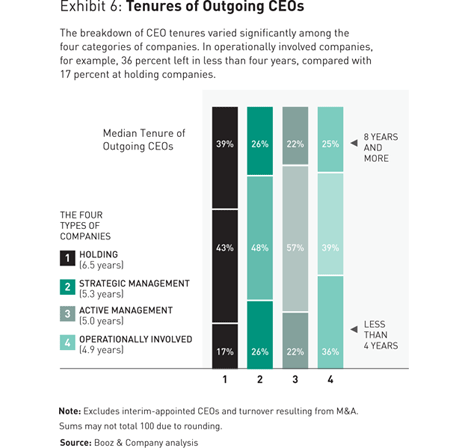
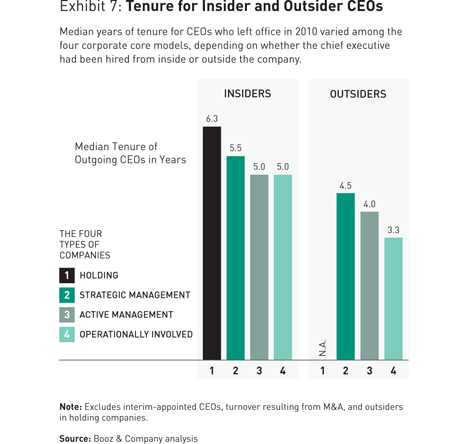
This departure rate at operationally involved companies was particularly high for outsider CEOs — those who were hired from another company. Outsiders are generally more pressured; in all categories except holding companies (in which only one outsider CEO left in 2010, a chief executive who had lasted for a statistically anomalous 17 years), they stayed in office for less time on average than their insider counterparts. Outsiders at Model 4 companies had the shortest tenure of all: on average, only 3.3 years in office. (See Exhibit 7.)
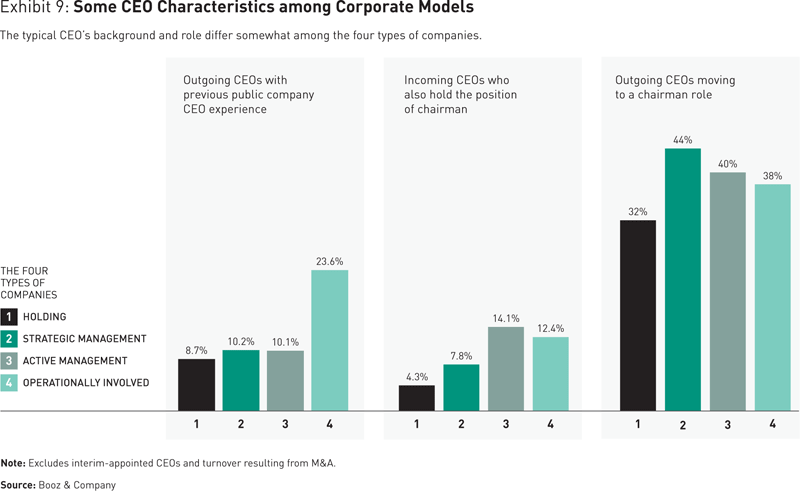
Why was CEO turnover higher in Model 4 companies? It wasn't because of inexperience: The proportion of Model 4 outgoing CEOs who had prior CEO experience was higher than in any other model group. Nor was it a matter of a lack of coaching or support. The apprentice CEO model is more prevalent at operationally involved companies than at holding companies (38 percent as compared with 32 percent), and Model 4 headquarters organizations are much larger, as a rule. However, CEOs in Model 4 companies face some particular challenges:

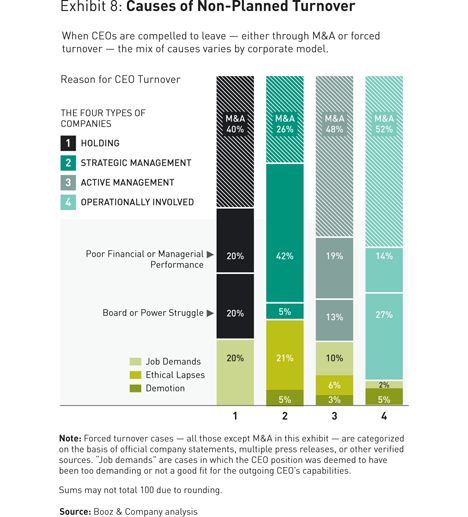
1. Operationally involved companies are more likely to be acquired. M&A successions are most common among Model 4 firms (in 2010, they represented 52 percent of non-planned turnover, versus 40 percent at Model 1 companies and 26 percent at Model 2 companies). Because Model 4 companies typically focus on a single industry or business, they are often attractive targets for acquisition. And although Model 1 and 2 companies may engage in M&A activity more frequently, they typically buy and sell subsidiary units, not whole companies, so the CEO position is usually not affected.

2. Operationally involved CEOs more often succumb to board and power struggles. These struggles accounted for 57 percent of the forced (non-planned and non-M&A) turnover at Model 4 companies in 2010. By contrast, in Model 2 companies, poor financial or managerial performance was the main driver of forced succession. (See Exhibit 8.) In a single-line or closely related set of businesses, it is easier for the board to apply strict scrutiny to a CEO's strategy, and power struggles with other knowledgeable insiders are more likely.
3. Operationally involved and active management CEOs are more likely to also hold the chairman title. This is twice as likely, on average, as it is in the other two models. Overall, only one in 10 CEOs has this dual role, but the more involved the corporate core is in the business operations, the more likely the double role is to appear. (See Exhibit 9.) The correlation between actively engaged corporate cores and "double-hatted" CEO/chairmen is particularly strong in Europe.
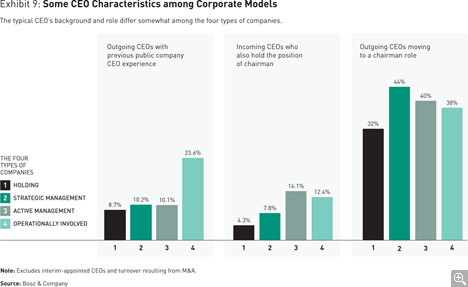
At first glance, this correlation seems puzzling. Double-hatted CEOs are subject to immense job demands in any company; they run both the board — which is charged with scrutinizing their strategy — and the business. In Model 3 and Model 4 companies, their roles would be even more demanding. One may surmise that this trend is either an anomaly (in which case we will probably see it diminish in future years) or a sign that some boards still believe that a single leader accountable for the entire company provides the most effective form of governance.

Advice for the New CEO

Few CEOs would interpret these findings as a suggestion to adopt the holding company model. After all, most companies have developed their corporate core structure over time, to match their unique portfolio of businesses and their competitive strategy. No one model is inherently better than another, and it is neither practical nor desirable to move your corporate model away from what the business requires.

However, if you are the CEO in a Model 4 company, you should recognize the especially demanding nature of this job. It requires hands-on management and greater accountability, and your exposure to disruption is therefore higher. More than one-third of operationally involved CEOs are replaced within four years; indeed, your role may involve quietly building value to become an acquisition target. Model 4 boards tend to be more informed and engaged in monitoring strategy, and the competition for the chief executive position can be more intense — there are often several candidates well versed in the business vying for the position. These challenges will be all the more formidable if you are hired from outside.

Of course, CEOs at companies with other core models also face great pressures. As we noted earlier, planned-succession tenures, overall, have dropped from 10 years to seven since 2000. In a large company, seven years can be a very short time to set an agenda and execute it. Nonetheless, as an incoming CEO, you should adjust your expectations accordingly, and be prepared to demonstrate early wins in the first few years to solidify your position.

If you are a board member or senior executive in search of a long-term CEO, you face a different, but equally immense, challenge. As they develop through their careers, very few candidates will automatically receive the breadth of general management experience and functional expertise needed to oversee a large global enterprise. In a Model 1 company, up-and-coming executives have the early opportunity to run a P&L, but they may not get a broader sense of the whole portfolio or develop strong functional skills. By contrast, in a typical Model 4 company, there will be a cadre of executives with high levels of functional expertise and strong industry knowledge, but their general management experience may be less robust.

It is the responsibility of sitting CEOs and boards to plan for succession by building a bench of well-rounded candidates that transcends any management development limits in their corporate core model. Model 1 and 2 companies need to help their general managers cultivate functional and portfolio management skills. Model 3 and 4 companies need to give their functional specialists general management experience. Thoughtful executives planning their own careers would do well to take on roles that help fill the gaps.

If you are a new CEO, awareness of your corporate core model can help you establish a better position. For example, a new CEO coming from the outside into a company with an active management model can lay the groundwork for success early by appointing well-regarded insiders to one or two top jobs, to engage the organization more effectively. Similarly, in last year's study, we highlighted the growing importance of regarding the board of directors as a strategic partner. This advice is crucial if you are the CEO of an operationally involved company, especially given the fact that skirmishes with the board account for most CEO dismissals in those companies. The more effective your engagement is with the board, the more likely your succession is to be a planned one.

In general, chief executives need to adapt their personal management style to the company's corporate core model. This may be particularly challenging if you are a new CEO in a Model 1 or Model 2 company. More likely than not, you were an operationally involved business unit head before taking the top job. Now, you will have to deliberately learn to delegate accountability for running the businesses so you can focus on adding value to the larger organization.

No matter where you sit on the corporate core spectrum, the challenges of being the CEO of a major corporation are considerable and growing, while the window you have to address and overcome those challenges continues to narrow. Never has the job been more exciting…or more daunting. 

A Tipping Point for the Global Economy
by Ivan de Souza and Edward Tse

The changing composition of this year's sample of the world's top 2,500 public companies by market capitalization is, in and of itself, a significant portent of a profound shift about to occur in the global economy. The center of gravity among global corporations is moving from mature Western economies to emerging markets. (See Exhibit 3.) The details vary by country and industry, but some general truths broadly apply.

Companies in emerging economies — not only in Brazil, Russia, India, and China (the BRIC countries), but also in the "next 11" countries named by Goldman Sachs: Bangladesh, Egypt, Indonesia, Iran, Mexico, Nigeria, Pakistan, the Philippines, South Korea, Turkey, and Vietnam — are in hyper-growth mode. They are on the early and steep side of what we at Booz & Company call the arc of growth: the natural evolutionary cycle of any country or region as it enters the industrialized economy. Meanwhile, the mature economies of North America and western Europe are confronting challenges in generating further growth — challenges that have only been exacerbated by the economic turmoil of the past few years. The global recession has exaggerated the dichotomy between rapidly growing BRIC and next 11 countries on the one hand, and those in the Organisation for Economic Co-operation and Development on the other.

Furthermore, companies based in these emerging economies have far greater access to capital markets than they did even five years ago. Investors now perceive these economies more favorably, and the senior management of these companies have become more worldly in their outlook. Companies can now capitalize through IPOs, finance additional activity, and fund acquisitions in their own geographies as well as abroad (including in North America and western Europe).

Finally, companies in the world's emerging economies enjoy significant resource advantages. It's little wonder that demographically advantaged countries, such as India and China, and countries endowed with natural resources, such as Russia and Brazil, have seized the lion's share of the growth in global GDP over the past several years.

Although these general truths apply to all emerging economies, China's story has some unique elements. First, despite being publicly listed, the largest Chinese companies in our sample are still controlled by the state, which retains a substantial ownership stake. (Of the 232 Chinese companies on our global list of 2,500, the state owns all of the top 10.) The Communist Party appoints the chairman and the CEO of these enterprises from a roster it maintains of industry experts. (That said, the Chinese government has installed Western-style boards of directors in the top government-owned enterprises in China, and these boards exercise a good deal of authority.) Finally, given the high degree of government oversight, companies in China often enjoy distinct positional advantages, at least domestically, and M&A activity is rare. These factors all help explain why China's CEO turnover is so low compared with that of other countries. (See Exhibit 4.)
In the coming years, we should see Chinese companies and their emerging-market peers open up more and more to the rest of the world, in terms of both mind-set and footprint. Chinese business leaders, by necessity, will maintain a more international outlook; this will undoubtedly have an impact on CEO succession in years to come.

  • Ivan de Souza is a senior partner with Booz & Company based in Sao Paolo and is managing director of the firm's global markets business.
  • Edward Tse is a senior partner with Booz & Company based in Shanghai and Hong Kong, and is the firm's chairman for Greater China.
  • Methodology

    The 2010 CEO Succession study identified the world's 2,500 largest public companies as measured by their market capitalization (per Bloomberg) on January 1, 2010. Booz & Company research team members based in India, China, Romania, Chile, the United Arab Emirates, Italy, France, and the United States then identified the companies among the top 2,500 that had experienced a chief executive succession event and cross-checked data using a wide variety of printed and electronic sources in multiple languages. For a listing of companies that had been acquired or merged in 2010, we again used Bloomberg. In considering relative market capitalization, we did not adjust for currency exchange rate fluctuations, which have an insignificant effect over time because they quickly adjust to market reality. (We also note that China's currency is pegged to the U.S. dollar.)

    We investigated each company that appeared to have changed its CEO to confirm that a succession event occurred in 2010, and for the 291 confirmed companies, we compiled demographic, career, and governance structure details on both outgoing and incoming CEOs (as well as any interim chief executives), including age, tenure, title, career path, prior experience, education, and chairmanship, among others. In the analysis of CEO succession by tenure of outgoing CEO (Exhibit 6), insider/outsider status (Exhibit 7), and CEO background (Exhibit 9), we excluded turnover events involving interim-appointed CEOs, and those resulting from mergers and acquisitions.

    We accepted company-provided information for all data elements except for the reason for the succession. For that, we consulted outside press reports and other independent sources.

    Total shareholder return data for a CEO's tenure was sourced from Bloomberg and includes reinvestment of dividends, if any. Company return data was then regionally market-adjusted (against the return of the local regional index over the same time period) and annualized.

    Corporate core classification of each of the 291 companies experiencing a succession event in 2010 was based on multiple factors (e.g., number and diversity of business units, degree of shared activities, number and percentage of top-line versus functional managers), as well as Booz & Company expertise on industry and geographic operating models.

    To distinguish between mature and emerging economies, we followed the United Nations' Human Development Index 2010 ranking, which classifies countries with a score above 0.788 as "very high." Mature economies include South Korea, Australia, the Czech Republic, Poland, and Hong Kong; emerging economies include Turkey, Saudi Arabia, Mexico, and South Africa. For the purposes of this study, Hong Kong and Macau are classified as separate from China.

    Author Profiles:

  • Ken Favaro is a senior partner with Booz & Company based in New York. He leads the firm's work in enterprise strategy and finance.
  • Per-Ola Karlsson is a senior partner with Booz & Company based in Stockholm. He is managing director of the firm's European business.
  • Gary L. Neilson is a senior partner with Booz & Company based in Chicago. He focuses on operating models and organizational transformation and is a leader of the firm's work on organizational DNA.
  • Also contributing to this article were Booz & Company Senior Associates Alexis Bour and Kenji Chikada and s+b contributing writer Tara A. Owen.
  •  


    5 Sentences Saved By Em Dashes

    Sentential adverbs (words such as indeed or namely and phrases like "that is" and "of course"), and their close cousins the conjunctive adverbs, or adverbial conjunctions (however, "on the other hand," and the like), indicate an interruption of thought, and should themselves appear as interruptions. Because they are parenthetical remarks (the framing sentence would be complete without them), they should be set off by commas:

    "You must, after all, admit that it was a good effort."

    If they are employed to indicate a new thought, stronger punctuation is called for:

    "They are highly skilled; however, they do not possess the level of knowledge you do."

    (In each case, the adverb could also appear at the end of the sentence — after a comma.)

    Often, though, the interruption in sentence structure is somewhere between comma country and semicolon stature: The phrase that begins with the adverb is something more than a dependent clause but not quite an independent clause. In these cases, the linking function of an em dash is appropriate:

    1. "I thank them for putting up with this project with such good sportsmanship, indeed with such exuberance."
    The phrase beginning with indeed is tacked on to the basic sentence to provide an additional, loosely related thought. Note the shift with an em dash, and follow the adverb with a comma to mark elision of a repetition of the phrase "for putting up with": "I thank them for putting up with this project with such good sportsmanship — indeed, with such exuberance."

    2. "There is a job to be done, namely educating educators how to effectively teach that wildlife conservation addresses quality of life for everyone."
    The phrase that follows "There is a job to be done" is an explanation of what is meant by that phrase. The traditional marker for explanation is a colon, but an em dash does just as well. Again, set the adverb off with a comma: "There is a job to be done — namely, educating educators how to effectively teach that wildlife conservation addresses quality of life for everyone." (Without the comma, the sentence seems to refer to "namely educating educators," but how do you do something in a namely manner?)

    3. "They may also be judicially voided for being unreasonable, that is, unsupported by the evidence claimed to justify them."
    A colon is often employed to set off a sentence from a subsequent clarification, but the adverb — and the fact that the clarification is an incomplete sentence — justifies use of an em dash here: "They may also be judicially voided for being unreasonable — that is, unsupported by the evidence claimed to justify them."

    4. "Furthermore, a scientific conclusion is based on the past, i.e. previous studies that lead to present conclusions."
    The initials i.e. (an abbreviation for id est, Latin for "that is") gives you a clue that this sentence can be treated identically to the previous example. Note, however, that just as you follow "that is" with a comma, set i.e. (and the similar e.g., which means "for example") off from the following phrase: "Furthermore, a scientific conclusion is based on the past — i.e., previous studies that lead to present conclusions."

    5. "Ethics, on the other hand, is future oriented, that is to say a present choice is based on a future desire, intent, or consequence."
    This sentence contains two adverbial phrases: "on the other hand," and "that is to say." The first one, a simple parenthetical phrase, need not concern us, but the latter is an expanded version of "that is" and needs the same treatment as the short form: "Ethics, on the other hand, is future oriented — that is to say, a present choice is based on a future desire, intent, or consequence."

    Thanks to Mark Nichol / Daily Writing Tips
    http://www.dailywritingtips.com/5-sentences-saved-by-em-dashes/


    Take A Break

    Tim Gould's post at HR Morning is titled: "'Tis the season: Encourage your people to take a break." It's about taking vacations and who's doing it. Here's the lead.

    "Another sign the economy's crawling back: A substantial number of workers feel better about taking vacation this year than they did in Summer 2010."

    Let's broaden the scope a bit. With Memorial Day just ahead, you may be thinking about taking some time off. Me, too. And it's a good thing. Human beings aren't meant to go full bore all the time. We need a change, we need downtime, and we need rest and renewal.

    Simple changes are a good way to work little breaks into your workday. Just do something a little bit different for a while. If you're sitting, stand up and work. If you're working on a project, shift to working on some routine scheduling. If you're working alone, shift to working with others. It doesn't take much.

    Those simple changes will help keep your energy and efficiency up during the day, but you need downtime, too. We call short periods of downtime "breaks." We call longer periods "time off" or "vacation."

    Carve out space in your day for your breaks. Otherwise the pace of the day may overwhelm. My exercise time is a break for me. So is the time spent walking the dog.

    It's important to carve out space for your longer periods of downtime. I try to block out three in the twelve months ahead and make sure they appear on my calendar.

    Learn what kind of downtime is best for you. I'm very disciplined and efficient during my work days, so the best downtime for me is unstructured time. When my friend Ray goes on vacation, he wants to take a course or go on a tour. Not me. I want to go someplace and have no agenda other that waking up every day and saying, "What should we do today?"

    We need rest and renewal, too. That means enough sleep. It means taking time for restful activities. I have friends who rest and recharge by gardening, cooking, hunting antiques, playing cards, and painting. Even though I read all the time at work, reading and conversation are still my favorite recreations. The reading is anything that I don't have to finish but that I could get lost in.

    Boss's Bottom Line

    Time off is good for you and your team. Set the example, by taking breaks, building downtime into your schedule, and taking time off regularly.

    Thanks to Wally Bock's Three Star Leadership Blog
    http://blog.threestarleadership.com/2011/05/26/take-a-break.aspx


    Conversation Killers: How To Ruin A Networking Opportunity

    How to Ruin a Networking Opportunity | CAREEREALISM.comI recently interviewed Debra Fine on the Career Success Radio Show. Debra is the author of the book, The Fine Art of Small Talk, which offers a wealth of advice in how to start a conversation, keep it going and leave a lasting positive impression of yourself.

    Mastering "small talk" is key to networking and relationship development — it enables you to effectively establish rapport, command the attention of others, and boosts your self-confidence in conversational situations.

    One of the things that Debra mentions in her book is a list of "Conversation Killers" — topics you DEFINITELY WANT TO AVOID initiating in a conversation. Those conversation killers include the following questions and topics:

    • Are you married? Do you have any kids? What are you going to do with either one of these if the response is "no?"
    • How's your job at ABC Company? Unless you know the person VERY well, don't assume anything. Avoid putting the person on the spot or in an uncomfortable position.
    • How's your wife? How's your husband? Again, don't make ANY assumptions regarding relationships; the answer to this line of questioning can bring a conversation to a screeching halt.
    • Who'd you vote for? Politics is definitely a "no-no" — don't even think about going there.
    • Where'd you go to college? Those who did not go to college or did not complete their degree find this question uncomfortable. If it comes up in the conversation, it's okay to talk about it, but avoid initiating the topic and avoid making any presumptions about the individual's educational background.

    Bottom line, you want to avoid asking personal questions you DO NOT ALREADY KNOW THE ANSWER to.

    Thanks to Andy Robinson / Careerealism
    http://www.careerealism.com/conversation-killers-how-to-ruin-a-networking-opportunity/?utm_source=feedburner&utm_medium=email&utm_campaign=Feed%3A+careerealism+%28CAREEREALISM%29


    5 Factors To Consider When Evaluating Online Career Advice

    How to Evaluate Online Career Advice | CAREEREALISM.comIt seems like everyone writes about careers and the job market today. As a job seeker, the amount of online advice available can be overwhelming. Which advice is the "right" advice? Who should you listen to? How will you distinguish bad advice from good advice?

    Consider the following when evaluating online career advice:

    1. The writer. Before completely re-doing your resume or switching your job search strategy, evaluate the following:

    • Who is the person sharing this advice?
    • Do they have expertise on the subject?
    • Do they have experience (for example, as a professional resume writer or hiring manager) in the subject?
    • Do they have examples or anecdotes within their advice?

    2. The audience. What is the main audience for this outlet? Is it a blog aimed at high-level executives, or intern candidates? Depending on where you're at in your career, the advice may differ slightly, so make sure you're reading the appropriate outlets.

    3. The outlet. Is the blog or website a valuable source of career advice? Is it well respected? How long has it been around? There are some sources of advice online that mean well, but might not give job seekers the proper advice to succeed in their job search. Check out the "About Us" sections of any career advice outlet you stumble upon to see if it's a valuable source of advice. Also, look for award badges and lists to see how the website ranks with other top career advice outlets.

    4. Consistency. Is the advice consistent with what you've read on other websites? Or does it sound completely different than anything you've read before? Many career experts tend to have similar opinions on certain topics, but there are certainly people who disagree in the career world. However, the "good" advice tends to be similar across experts, for the most part.

    5. Relevancy. Look at the date on the article. Is it older than a year or two? Then it's probably best to look around for a more updated source of information. The job search is constantly evolving, which means advice from a few years ago might not be relevant in today's job search.

    How do you search for online career advice? What helps you decide if it's a good source of information?

    Heather R. Huhman, founder & president of Come Recommended, is passionate about helping students and recent college graduates pursue their dream careers.

    Thanks to Heather Huhman / Careerealism
    http://www.careerealism.com/online-career-advice/?utm_source=feedburner&utm_medium=email&utm_campaign=Feed%3A+careerealism+%28CAREEREALISM%29


    20 Questions To Ask Anyone Foolish Enough To Believe The Economic Crisis Is Over

    If you listen to Ben Bernanke, Barack Obama and the mainstream media long enough, and if you didn't know any better, you might be tempted to think that the economic crisis is long gone and that we are in the midst of a burgeoning economic recovery.  Unfortunately, the truth is that the economic crisis is far from over.  In 2010, more homes were repossessed than ever before, more Americans were on food stamps than ever before and a smaller percentage of American men had jobs than ever before.  The reality is that the United States is an economic basket case and all of these natural disasters certainly are not helping things.  The Federal Reserve has been printing gigantic piles of money and the U.S. government has been borrowing and spending cash at a dizzying pace in an all-out effort to stabilize things.  They have succeeded for the moment, but our long-term economic problems are worse then ever.  We are still in the middle of a full-blown economic crisis and things are about to get even worse.

    If you know someone that is foolish enough to believe that the economic crisis is over and that our economic problems are behind us, just ask that person the following questions….

    #1 During the 23 months of the "Obama recovery", an average of about 23,000 jobs a month have been created.  It takes somewhere in the neighborhood of 150,000 jobs a month just to keep up with population growth.  So shouldn't we hold off a bit before we declare the economic crisis to be over?

    #2 During the "recession", somewhere between 6.3 million and 7.5 million jobs were lost.  During the "Obama recovery", approximately 535,000 jobs have been added.  When will the rest of the jobs finally come back?

    #3 Of the 535,000 jobs that have been created during the "Obama recovery", only about 35,000 of them are permanent full-time jobs. Today, "low income jobs" account for 41 percent of all jobs in the United States. If our economy is recovering, then why can't it produce large numbers of good jobs that will enable people to provide for their families?

    #4 Agricultural commodities have been absolutely soaring this decade.  The combined price of cotton, wheat, gasoline and hogs is now more than 3 times higher than it was back in 2002.  So how in the world can the Federal Reserve claim that inflation has been at minimal levels all this time?

    #5 Back in 2008, banks had a total of 27 billion dollars in excess reserves at the Fed.  Today, banks have a total of approximately 1.5 trillion dollars in excess reserves at the Fed.  So what is going to happen when all of this money eventually hits the economy?….

    #6 If the U.S. economy is recovering, then why are shipments by U.S. factories still substantially below 2008 levels?

    #7 Why are imports of goods from overseas growing much more rapidly than shipments of goods from U.S. factories?

    #8 According to Zillow, the average price of a home in the U.S. is about 8 percent lower than it was a year ago and that it continues to fall about 1 percent a month. During the first quarter of 2011, home values declined at the fastest rate since late 2008. So can we really talk about a "recovery" when the real estate crisis continues to get worse?

    #9 According to a shocking new survey, 54 percent of Americans believe that a housing recovery is "unlikely" until at least 2014.  So how is the housing industry supposed to improve if so many people are convinced that it will not?

    #10 The latest GDP numbers out of Japan are a complete and total disaster.  During the first quarter GDP declined by a stunning 3.7 percent.  Of course I have been saying for months that the Japanese economy is collapsing, but most mainstream economists were absolutely stunned by the latest figures.  So will the rest of the world be able to avoid slipping into a recession as well?

    #11 Next week, Republicans in the House of Representatives are going to allow a vote on raising the debt ceiling.  Everyone knows that this is an opportunity for Republican lawmakers to "look tough" to their constituents (the vast majority of which do not want the debt ceiling raised).  Everyone also knows that eventually the Republicans are almost certainly going to cave on the debt ceiling after minimal concessions by the Democrats.  The truth is that neither "establishment Republicans" nor "establishment Democrats" are actually serious about significantly cutting government debt.  So why do we need all of this political theater?

    #12 Why are so many of our once great manufacturing cities being transformed into hellholes?  In the city of Detroit today, there are over 33,000 abandoned houses, 70 schools are being permanently closed down, the mayor wants to bulldoze one-fourth of the city and you can literally buy a house for one dollar in the worst areas.

    #13 According to one new survey, about half of all Baby Boomers fear that when they retire they are going to end up living in poverty.  So who is going to take care of them all when the money runs out?

    #14 According to the U.S. Bureau of Labor Statistics, an average of about 5 million Americans were being hired every single month during 2006.  Today, an average of about 3.5 million Americans are being hired every single month.  So why are our politicians talking about "economic recovery" instead of "the collapse of the economy" when hiring remains about 50 percent below normal?

    #15 Since August, 2 million more Americans have left the labor force.  But the entire period from August to today was supposed to have been a time of economic growth and recovery.  So why are so many Americans giving up on looking for a job?

    #16 According to Gallup, 41 percent of Americans believed that the economy was "getting better" at this time last year.  Today, that number is at just 27 percent.  Are Americans losing faith in the U.S. economy?

    #17 According to the U.S. Census, the number of children living in poverty has gone up by about 2 million in just the past 2 years, and one out of every four American children is currently on food stamps.  During this same time period, Barack Obama and Ben Bernanke have told us over and over that the U.S. economy has been getting better. So what is the truth?

    #18 America has become absolutely addicted to government money. 59 percent of all Americans now receive money from the federal government in one form or another. U.S. households are now receiving more income from the U.S. government than they are paying to the government in taxes. Americans hate having their taxes raised and they hate having their government benefits cut.  So is there any hope that this will ever be turned around before disaster strikes?

    #19 The combined debt of the major GSEs (Fannie Mae, Freddie Mac and Sallie Mae) has increased from 3.2 trillion in 2008 to 6.4 trillion in 2011.  How in the world is the U.S. government going to be able to afford to guarantee all of that debt on top of everything else?

    #20 If the U.S. national debt (more than 14 trillion dollars) was reduced to a stack of 5 dollar bills, it would reach three quarters of the way to the moon.  The U.S. government borrows about 168 million dollars every single hour.  If Bill Gates gave every penny of his fortune to the U.S. government, it would only cover the U.S. budget deficit for 15 days.  So how in the world can our politicians tell us that everything is going to be okay?

    Thanks to TheTradingReport
    http://www.thetradingreport.com/2011/05/26/20-questions-to-ask-anyone-foolish-enough-to-believe-the-economic-crisis-is-over/