Thursday, May 31, 2012

Copyright Act Of 1790

Enlarge picture
The Copyright Act of 1790 in the Colombian Centinel

The Copyright Act of 1790 was the first federal copyright act to be instituted in the United States, though most of the states had passed various legislation securing copyrights in the years immediately following the Revolutionary War. The stated object of the act was the "encouragement of learning," and it achieved this by securing authors the "sole right and liberty of printing, reprinting, publishing and vending" the copies of their "maps, charts, and books" for a term of 14 years, with the right to renew for one additional 14 year term should the copyright holder still be alive.

Early Developments

The 1709 British Statute of Anne did not apply to the American colonies, although some scholars have asserted otherwise. The colonies' economy was largely agrarian, hence copyright law was not a priority, resulting in only three private copyright acts being passed in America prior to 1783. Two of the acts were limited to seven years, the other was limited to a term of five years. In 1783 several authors' petitions persuaded the Continental Congress "that nothing is more properly a man's own than the fruit of his study, and that the protection and security of literary property would greatly tends to encourage genius and to promote useful discoveries." But under the Articles of Confederation, the Continental Congress had no authority to issue copyright, instead it passed a resolution encouraging the States to "secure to the authors or publishers of any new book not hitherto printed... the copy right of such books for a certain time not less than fourteen years from the first publication; and to secure to the said authors, if they shall survive the term first mentioned,... the copy right of such books for another term of time no less than fourteen years.[1] Three states had already enacted copyright statutes in 1783 prior to the Continental Congress resolution, and in the subsequent three years all of the remaining states except Delaware passed a copyright statute. Seven of the States followed the Statute of Anne and the Continental Congress' resolution by providing two fourteen year terms. The five remaining States granted copyright for single terms of fourteen, twenty and twenty one years, with no right of renewal.[2]

The Act

At the Constitutional Convention 1787 both James Madison of Virginia and Charles Pinckney of South Carolina submitted proposals that would allow Congress the power to grant copyright for a limited time. These proposals are the origin of the Copyright Clause in the United States Constitution, which allows the granting of copyright and patents for a limited time to serve a utilitarian function, namely "to promote the progress of science and useful arts". The first federal copyright act, the Copyright Act of 1790 granted copyright for a term of "fourteen years from the time of recording the title thereof", with a right of renewal for another fourteen years if the author survived to the end of the first term. The act covered not only books, but also maps and charts. With exception of the provision on maps and charts the Copyright Act of 1790 is copied almost verbatim from the Statute of Anne.[3]

The Copyright Act of 1790 was deliberated on and passed during the Second Session of Congress, convened on January 4, 1790. The bill was signed into law on May 31, 1790 by George Washington, and published in its entirety throughout the country shortly after. At only half a page in the Columbia Centinel [1], a Boston newspaper of the day, the law was considerably shorter than current statutes, which, as of 2003, totalled some 279 pages. The law covered only books, maps, and charts; paintings, drawings, and music were not included until later.[citation needed]

Enlarge picture
Expansion of U.S. copyright term

Provisions

Much of the Act was borrowed from the 1709 British Statute of Anne. The first sentences of the two laws are almost identical. Both require registration in order for a work to receive copyright protection; similarly, both require that copies of the work be deposited in officially designated repositories such as the Library of Congress in the United States, and the Oxford and Cambridge universities in the United Kingdom. The Statute of Anne and the Copyright Act of 1790 both provided for an initial term of 14 years, renewable once by living authors for an additional 14 years, for works not yet published. The Statute of Anne differed from the 1790 Act, however, in providing a 21-year term of protection, with no option for renewal, for works already published at the time the law went into effect (1710).[citation needed]

Enlarge picture
Newspaper advert: "United States and Foreign Copyright. Patents and Trade-Marks A Copyright will protect you from Pirates. And make you a fortune."

Geographic Reach

The Copyright Act of 1790 applied exclusively to citizens of the United States. Non-citizens and material printed outside the United States could not be granted any copyright protection until the International Copyright Act of 1891. Consequently, Charles Dickens sometimes complained about cheap American knockoffs of his work for which he received no royalty. The first significant challenge to this law came in the case of Wheaton v. Peters, decided in 1834.[citation needed]

Federal Law

At the time works only received protection under federal statutory copyright if the statutory formalities, such as a proper copyright notice, were satisfied. If this was not the case the work immediately entered into the public domain. In 1834 the Supreme Court ruled in Wheaton v. Peters, a case similar to the British Donaldson v Beckett of 1774, that although the author of an unpublished work had a common law right to control the first publication of that work, the author did not have a common law right to control reproduction following the first publication of the work.[4]

Thanks to Encyclopedia The Free Dictionary / Farlex, Inc.
http://encyclopedia.thefreedictionary.com/p/Copyright%20Act%20of%201790


10 Reasons Why You’re Not Getting The Job Offer

Let's begin with a few of assumptions.

Since you got the interview your cover letter and resume were obviously effective. You arrived on time, were dressed conservatively, smiled, gave a firm handshake, had the right attitude, did all the basics of Interviewing 101.

But you still did not get the offer.

Why?

First, did you send a thank you letter? Did you get it out immediately? Did you make necessary clarifications and mention particulars about the interview? Did you proofread it? Did you also send a hand written note?

Second, how did you deal with "negative" questions? Did you end your answers on a negative or a positive?

Third, what did you say when you were asked about former employers or colleagues? Were you at all negative?

Fourth, how much research did you do on the employer? Did you only study their website? Did you Google them? Did you dig deep?

Fifth, how much research did you do on the interviewers? Were you able to make a personal connection with them? Did you impress them with your meeting preparation skills?

Sixth, what questions did you ask? Were they about the job? Were they about the company? Were they about the interviewers? Did they show that you had done in-depth research?

Seventh, did you give direct answers to questions? Did you talk too much?

Eighth, did you listen? Did you really hear what the interviewers were saying? Did you pick up on clues?

Ninth, did you thank each interviewer at the start and conclusion of each meeting?

Tenth, at the end of the interview did you express interest in the position?

If you had an interview then you already know that not only did you meet the minimum qualifications for consideration but so did your competition. What you don't know is how well they – your competition – prepared and how they responded to questions. Nine times out of ten, that's where candidates fail. They do not succeed in differentiating themselves from their competition.

And THAT'S how you get a job offer!

Thanks to Bruce Hurwitz / Careerealism
http://www.careerealism.com/reasons-not-getting-job-offer/?utm_source=feedburner&utm_medium=feed&utm_campaign=Feed%3A+careerealism+%28CAREEREALISM%29


Information You Must Have Before Your Interview

So, you've gotten through the hurdle of securing an employer's interest with your resume, but now the real challenge begins – the interview.

While an interview is no guarantee to a job offer, your chances at it are much improved if you properly prepare for it well ahead of time. Here is information you should have on hand before stepping through the doors of any employer to create the best possible impression.

Understand the organization's mission.

When I was hiring people the first question I would ask was "What do you know about us?" If the response indicated they did not bother to spend the time to research our firm, they were a definite "Do Not Hire."

So, check out the organization's website to get a general sense of what they are about, what products/services are offered, who its audience is, where its office locations are and who the key members of management are. Importantly, look at their latest news and press releases and see if that applies to you. Perhaps they just opened a new plant and need someone who can quickly step into an HR role and staff it. For specialized industries, you may also find it helpful to scour through industry journal and newsletters. And don't forget to look them up on LinkedIn and even Facebook to get a sense of their messaging.

Reading up on the company and the latest general industry news will give you a clearer picture of issues that matter, and help you to speak "smartly." The messages and points you make during the interview will fit in line with what is relevant to the employer.

Check out the Decision Maker and Interviewer.

You should always get as much information about the decision maker and interviewer through LinkedIn. It will tell you how long they've been there, where they came from and if you look at the groups and discussions they participate in, their areas of interest. It will also tell you if someone else had this job and whether they left or got promoted.

I know a sales guy who turned an interview with a sour hiring manager into an instant job offer by researching his background and discovering his long military career. So, when he related his own military career to his disciplined approach to sales, he built instant rapport and differentiated himself from other candidates.

Prepare supporting points to demonstrate how your experience, skills and strengths are relevant and will benefit the employer.

An interview is a chance for you to learn about the opportunity as well as for the employer to further determine if you are the best candidate for the job. Start by identifying the five top skills that are the most important to the job and then focus on how you have demonstrated them successfully in your career.

Some employers may ask for a rundown of your resume while others may poke at specific experiences on your resume and dig deeper for more information or examples to demonstrate your skills and success. Go over your resume and make sure you know what you will say about each experience to make yourself shine.  Be aware of what you have written on your resume so that your talking points match up and enhance the messages you've projected from the resume. Be ready to provide case examples to help demonstrate specific points and achievements.

Be prepared with questions for the employer.

Each interview takes on a different format, but somewhere along the way an employer will likely ask if you have any questions. Even if the interview was packed with information, always have questions prepared to ask the employer that have not been touched on or that you can benefit from by having more information. Asking questions expresses to an employer that you are serious and sincerely interested in the company and position.

Asking the "right" questions can also help solidify a positive impression. For instance, if you have done the proper research on the company before the interview, you may have knowledge of developments happening at the company or within the industry that may have an impact on the job you apply for. Asking questions that express you are thinking ahead about the job and how certain developments may impact the business demonstrates to an employer that you are a "smart" candidate. You are already thinking like you belong in the position and looking ahead at how to address possible challenges. These types of questions can also help the employer see how you fit right in.

List of references.

Many employers ask candidates to complete an application form upon arrival. Applications often ask you to list references. Come prepared with two to three contacts you have recently been in contact with who are aware of your job search and who can provide positive feedback. You will need the references' business information (company, title, phone number and e-mail address).

Many employers do not resort to contacting references until they have come down to one or two candidates to choose from. Make sure you have properly obtained permission from your contacts to list their information as your reference. They should also be briefed on the position you are applying for so that they are well informed should the employer take action to contact them.

Preparing for an interview is about having the right state of mind, but there are also other common things you must have prepared that may be overlooked. Make sure you have extra copies of your resume and pen and paper to take down important notes that allow you to personalize the thank you follow-up note after the interview. For those applying for a position such as art or writing, make sure to have a portfolio of your work to leave behind or to show to the employer.

Lastly, know who you will be meeting with. In addition, account early for how to get to the address and how much time it will take you. Don't sabotage all the time and effort you put in to preparing for the interview by arriving late to an appointment. Small issues like these can make an immediate negative impression.

Thanks to Don Goodman / Careerealism
http://www.careerealism.com/information-before-interview/?utm_source=feedburner&utm_medium=feed&utm_campaign=Feed%3A+careerealism+%28CAREEREALISM%29


Rewarding Your Team

Learning Why "Thank You" Is So Vital

Imagine this scenario: One of your team members has saved the company a significant amount of money with a process she spent weeks creating. It's right before the winter holidays, so you decide to reward her with a turkey that she and her family can enjoy for dinner one night.

You make a big deal of presenting the turkey to her. She smiles and shyly accepts the gift, quickly putting it in the office refrigerator. You feel good because you rewarded her efforts, and she seemed to be happy about the recognition.

But is she? Things aren't always as they appear. You didn't take the time to learn whether or not she eats meat, so you didn't discover that she's a vegetarian. And you didn't consider that she commutes to the office one hour by train – so by the time she gets that frozen turkey home to give away to friends, it will be a drippy, soggy mess.

Have you ever wondered why the rewards you offer don't seem to be received very well? We often hear from business experts about how important it is to reward your team. But it's equally important to take the time to find out how your team would really like to be recognized. Sometimes people don't want a bonus or pay raise. Instead, what they'd really like is a sincere "thank you" or a day off to spend with their families.

This article can help you learn the "ins and outs" of recognizing your team.

The Importance of Rewarding Your Team

Although the idea of rewarding workers beyond their pay and benefits package seems obvious, some leaders avoid the practice, perhaps because they feel that showing appreciation undermines their authority, perhaps because they want to avoid stirring up jealousy in other members of the team, perhaps because they feel they don't have the time to do it, or perhaps because they feel embarrassed praising people openly.

This is a shame, because these attitudes reduce their own performance, and all of these problems can or should be avoided. The most successful leaders are those who recognize and reward their team's efforts. This not only builds trust, but it strengthens loyalty as well. Turnover is often much lower in teams that have a strong bond with their leader, and this impacts a company's bottom line.

You should also remember that, for the most part, the world's talent pool is shrinking – mostly due to declining birth rates, which leads to an aging workforce. This means that it's becoming harder for organizations to find the people they need. Finding and keeping talented people is a key issue, and the companies that figure out how to do this now will likely be the ones that succeed far into the future. One of the best ways to keep these people is to make sure that their hard work is appreciated. If finding the few minutes needed to recognize people is a problem, just think how much time you'd have to spend replacing them!

Recognizing Their Efforts

Appropriately rewarding team members for something they've done takes some effort on your part. If you don't put much thought into what you're doing, then you may just upset the people you're trying to thank. This is why you should sit down with your team and find out how they'd really like to be rewarded.

For example, if your team is about to start a major project, find out:

  • Which team achievements would people like to be rewarded for?
  • What kind of reward would they like, as individuals and as a team?
  • Would they rather celebrate with several milestones along the way, or have one big celebration when they hit the goal?

Learning how your team would like to be recognized, and how you can show your appreciation, is a vital step toward making sure that your efforts will be appropriate.

When and How to Say "Thank You"

Because the return on appreciation is huge. Workers who feel appreciated are twice as likely to stay at a company than those who don't feel appreciated.

If you think you don't have time or can't afford to show appreciation to your team, then stop and think about how much you currently invest in hiring and training new people. How much would you save if your turnover were lower? Probably a lot, which is why recognizing your team's efforts is almost always cost-effective.

And don't think that daily gratitude will "wear out" your team. Has anyone ever thanked you so many times that it lost its meaning? Probably not. It's not likely that your team will ever get tired of receiving your appreciation.

Just make sure you're sincere about why you thank people. And don't rush the "thank you" while you're on your way somewhere else. This WILL probably make your gestures lose their meaning. Stop, look at the person, and tell him how much you appreciate what he's doing.

These small gestures cost nothing except a few seconds of your time, but their payoff is enormous.

"Thank You" Tips

Remember these guidelines:

  • Be consistent – Consistency is vital. If you praise often during one month, and then skip the next month entirely, your team will wonder what's going on. Creating a culture of recognition and reward is important – so once you start, make sure you continue.
  • Be specific – Every time you praise people on your team, be specific about what they did to deserve the recognition. If you say, "Jim did a great job yesterday!" that's not only vague, but it may cause jealousy from other team members. Being specific not only makes the person you recognize feel better, it also lets the whole team know that you're paying attention. So, detail exactly what the person did and why it made a difference.
  • Know your people – You must know your team to reward them adequately. For example, if you know that someone loves art and music, then opera tickets or museum passes would probably be an appreciated, thoughtful gift. If someone else is a sports fan, then football tickets might be a great idea. Getting to know your team's interests is critical to showing your appreciation well. Send out a survey, or question them about their passions. And write it all down so you don't forget.
  • Make the reward relevant – Your gift or gesture should be relevant to your team member's effort. For example, if someone comes in early for a week to make sure a project is completed on time, then a gift certificate for a great breakfast would be a good fit. If, however, the person just saved the company from a mistake that would have cost millions, then something more significant is needed!

Ideas for Rewarding Your Team

As we said earlier, chances are high that your team isn't looking for a bonus check or pay raise to feel appreciated. Often, smaller gestures go further and end up costing you less in the long run. Here are some creative ideas to consider for showing appreciation to your team:

  • Offer flexible scheduling – not everyone needs, or wants, to be in the office at 8:00 a.m. Or, you could offer telecommuting days.
  • Send handwritten thank-you notes when someone goes above and beyond the requirements of the job.
  • Create "free day" coupons that a worker could use for a free day off – no questions asked – without using vacation or sick time.
  • Take your team out to lunch – and then, as a last-minute surprise, give them the rest of the day off.
  • Give out "lazy Monday" coupons to allow a team member one "free" Monday morning off.
  • If you e-mail a team member to say thank you, consider copying that message to your boss.

There are thousands of creative ways to say "thank you." The great thing about these gestures is that they'll probably be remembered far longer than any bonus check. You'll show your appreciation – and, at the same time, you'll strengthen the bond between you and your team.

Listen to our Expert Interview with Chester Elton, who talks in detail about using recognition in practice within the workplace. You can also read Bruna Martinuzzi's article on the subject, which, as well as giving elegant insights into the value of praise, points towards useful supporting resources.

Key Points

Leader need to say "thank you" regularly. Your team members will likely work much harder if they feel that what they're doing really makes a difference, and that their efforts are noticed by those with "power."

Thank-you gifts don't have to be extravagant or costly. Small gestures are often remembered longer than financial bonuses. These small, entertaining rewards can also help promote a sense of fun in the workplace, which may go a long way toward helping you retain key talent.

Thanks to MindTools
http://www.gsmarena.com/nokia_x1_00-3853.php


Thursday, May 24, 2012

Interview Tips For Project Managers

In this current economy we have a lot of individuals looking to either reposition themselves within various industries – including as PMs – or PMs looking for new work due to layoffs, etc. I thought this might be a helpful time to re-visit that list and provide what I consider to be some of the key questions that were discussed on that thread over the course of several months.

Some key suggested questions include:
  • How do you handle non-productive team members?
  • Tell me about a situation where your loyalty was challenged. What did you do? Why?
  • Give me an example of a win-win situation you have negotiated.
  • Give me an example of a stressful situation you have been in. How well did you handle it? If you had to do it over again, would you do it differently? How do you deal with stress, pressure, and unreasonable demands?
  • What are the necessary steps to successful project management?
  • How do you plan for a project?
  • Your three month project is about to exceed the projected budget after the first month. What steps will you take to address the potential cost overrun?
  • You are given the assignment of project manager and the team members have already been identified. To increase the effectiveness of your project team, what steps will you take?
  • You've encountered a delay on an early phase of your project. What actions can you take to counter the delay? Which actions will have the most effect on the result?
  • Have you ever had a project that was considered a failure? What factors caused the project to fail?
Pause a second or so to formulate a CONCISE answer (hopefully 1 minute or less per question as the interviewer's time is important).

Keep a professional and business focus … When you're asked general questions like "Tell me about yourself" you want to mostly focus on your education and experience.

If your mind goes blank or you don't the answer, tell the interviewer you'd like to think about that question a little more and come back to it.

Be yourself, be honest, smile, make eye contact, etc. … Some HR interviewers want folks to have polished scripts that are outside how they'd normally respond. You should be professional, but don't try to present a false personality.

Dress professionally even if it's a business casual environment (unless told specifically otherwise).

Have a family member or friend, select some of the questions and give you a brief interview. Attend any classes offered by your state employment commission.

Above all else – be yourself. Answer confidently and be honest. And more than anything else, I've found that making good eye contact lets the interviewer know you are serious, interested and providing a thoughtful and honest response. And as always, please feel free to provide your own thoughts and potential questions. It will certainly be to everyone's benefit.

Source: Unknown


Preventing Manager Dependency

Teaching Your Team to Be More Independent

You've just arrived at the office, and it looks like it will be another typical day. Before you even sit down, one of your team walks into your office and asks for your help on the budget she's preparing. As soon as she leaves, someone wants to know if you have any time to help him with a marketing plan that's due by the end of the week.

Before you know it, you've spent much of your day helping your team to do their jobs, while your own tasks are left untouched.

It's important for managers to be a resource to those they lead. But it's easy for teams to take advantage of this. Over time, they can develop "manager dependency."

So how can you train team members to take more responsibility for their own tasks, instead of running to you for "hand-holding" through every step?

In this article, we'll examine how to decrease manager dependency, and how to get the members of your team to stand on their own.

Micromanaging and Delegating

Team members often become dependent on their manager because of micromanagement. When managers don't let team members take responsibility and ownership of tasks, then it's understandable that people come to depend on that control.

It's important to take a close look at your management style. Is it possible that you're managing your team just a bit too closely?

If you are, then cut back slowly. Start by giving people tasks that don't have to be perfect. (When you reduce your control and input, your team might be uncertain at first that's why it's a good idea to start with low-priority or low-importance tasks or projects.)

If micromanagement could be part of the problem, learn more about how to prevent it in our article on Avoiding Micromanagement.

Next, look at how you're delegating. When delegating tasks, team members must understand exactly what they need to do, they need to know that they have the skills and knowledge to complete the task, and they need to feel responsible for delivering it with a certain level of quality by a certain deadline.

If any of this information is missing when you assign tasks, then your people may be forced to come to you for more information. You can avoid this by making sure that they have everything they need at the start of the project. To learn more about assigning responsibility, see our article on The Responsibility Assignment Matrix.

One strategy for preventing manager dependency is to assign one task to two team members. Give them the responsibility for dividing the work. If they have questions, encourage them to discuss issues with each other first. They should come to you only if they're unable to find an answer together.

Let them know at the start of the task that you've given them all of the information you have. And explain that if you knew all of the answers, you wouldn't need intelligent people in their roles! Let them know that the task will require them to do some brainstorming and strategic thinking, and that you trust their ability to do it. Also make it clear that you want them to come to you with a finished project.

If they do have problems, remember the old advice to "get people to come to you with solutions, not with problems." Make sure that they've thought through at least one possible solution to the problem before they come to bother you.

Creating a Culture of Responsibility

For your team to take responsibility, you must have a workplace culture that encourages this behavior.

Look at your organization's culture. Does your company encourage or discourage responsibility and independent thinking?

If it's discouraged, then you need to take steps to change this.

Make sure that "taking responsibility" is written into your performance plans. You want your team to know that this behavior will be rewarded. When team members take independent action to get the job done, praise them for their initiative.

When it's time for performance appraisals, assess team members on their ability to take responsibility. Let them know that you value their initiative, and that the more they take responsibility for their tasks, the better their appraisals will be. Keep notes on which team members have taken responsibility, and what they did specifically, so you can discuss this during their performance reviews.

Using Parenting Techniques with Your Team

Surprisingly, you can use some proven parenting techniques to teach your team to be more independent.

For instance, many parents are encouraged to let their young children take the lead in some situations. The children's choices might be wrong, but the experience allows them to learn and grow.

This is a wonderful technique to use with your team. During meetings, put someone else in charge while you sit back and observe. Or, let the group choose a leader. Putting the team in control forces them to rely less on you, and it empowers them to make their own choices.

Parents are also advised to "practice being absent" if they want their children to be more independent. If your organization allows telecommuting, spend more time away from the office – or simply keep your door closed, signaling that you don't want to be disturbed. Putting space between you and your team will force them to make decisions on their own.

Key Points

Teams sometimes become "manager dependent." To prevent this, make sure that you're not micromanaging their activities. Slowly start delegating less important tasks and projects, and make it clear that it's up to them to brainstorm and find solutions.

You can also use some parenting strategies. Empower your team by letting them take the lead in meetings and on projects, and spend more time away from the office or with your door closed.

It may take time, but by slowly building your team's confidence level, they'll learn to rely less on you and more on themselves.

Thanks to Mind Tools
http://www.mindtools.com/pages/article/preventing-manager-dependency.htm#np

To Get Uninterrupted Daily Article(s) / Review(s) Updates; Kindly Subscribe To This BlogSpot:- http://ZiaullahKhan.Blogspot.com/ Via "RSS Feed" Or " Email Subscription" Or
"Knowledge Center Yahoo Group
".
Amazon Magazine Subscriptions Amazon Books Amazon Kindle Store
Amazon Everyday Low Prices, Sales, Deals, Bargains, Discounts, Best-Sellers, Gifts, Household Consumer Products


Have You Checked Your Blind Spots Lately

"Reputation" is not a line item on a corporate income statement, but it should be. Instead, it lurks pervasively below the surface of carefully calculated revenues and expenses. The accountants can't assign a specific number to it.  Think about that for a moment. Companies can leverage the incalculable perceptions of a great reputation into bottom-line success and a very real corporate advantage.  Sadly, there's also the flip side: a negative reputation can cause them to crash and burn— despite solid product offerings. 

Perceptions may be unquantifiable, but they are powerful. And, as we've all heard, perception is reality. Having the best of intentions isn't enough to get us the new job, the big raise, or the highly coveted promotion. Our professional reputations are defined through the perceptual lens of our colleagues, co-workers, and clients— and those reputations determine the path and the pace of our careers (for better or worse). 

We all have blind spots in some area. Here are a few examples that you may have noticed in yourself or others:


  People who feel they are:

  But others perceive them as:

  Highly productive and innovative

  Rebellious and uncooperative

  Intelligent and well-qualified

  Condescending and elitist

  Decisive and candid

  Abrupt and insensitive

  Extremely energetic and driven

  Relentless and unrealistic

  Composed and steady

  Robotic and indifferent

  Remarkably reliable and high performing

  One-dimensional and over-functioning

  Spirited and passionate

  Intense and overzealous

  Methodical and compliant

  Inflexible and overly cautious

  Assertive and enthusiastic

  Self-serving and inappropriate

No one is so perfectly self-aware that he or she can eliminate every potential perception disconnect before it occurs. Those who are most successful have learned how to read the diverse people and situations they encounter and respond appropriately. Sure, they are savvy enough to avoid the obvious perception landmines. But they have also mastered a skill that could be even more important:  recognizing an inadvertent "hit" and diving in quickly for effective damage control.   

Insight to Action
The world's strongest leaders know how to take insight to action, to effectively manage the perception gaps that are inevitable in our fast-paced, technology-fueled, global business environment. Here are some suggested steps that I've found valuable:

1. Increase your self-awareness.

Before you can determine whether other people define your professional reputation in the manner you'd prefer, you need to understand your own goals and intentions.  How would you like to be perceived?  What is your ideal reputation?  To find those answers, you'll need to increase your own self-awareness. Seriously consider the following questions and jot down your thoughts for reference:  

  • What are your strongest and most developed skills?
  • How do people benefit from working with you?
  • What are the results of your communications and interactions with others?
  • How do you make others feel?
  • How would you ideally like to be described by the people who work with you?
  • Is your ideal reputation realistic and attainable?
  • How could that reputation impact your opportunities for advancement?

2. Seek out candid feedback.

Regardless of your goals and ideals, what is your actual reputation in the workplace? Uncomfortable or not, you need to know how you're perceived. And that means you have to ask!  While this conclusion might seem obvious, many people think that making an educated guess is good enough. Not true. To get an accurate picture of our blind spots, we must gather feedback from those who have experience interacting with us. Ideally, you'll want to get input from people who have observed your behaviors and communication styles for a minimum of six months. 

  • Managers, directors, supervisors and bosses (current and former)
  • Peers, co-workers, and colleagues  (across departments and teams)
  • Staff, subordinates, and employees
  • Members of common committees or organizations (professional or civic/community)
  • Advisors and friends
  • Family members

Choose people you respect and whom you feel confident have your best interests in mind. Select people you trust to give you candid and specific information. A glowing review with exclusively positive remarks might warm your heart, but it won't help you get an accurate picture of any lurking perception gaps. Sometimes the best person to approach is one with whom you have experienced some difficulties in the past. They are likely to shed light on a few issues you have trouble recognizing, which is precisely the goal of the exercise.

Once you figure out which people to approach, you can determine how to start the process.  Luckily, there are plenty of options to make that happen:

• Official 360-degree assessments and evaluations (available from many leadership and industrial/organizational psychology institutes)
• Self-designed questionnaires distributed in person or online with sites like Survey Monkey
• Formal performance reviews from supervisors
• Candid conversations with mentors or advisors
• Informal dialog with trusted colleagues
• Casual comments from co-workers (sometimes disguised as humor)

The Power of Applied Self-AwarenessTM
Simply knowing that a problem exists doesn't fix it. Likewise, becoming aware of our reputations is only useful if we do something to make improvements. While the term "self-awareness" seems to imply a passive state of knowledge, I prefer to focus on the process of applied self-awareness TM, an active, ongoing brand of perception management that is truly the heart and soul of a stellar reputation. You have to change your behavior to change the end result for yourself and to help drive better results for the people around you.

Applied self-awareness moves us from insight to action.  In its very simplest form, successfully managing our reputations involves a strategic approach with two basic steps:

1. Self-Awareness: Identifying the gaps between how our words and actions are perceived, versus how we intended them.
2. Applied Self-Awareness: Using that information to adjust our behavior and close the gaps.

When we deliberately change our behavior in a way that allows our words and actions to be perceived precisely as we intended them, we can then achieve the reputation and the results that we want.

About the Author(s):- Sara Canaday is a nationally recognized leadership expert, corporate speaker, and owner of Sara Canaday & Associates, a consulting firm based in Austin, TX. Her new book You. According to Them (2012) is for professionals at all levels who want to uncover the blindspots that impact their reputations and their careers.


Tuesday, May 22, 2012

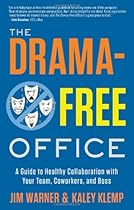
The Drama-Free Office: A Guide To Healthy Collaboration With Your Team, Coworkers, And Boss By Jim Warner, Kaley Klemp

The Drama-Free Office: A Guide to Healthy Collaboration with Your Team, Coworkers, and Boss

The Drama-Free Office: A Guide To Healthy Collaboration With Your Team, Coworkers, And Boss By Jim Warner, Kaley Klemp

List Price: $14.95
Price: $10.17 & eligible for FREE Super Saver Shipping on orders over $25. Details

Availability: Usually ships in 24 hours
Ships from and sold by Amazon.com

48 new or used available from $8.26

Average customer review:
(13 customer reviews)

Product Description

Free your workplace from drama dysfunction with these proven tools for increased office efficiency, harmony, and productivity.

In The Drama-Free Office, authors Jim Warner and Kaley Klemp interweave humorous and relatable case studies with the three key skills you'll need for managing office saboteurs--be they subordinates, coworkers, or the boss. You will see your coworkers (and yourself) in this entertaining and practical blueprint for addressing the dramatic behaviors that cripple so many teams.

The authors' research draws on years of experience working with more than 2,500 CEOs and their executive teams. They define the four major drama roles--the Complainer, the Cynic, the Controller, and the Caretaker--found in most organizations and lay out a detailed roadmap to help you:

  • Skillfully initiate difficult conversations and defuse dramatic moments
  • Reclaim the time, energy, and resources wasted in drama-riddled meetings and interactions
  • Reduce your own dramatic tendencies and take control of your work life
  • Create and sustain a collaborative, authentic, and fun work environment
Product Details
  • Amazon Sales Rank: #391000 in Books
  • Published on: 2011-07-01
  • Original language: English
  • Number of items: 1
  • Dimensions: .62" h x 5.56" w x 8.51" l, .64 pounds
  • Binding: Paperback
  • 160 pages
Editorial Reviews

Review
''Consultants Warner and Klemp have made a career out of working with leaders and professionals in large and small settings to help keep different personalities working together peacefully. Drama-prone associates sap energy from the organization, and the authors have created a program to ''diagnose the drama disease,'' manage it, and cure it. Through the framework of a fictional Riva Corporation case study, they track a team leader dealing with her boss and four difficult team members. Each of the drama queens displays one of the four sabotaging roles--the Complainer, the Cynic, the Controller, and the Caretaker. They recommend becoming drama-free yourself, first, then developing more effective relationships with each personality type and at all levels--superior, peer, and subordinate. The book's tone is conversational and clear, but its real advantage is in its practicality and breakdown of actionable steps--the authors delineate the seven steps of dealing with office divas, given any of the various drama types, and provide scripts for carrying out the steps. An excellent handbook for wrassling workplace drama to the ground before anyone goes postal.'' --Publishers Weekly

''With such an expert, well-articulated guidebook, managers and others will find comfort in knowing they're not alone in dealing with difficult personalities in the office. Best of all, they'll now have tools for turning toxic behavior into collaborative efforts.'' --ForeWord Reviews

''A quick-and-easy read that seeks to dampen office drama and ramp up efficiency.'' --Kirkus Reviews

''Describing cases true (but disguised) and hypothetical, Waner and Klemp employ realistic dialogue and solutions. Charts and a variety of tips guide readers visually. Obviously well-schooled in issues of corporate life, Warner and Klemp encourage cool heads to defuse almost any situation.'' --Booklist

About the Author
Jim Warner and Kaley Klemp are devoted to guiding corporations, family businesses, professional partnerships, and other organizations on how to expand their leadership skills, while fostering enduring authenticity within their teams. Whether for entire corporations, executive teams, small groups, couples, or individuals, Jim and Kaley are experts in creating collaborative, productive interactions.

Customer Reviews

Most helpful customer reviews

6 of 6 people found the following review helpful.
5Practical, Precise, Powerful!
By MDT
Jim and Kaley are masters at diagnosing and dealing with the common energy draining attitudes and behaviors that create dysfunctional teams of all types. Drama-Free Office is superb in exploring and explaining the symptoms and types of dysfunction and then HOW TO DO something about it in an efficient, effective, and lasting manner. I have used their methods and models with tremendous success working with elite sports teams and corporate executive teams. Their insights and practical approach to inspiring collaboration and cohesion is essential to any leader or manager wanting to build a winning and successful team.

6 of 6 people found the following review helpful.
5Easy to read and understand, and it works!
By Frank Buonanotte
Jim Warner and Kaley Klemp are without peers when it comes to understanding the personalities that create unintentional but extremely harmful "drama" in every organization. Their easy to read and understand book provides a step by step approach to effectively dealing with those personalities and creating a productive and fun work environment. This simple to read and easy to understand book will show you how to effectively deal with the personalities that create drama in every organization. I have already used their suggested methods and achieved stunning results.

5 of 5 people found the following review helpful.
5Extraordinary
By AAH
This book may be about offices and yet can be used in any/every relationship. If you are daring enough to live drama free at work and at home, read this book.

http://astore.amazon.com/amazon-book-books-20/detail/1608321177