Tuesday, October 23, 2012

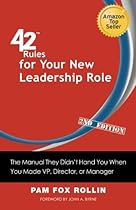
42 Rules For Your New Leadership Role (2nd Edition): The Manual They Didn't Hand You When You Made VP, Director, Or Manager By Pam Fox Rollin

42 Rules for Your New Leadership Role (2nd Edition): The Manual They Didn't Hand You When You Made VP, Director, or Manager

42 Rules For Your New Leadership Role (2nd Edition): The Manual They Didn't Hand You When You Made VP, Director, Or Manager By Pam Fox Rollin

List Price: $19.95
Price: $14.36 & eligible for FREE Super Saver Shipping on orders over $25. Details

Availability: Usually ships in 24 hours
Ships from and sold by Amazon.com

12 new or used available from $14.36

Average customer review:
(14 customer reviews)

Product Description

42 Rules for Your New Leadership Role (2nd Edition) describes practical and effective actions for you to make a strong start at your new VP, Director, or Manager job. Drawing from extensive interviews with corporate leaders and the author's 20 years as a strategy consultant and executive coach, these rules form the manual they forgot to hand you when you got that promotion or offer letter.

Topics include how to gain cooperation from your team, read the business culture at your new level, tee up smart "quick wins", show others how to work with you, assess the business risks in your new role, make the most of your strengths without overdoing it, work around your weaknesses, use team screw-ups to your advantage, redesign your undoable job, and stay focused on your plan when everyone wants you to fight fires and solve the problems on their desks.

Pam gives you specific guidance for each step of those first few critical months. Her recommendations are shaped by current and classic leadership research, as well as fresh insight from her interviews with executives and surveys of leaders at all levels. With her background as executive coach to top Silicon Valley companies, corporate strategist with Bain and Accenture, and Guest Fellow at Stanford GSB's Center for Leadership Development and Research, Pam translates the experiences of thousands of leaders into easy-to-read guidance.

Let this book remind you what you did right before, help you avoid common missteps that cause leaders to stumble, and give you new strategies for acing those critical first months. Adjust what you find here to serve team needs, market condition, cultural context, your goals and your personal leadership style.

Buy this book when you're making a step up, moving to a new organization, or for your friends as they move up. This book is also an ideal reference for executive coaches, HR business partners, management trainers, executive assistants, and others who help new leaders be successful.

Product Details
  • Amazon Sales Rank: #164229 in Books
  • Published on: 2012-10-03
  • Original language: English
  • Number of items: 1
  • Dimensions: .36 pounds
  • Binding: Paperback
  • 134 pages
Customer Reviews

Most helpful customer reviews

6 of 7 people found the following review helpful.
5Practical and thoughtful advice that works
By S. Cipresse
Pam Fox Rollin offers clear and practical advice that fits within ones own personal style. These aren't transformations or tricks but solid suggestions from someone who understands how organizations work and has helped countless leaders become effective and satisfied with their roles. Whether you are leading a project, a department, a company, a volunteer group, a community discussion, a sports team, or your own family, Ms. Rollins words of wisdom will ring true and help you find the path to leadership practices that work for you and your team.

2 of 2 people found the following review helpful.
5A Blessedly Short Little Book With A Lot of Succinct Advice
By Christina Strauch
There must be 300 books written about how to succeed as a new leader. Why would you buy this one?
1. It's short and to the point. Rollins covers pretty much everything you need to know in just over 100 pages.
2. It's simple. No business jargon. It's written in a breezy, accessible style.
3. It addresses more than just success at work. Rollins discusses subjects like not taking yourself so seriously, how to enjoy your work, and how to be a force for good. It's not all about work performance.
4. If you want to read more, the author has included additional resources and articles on her website that expand on the two pages (yes! only 2 pages!) she spends on each rule.

It's hard to break out of obscurity in the book business. Everyone can (and is) writing books. This one is actually worth reading.

4 of 5 people found the following review helpful.
5Leadership Success
By Ted Ira
"42 Rules for Your New Leadership Role" provides a solid foundation for leadership success for any new role. It is based on real world challenges and proven techniques and strategies to effectively manage transitions to new manager, director, or VP. Rule 28 / Launch 1:1's that actually drive performance has been critical to me in managing a geographically diverse sales team to successfully exceed our sales targets and maintain individual and team morale.

http://astore.amazon.com/amazon-book-books-20/detail/1607731010


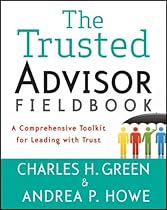
The Trusted Advisor Fieldbook: A Comprehensive Toolkit For Leading With Trust By Charles H. Green, Andrea P. Howe

The Trusted Advisor Fieldbook: A Comprehensive Toolkit for Leading with Trust

The Trusted Advisor Fieldbook: A Comprehensive Toolkit For Leading With Trust By Charles H. Green, Andrea P. Howe

List Price: $27.95
Price: $16.36 & eligible for FREE Super Saver Shipping on orders over $25. Details

Availability: Usually ships in 24 hours
Ships from and sold by Amazon.com

49 new or used available from $11.99

Average customer review:
(18 customer reviews)

Product Description

A practical guide to being a trusted advisor for leaders in any industry

In this hands-on successor to the popular book The Trusted Advisor, you'll find answers to pervasive questions about trust and leadership—such as how to develop business with trust, nurture trust-based relationships, build and run a trustworthy organization, and develop your trust skill set. This pragmatic workbook delivers everyday tools, exercises, resources, and actionable to-do lists for the wide range of situations a trusted advisor inevitably encounters. The authors speak in concrete terms about how to dramatically improve your results in sales, relationship management, and organizational performance.

Your success as a leader will always be based on the degree to which you are trusted by your stakeholders. Each chapter offers specific ways to train your thinking and your habits in order to earn the trust that is necessary to be influential, successful, and known as someone who makes a difference.

  • Self-administered worksheets and coaching questions provide immediate insights into your current business challenges
  • Real-life examples demonstrate proven ways to "walk the talk"
  • Action plans bridge the gap between insights and outcomes

Put the knowledge and practices in this field book to work, and you'll be someone who earns trust quickly, consistently, and sustainably—in business and in life.

Product Details
  • Amazon Sales Rank: #13039 in Books
  • Published on: 2011-11-15
  • Original language: English
  • Number of items: 1
  • Dimensions: 9.25" h x .51" w x 7.44" l, 1.09 pounds
  • Binding: Paperback
  • 288 pages
Editorial Reviews

From the Back Cover

A practical guide to being a trusted advisor for leaders in any industry

Your success as a leader depends on your stakeholders' trust. In this hands-on companion to the bestselling The Trusted Advisor, you'll find actionable tools, exercises, and resources for the situations that any leader inevitably encounters. Put them to work, and you'll earn trust quickly, consistently, and sustainably—in business and in life.

"Leaders and aspiring leaders understand the central importance of trust-based relationships. The Trusted Advisor Fieldbook is a practical guide for leaders at all levels in building and maintaining relationships with clients and colleagues. Success requires this critical asset."

—Jim Quigley, former CEO of Deloitte Touche Tohmatsu Limited

"This is an extensive and in-depth collection of practical tools and exercises that will help anyone improve his or her ability to earn trust. A major contribution." —David Maister, coauthor of The Trusted Advisor

"This book is a really valuable resource for anyone who needs to sharpen their trust-building skills—and who doesn't? It's packed with practical tools and ideas." —Matt Nixon, VP Organisation Effectiveness, Royal Dutch Shell

"Everyone talks about being a 'trusted advisor,' but few people have real science behind it. Green and Howe have got experience, data, and perspective; they don't shy from the really difficult tasks in client relationships. We have found them to bring practical, tactical expertise to the ideas already developed in The Trusted Advisor and Trust-Based Selling." —Mark Hawn, Managing Partner, Accenture

"When The Trusted Advisor published in 2000, I called it a brilliant and practical book. The Trusted Advisor Fieldbook is even more practical—and instructive—on how to develop trustworthiness, both in yourself and your organization." —Tom Peters, coauthor of In Search of Excellence

About the Author

Charles H. Green is founder and CEO of Trusted Advisor Associates. The author of Trust-Based Selling and coauthor of The Trusted Advisor, he is a noted speaker on trust in sales, within organizations, and in external business relationships.

Andrea P. Howe is part of the leadership team of Trusted Advisor Associates. She is also the founder and President of BossaNova Consulting Group. A veteran consultant and seminar leader, Andrea specializes in serving global professional services firms.

Customer Reviews

Most helpful customer reviews

8 of 8 people found the following review helpful.
5Trust is the bedrock of influence
By J. F. Malcolm
Trust between individuals is one of the most essential and important ingredients of personal influence. If motivation is the fuel of persuasion, trust is its lubricant. Trust lowers risk; it opens communication; it makes decisions more efficient and effective.

Of course, you don't need a book to tell you that. The critical point is that trust is also within your control, and this excellent book by Charles H. Green and Andrea P. Howe shows you how to establish, accelerate, and maintain it.

Whether or not you are in sales, you exert influence and make a difference in others' lives when they take your advice--but even if you are always right it's no guarantee that people will take you advice. (And you don't have to have teenage kids for this to be true.) As the authors tell us, you have to earn the right to be right.

The Trusted Advisor Fieldbook shows you how by opening up the black box and exposing how the process works so that you can become more trustworthy to others. It then goes into specific practical detail on how to apply the trust principles in everyday situations, from different aspects of the sales cycle to personal and organizational relationships.

Most "how-to" books such as this provide value on three levels:
* Things you already "know" you should do but need reminding or prompting to do more of
* Things you kind of know how to do, but get expert instruction on how to do it better
* Things you thought you knew, but were wrong

The fieldbook has a lot of material in the first category, but to me the most important reminder is worth quoting at length:

"The goal of traditional selling is to convince the buyer to buy from you--the goal of trust-based selling is to help the buyer do what is right for him. The difference is a question of focus and motives. Helping, as distinct from closing, is other-focused, nonmanipulative and trust-enhancing."

I believe this quote could encapsulate the entire book, and because one of my pet causes is the professionalization of selling, I urge any salesperson reading this article to print this and post it somewhere that you can see it before any communication with a client or prospect. Even if you're not in sales, change the words slightly and they will apply equally to you.

In the second category, there are a number of specific situations, including presenting, selling to the C-Suite, and negotiating, where they give useful advice and excellent insights. Most importantly, the examples of the phrases they provide to illustrate their points ring true, and demonstrate that the authors have very deep experience in these areas.

As to the third category, I pride myself on being right, and this is awkward to admit, but I may have to reconsider my traditional advice to keep price out of the discussion until the end. The authors make a convincing case that this just adds to the tension and angers the potential buyer; it's best to let the buyer control when the topic comes out in the discussion.

Finally, I like the format of the book. In the form of a fieldbook, it provides numerous questions, forms and suggestions to think further about how to apply their ideas to your own particular situation. The "list of lists" at the end is also helpful; I found it easier to read them before beginning a new chapter.

I am in the business of teaching people how to be more influential, and I personally learned a lot from this book. I trust you will get a lot of value out of it as well.

4 of 4 people found the following review helpful.
5Every leader should read this book
By Kristi Hedges
As a business owner of a consulting firm for more than a decade, I was introduced to The Trusted Advisor and Charles H. Green's work on trust years ago and finally understood what relationship-based sales really meant. I've introduced those trust concepts to many people since then and have seen numerous light bulbs go off. Most people don't talk about trust in a diagnostic and prescriptive way, so these concepts are a breath of fresh air.

In the Trusted Advisor Fieldbook, Green and Howe offer a straightforward, practical toolkit for building trust across situations like business development, networking, C-suite selling, and internal communications. They include useful lists and exercises to use as reference for building relationships in multiple settings. For example, there's a 5-point checklist for preparing for meetings. With so many wasteful meetings, 10 minutes of prep can dramatically shift the outcome. There are also lots of tips for sales here, including how to strengthen trust instead of hard selling. This often runs counter to what you hear in sales trainings, but is definitely my personal experience for what works.

Finally, what I find personally most helpful is the advice around strengthening relationships that aren't working. I wish I'd had this book as a new manager, struggling to motivate employees! For anyone who has had an employee they are trying to "turn around," you'll find inspiration in the book.

As a leader, if you don't have trust, you'll never get buy-in. I felt so strongly about the ideas in this book that I included an entire chapter in my own book about them. I saw what a difference they'd made in my life, and wanted to share them with anyone seeking to influence others.

This book is a must-read for leaders.

Kristi Hedges, author, The Power of Presence: Unlock Your Potential to Influence and Engage Others

4 of 4 people found the following review helpful.
5Definitely a book to keep in arm's reach
By Alison Lester
I got such a strong feeling of experience, openness and commitment from the authors of this book as I read it - a real feeling that they are walking their talk, developing our trust in them all along the way. When I read business-related self-help books, I'm always on the lookout for the padding that often is a hallmark of the genre, and I didn't find it here. What I did find was a very rich mine of information, and a regular return to the most important components of trusting relationships. The aim is clear, the details are helpful and memorable, and the opportunity for reflection and real work on self-development is excellent.

So many sections seem to stand alone very nicely that it is dangerously tempting to just dip in and out. Two that stood out for me were the one on maintaining trust when you don't agree, and also the chapter on building trust at a distance (so important now that so many of us are working in virtual teams). But the book is an importnat whole, with a great deal of know-how and passion behind its structure and its meaning. Read the whole thing.

While they've got a very welcome final section called their "List of Lists" which itemizes all the concepts, recommendations, and step-by-step approaches of the book, by that time most readers will have absorbed the understanding that developing trust is not about following a behavioral checklist, and that trust-based relationships cry out for principles, rather than processes.

http://astore.amazon.com/amazon-book-books-20/detail/1118085647


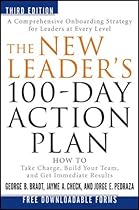
The New Leader's 100-Day Action Plan: How To Take Charge, Build Your Team, And Get Immediate Results By George B. Bradt, Jayme A. Check, Jorge E. Pedraza

The New Leader's 100-Day Action Plan: How to Take Charge, Build Your Team, and Get Immediate Results

The New Leader's 100-Day Action Plan: How To Take Charge, Build Your Team, And Get Immediate Results By George B. Bradt, Jayme A. Check, Jorge E. Pedraza

List Price: $25.95
Price: $15.28 & eligible for FREE Super Saver Shipping on orders over $25. Details

Availability: Usually ships in 24 hours
Ships from and sold by Amazon.com

52 new or used available from $13.80

Average customer review:
(42 customer reviews)

Product Description

The authoritative updated and revised action plan for leaders entering new roles

Your first 100 days in a new leadership role are critical to the success of your mission, your relationship with your new team, and your career. Turnover is high among new leaders who "didn't work out" and the costs to them and their organizations are dramatic. The solution is for every new leader to have an "onboarding" plan. This updated and revised third edition of the bestseller The New Leader's 100-Day Action Plan delivers expert guidance to prepare executives for their new leadership roles, accelerate their results, and reduce turnover.

With new chapters and sample action plans, the third edition:

  • Helps you assess the internal political culture you'll be facing
  • Explains why your new job doesn't start on "Day 1" but on the day you accept the offer--and how to use the valuable time before "Day 1"
  • Explains the "BRAVE" approach to motivating your new team members by understanding their Behaviors, Relationships, Attitudes, Values, and Environment
  • Includes downloadable forms to help you plan
  • Provides advice for your bosses—so they'll know how to help you succeed

The third edition also includes a new 100-Hour Action Plan for crisis situations, which has been adopted by the American Red Cross. The new edition also explains how to use social media and other communication tools to reach and motivate your stakeholders.

Discover the right approach for your new role and engage your new colleagues by fully understanding the unwritten rules of the new context. The New Leader's 100-Day Action Plan helps deliver better results faster.

Product Details
  • Amazon Sales Rank: #6484 in Books
  • Published on: 2011-10-04
  • Original language: English
  • Number of items: 1
  • Dimensions: 9.33" h x 1.10" w x 6.30" l, 1.21 pounds
  • Binding: Hardcover
  • 352 pages
Editorial Reviews

From the Inside Flap
Your first 100 days in a new leadership role are critical. They determine the success of your mission, your relationship with your new team, and the trajectory of your career. Turnover is high among new leaders who "didn't work out," and the costs to them and their organizations are dramatic. However, the odds are in your favor, if you have a comprehensive onboarding plan.

This updated and revised Third Edition of the bestseller The New Leader's 100-Day Action Plan provides authoritative guidance to prepare exec-utives for an important transition and accelerate their results. Discover the right approach for taking charge in your new role, learn the key steps you should be making before Day One, and engage your new colleagues by fully understanding the organizational culture. This edition also adds a new 100-Hour Action Plan for crisis situations, which has been adopted by the American Red Cross.

With new chapters, sample action plans, and down-loadable forms to help you plan, this invaluable handbook will help you:

  • Assess the business context and internal political culture you'll be facing

  • Implement the "BRAVE" approach to motivating your new team members by understanding their Behaviors, Relationships, Attitudes, Values, and Environment

  • Provide advice for your bosses so that they'll know how to help you succeed

  • Use social media and other communication tools to reach and motivate your new stakeholders

The New Leader's 100-Day Action Plan will help you deliver better results faster. Ensure that you achieve all of your goals in your next leadership role by implementing an effective plan, starting even before Day One.

From the Back Cover
Praise for THE NEW LEADER'S 100-DAY ACTION PLAN

"What a book! New and experienced managers at every level will 'fly' with this programmed learning."
THE HONORABLE BRUCE S. GELB, former ambassador to Belgium; former vice chairman,Bristol-Myers Squibb; former president, Clairol

"I love this book and wish I had read it before stepping into my current leadership role. It provides a practical and indispensable road map to success that will help new leaders stack the odds in their favor. Read it—and don't be among the 40 percent of leaders who fail in the first eighteen months."
SANDY ROGERS, former marketing manager, Procter & Gamble and Apple Computer; former senior vice president, Enterprise Rent-A-Car

"The New Leader's 100-Day Action Plan offers practical tools and techniques for new leaders to follow. Leaders who use this book can expect impressive business and culture-building results."
JON BONITO, Senior Vice President, Bank of America; formerly of Coach and Pfizer

"One of the most basic, yet comprehensive books I've read regarding the do's and don'ts of a successful onboarding process. A must-read for all aspiring business leaders, first-time CEOs, and executives at every level of the organization. Also, a great tool for HR and talent management executives."
JOE GRIESEDIECK, former CEO, Spencer Stuart; Vice Chairman, Korn/Ferry International

About the Author
George B. Bradt has a unique perspective on helping leaders move into complex, high-stakes new roles. After graduating from Harvard and Wharton (MBA), George spent two decades in sales, marketing, and general management around the world at companies including Unilever, Procter & Gamble, Coca-Cola, and then J.D. Power as chief executive of its Power Information Network spin-off. Now, he is a principal of CEO Connection and managing director of PrimeGenesis, the executive onboarding and transition acceleration group he founded in 2002. George can be reached at gbradt@primegenesis.com.

Jayme A. Check offers a dynamic and global perspective gained from executive roles in firms ranging from start-ups to the Fortune 500 and leadership positions in sales, business development, and general management at companies including J.P. Morgan, Guidance Solutions, and Brice Manufacturing. In addition to being a PrimeGenesis founder and author of its onboarding and transition acceleration methodology, Jayme is President of Quantum Leap Associates, a firm focused on providing executives worldwide with authentic and measurable leadership skills. He earned a BS from Syracuse University and an MBA from UCLA's Anderson School. Jayme can be reached at jcheck@primegenesis.com.

Jorge E. Pedraza, PhD, is a former professor and a founding partner of PrimeGenesis. He helped develop the PrimeGenesis onboarding and transition acceleration methodology and has since deployed it to found and build Unison Site Management, the nation's leading independent cell site acquisition and management company. Jorge can be reached at jpedraza@primegenesis.com.

Customer Reviews

Most helpful customer reviews

66 of 70 people found the following review helpful.
5All Performance, Not Hype
By Stephen Denny
You won't find this book touted in any web 2.0 blogs, business 2.0 magazines, or pundit 2.0 panel discussions at Demo. It lacks snarky, pithy and/or bloviating commentary. This is an un-hip book that focuses hedgehog-like on your being successful in your new job.

The New Leaders 100-Day Action Plan gives us an insight into an area of our business lives that has not been given enough attention, namely what the authors call, the 'executive on-boarding' experience. Many, many new executives fail in new roles, not because they are incompetent but because they are set up for failure before their arrival.

The invaluable lessons within this book include: 1) your first day begins well before your first day, 2) negotiate after your offer and before your acceptance, 3) know your stakeholders before you start -- get all of these issues ironed out before you accept the job; and many others.

I won't do the standard "Amazon book report review" here, but if you're in a position to transition into a new role, this is a book you really need to read, quickly.

I joined a company many years ago -- hot brand name, great technology, high riding stock price -- only to find out upon arrival that 1) the job I was promised wasn't agreed upon by other stakeholders, 2) that there were others in the company who also had 'my job', and 3) my boss was about to get fired. I left after seven months. Had I spent 15 minutes with this book, I could have unlocked a few of these secrets ahead of time. You live and learn, but you don't always have to learn the hard way.

Save yourself from having to learn the hard way. Highly recommended, quick read.

54 of 59 people found the following review helpful.
5The only complete book for starting a new job as a leader from A-Z
By M and K
We bought this book along with the "The First 90 Days" and read them side by side.

Pro:
-Delves into what questions to ask before the interview through the first several months... I found no other book that is this complete from beginning to end
-Promotes using the time opportunity BEFORE you start a job and in my experience is a major differentiator that I've been able to surprise and delight. Set up pre-meetings, arranging for email/phone and a place to sit, etc. as a chance to listen and learn without the pressure to perform and to begin forming alliances.
-Serves as a handy reference... excellent chapter summaries and a strong executive summary with a timeline and a meaty chapter outline are helpful both now and in the future
-Checklists are excellent and abundant, boiling thoughts down to the most essential elements in a more memorable (less verbose) way
-Checklists include not only job-related tips, but also cover moving-related items as well... handy!
-There are many good tips interspersed throughout the book that are good reminders of the basics you need to adhere to in order to be successful
-Breaks the "sink or swim mindset" often associated with starting a new position
-Excellent use of forms for introspective Q&A; creatively offers forms that can even be downloaded from the internet, a clever and fairly unique offering

Con:
-I think that assessments of what environment you'll be stepping into are underdeveloped and/or understated. You need to know if the team is under performing, just too new, etc.

Bottom line: Highly recommended as a must have text for the aspiring business professional. This book effectively serves as warning, motivation, and how to get results in your new role.

20 of 20 people found the following review helpful.
5Think Productive Condensed Wisdom
By J. B. Golliday
This is an amazing book! Actually, it's a distillation and synthesis of the most relevant content of many books, combined with lots of unique and very valuable insight from the authors, and arranged in a highly useful order.

Key eye-openers are:

*The importance of starting before Day One and how to do it

*The critical success factors of Day One

*The sequence, timelines and guidelines for the critical events in the first 100 days - and how much time you haven't got

Even on established concepts (e.g. establishing shared purpose, building the right team, conducting milestone meetings), this book adds valuable perspective and many effective practices to improve your probability of success.

While the book focuses on the essential steps to succeed in a new job in a new company, it's equally useful for consultants taking on a new assignment or leaders taking on new responsibilities in their current company.

The only downside is the "Ouches" you'll feel when you realize what you did wrong, and what you should have done, in prior experiences that could have gone better.

http://astore.amazon.com/amazon-book-books-20/detail/1118097548

To Get Uninterrupted Daily Article(s) / Review(s) Updates; Kindly Subscribe To This BlogSpot:- http://ZiaullahKhan.Blogspot.com/ Via "RSS Feed" Or " Email Subscription" Or
"Knowledge Center Yahoo Group
".
Amazon Magazine Subscriptions Amazon Books Amazon Kindle Store
Amazon Everyday Low Prices, Sales, Deals, Bargains, Discounts, Best-Sellers, Gifts, Household Consumer Products


Monday, October 22, 2012

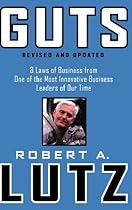
Guts: 8 Laws Of Business From One Of The Most Innovative Business Leaders Of Our Time By Robert A. Lutz

Guts: 8 Laws of Business from One of the Most Innovative Business Leaders of Our Time

Guts: 8 Laws Of Business From One Of The Most Innovative Business Leaders Of Our Time By Robert A. Lutz

List Price: $29.95
Price: $23.50 & eligible for FREE Super Saver Shipping on orders over $25. Details

Availability: Usually ships in 24 hours
Ships from and sold by Amazon.com

62 new or used available from $10.30

Average customer review:
(7 customer reviews)

Product Description

"Read it for no other reason than to learn Bob's Seven Immutable Laws of Business. . . . This is vintage Bob-contrarian, thoughtful, and he's really fun to read."
Forbes

In this edition of Bob Lutz's bestselling account of the business philosophy with which he revolutionized Chrysler and much of the automotive industry, Lutz reveals his unique brand of creative management. Readers will learn many lessons herein, including why the key to success in any business is maintaining a positive tension between the creative minds and the buttoned-up financial minds, and how to attract, motivate, and strategically deploy each type throughout an organization. This book features a new introduction and an epilogue in which Lutz introduces an eighth law that helps today's business leaders put his famed Seven Immutable Laws of Business into sharper perspective.

Robert A. Lutz (Scarsdale, NY) is General Motor's Vice Chairman of Product Development and Chairman of GM North America.

Product Details
  • Amazon Sales Rank: #716127 in Books
  • Published on: 2003-09-26
  • Original language: English
  • Number of items: 1
  • Dimensions: 9.41" h x .91" w x 6.38" l, 1.21 pounds
  • Binding: Hardcover
  • 256 pages
Editorial Reviews

Review
"Read it for no other reason than to learn Bob's Seven Immutable Laws of Business.... This is vintage Bob--contrarian, thoughtful, and he's really fun to read."

From the Inside Flap
What do you do with a book that's filled with controversial, counterintuitive, and downright contrarian statements that stand conventional wisdom on its ear and claim, lightheartedly, to be immutable "laws of business?" If the author is Robert Lutz, you read the book very carefully, probably several times, learn all of the "laws" by heart, and follow them to the letter every chance you get. You also find yourself laughing out loud, shaking your head in wonder, and nodding in agreement.

Revised and updated, this is a maverick's primer on the business philosophy that revolutionized Chrysler and is now powering dramatic new product development at General Motors. In it, Lutz reexamines his iconoclastic maxims to see how they have withstood the test of time. With hard evidence, hilarious anecdotes, and his characteristic frankness, the high-flying chairman of GM North America challenges his own contention that businesses should deliberately construct a "schizophrenic" corporate culture that combines rock-solid financial controls with a highly creative, no-holds-barred product development process.

Concluding that his laws have served him well and are generally reliable in any business situation and any industry, he goes on to explain why:

  • The customer isn't always right
  • The primary purpose of business isn't "to make money"
  • When everybody else is doing it, don't
  • Too much quality can ruin you
  • Financial controls are bad
  • Disruptive people are an asset
  • Teamwork isn't always good

If Lutz's first seven laws aren't provocative enough for you, wait until you read the new one that he formulated for executives charged with managing mergers and takeovers or rehabilitating failing companies. Suffice it to say, it involves the use of a flamethrower.

Enriched by Lutz's deep store of business wisdom acquired over three-plus decades in the automobile industry, Guts combines a fascinating, behind-the-scenes look at some of the most important events in the industry's history, with an outside-the-box view on the nature of leadership and success. This insightful, unorthodox, and thoroughly enjoyable discourse will change the way you think about product development and marketing, financial management, strategy, and managing people. It will redefine the way you think about success–and make you all the more eager and likely to achieve it.

From the Back Cover
Praise for GUTS, Revised and Updated

"Bob Lutz is the only man in history to rise to the top at all three Detroit automakers–Ford, GM, and Chrysler–and Guts reveals the kind of thinking that got him there. From a guy who didn't graduate from high school until he was twenty-two comes as good a business book as you will ever find, and one that applies in any industry. Go Bob, go."
–Jerry Flint, Forbes columnist, and 2003 winner of a Loeb Award for Distinguished Business and Financial Journalism

"Bob has always been a charismatic leader, but he became a true businessman when he joined Chrysler. Guts is typical Lutz–it's controversial, thought-provoking and, in the final analysis, it makes good business sense."
–Harold "Red" Poling, retired CEO, Ford Motor Company

"Bob has the rare ability to communicate with everyone on the automotive ladder–from the engineer to the guy on the assembly line to the designer . . . even the idiotic Hollywood celebrity who just likes to go fast! And whether you're in the business of building washing machines or just writing jokes, Lutz's laws work."
–Jay Leno, Hollywood celebrity and host of The Tonight Show

"In a world in which managerial creativity and discipline have become polar opposites, Guts presents a dynamic synthesis of both forces that will enable readers to challenge the status quo and make their organizations far more competitive."
–Stephen Girsky, Managing Director/Senior Global Automotive Analyst, MorganStanley

"Guts is about business, leadership, and life, and reaches well beyond the boundaries of the auto industry. Lutz's laws of business, updated for today's leaders, are key ingredients to a twenty-first-century road map for success. And it's also a great read, delivered with the passion, integrity, and strength of character so important to making good things happen in a turbulent world."
–David Cole, Chairman, Center for Automotive Research

"I've known Bob Lutz for over thirty-five years, and Guts reflects all the qualities that have made him one of the great car guys of our generation. As always, he tells it like it is, and that's what makes his book such a compelling read."
–Lee Iacocca, Lee Iacocca & Associates

Customer Reviews

Most helpful customer reviews

9 of 9 people found the following review helpful.
5Callin' It Like He Sees It
By Matthew Dodd
This book is a refreshing collection of straightforward thoughts and observations about business and leadership from one of the most seasoned, creative, colorful, and highly successful executives of our time-Robert A. Lutz, Chairman of General Motors North America. This revised and updated book contains the blunt, honest wisdom of an authentic maverick leader in the form of his laws of business that have stood the test of time over his thirty years in the car industry, and his rise to the top of Ford, General Motors, and Chrysler.

Organized into three parts, the book opens with the story of Chrysler's second turnaround in the early 1990s. Lutz was part of the executive team that conceived and brought to life one of the most famous and successful muscle cars of all-time: the Viper. Part Two is an in-depth review and validation of Lutz's eight immutable laws of business. The final part is Lutz's corollaries to his laws, or, as he calls them, "The Rest of the Story!"

A former Marine with an ongoing, life-long love affair with the Marine Corps and its leadership practices, Lutz presented many business and leadership concepts and personal anecdotes that reflected and blended his business and Marine Corps backgrounds. From his beliefs about the need for attention to detail and critical performance evaluations, to his emphasis on holistic, empowered, cross-functional teams and the value of a culture that nurtures middle-management dissent of conventional wisdom in open forums, Lutz's insights and experiences were both entertaining and informative.

If the following lists of Lutz's business laws and corollaries even sound remotely appealing to you, read this book - you will not be disappointed.

Lutz's Immutable Laws of Business:
LAW #1: The Customer Isn't Always Right
LAW #2: The Primary Purpose of Business Is Not to Make Money
LAW #3: When Everybody Else Is Doing It, Don't!
LAW #4: Too Much Quality Can Ruin You
LAW #5: Financial Controls Are Bad!
LAW #6: Disruptive People Are an Asset
LAW #7: Teamwork Isn't Always Good
LAW #8: When You Inherit a Really Big Rat's Nest, Don't Try to Lure Them Out With Food. Use a Flamethrower

Lutz's Corollaries
*It's Okay to Be Anal Sometimes
*A Little Fear, in Reality, Ain't All That Bad
*Leadership Is All About Common Sense, Which, Unfortunately, Is Not All That Common
*Some Squeaky Wheels Don't Get the Grease, or Pros and Cons of Being a Change Agent

3 of 3 people found the following review helpful.
4Clear Cut And To The Point Business Advice
By J. C. Payne
This book presents the 8-plus rules on how to run a successful business (and life) from a former GM Vice Chairman of Product Development. Robert Lutz presents a highly autobiographical, hypercritical, look at his career and how these laws he developed for himself can apply to anyone.

While the information may be a little dated, (the book was originally published in 1998, republished in 2003) the principles are universal and apply well to anyone looking for a little coaching in business. It is a lot easier to get into the book if you are a fan of cars, and to a lesser extent, military history. Lutz peppers a lot of his life experiences to get the point across, admitting freely that he wasn't always (and sometimes still isn't) the best example for focus, discipline, or innovative thinking. His own experiences with failing in school, joining the US Marine Corps, and dealing with car companies in Europe and the US helped to shape his 8 rules and 4 corollaries.

The most interesting part is a very candid and detailed breakdown of the creative process that gave birth to the Dodge Viper, and the admission that it wasn't exactly a car that was begging to be made, but by making it, it changed the culture of a car company and like any fine work of art, found its proper audience.

2 of 2 people found the following review helpful.
4Great Insider View of Chrysler
By Doug Aurand
Guts by Bob Lutz is a great insiders view of how Chrysler developed their innovative Platform Teams and the thinking that went into that process. The 8 Laws are funny with real world examples, and enlightening

Definitely a "must read" for people who want to learn more about "out of the box" thinking

http://astore.amazon.com/amazon-book-books-20/detail/0471463221
To Get Uninterrupted Daily Article(s) / Review(s) Updates; Kindly Subscribe To This BlogSpot:- http://ZiaullahKhan.Blogspot.com/ Via "RSS Feed" Or " Email Subscription" Or
"Knowledge Center Yahoo Group
".
Amazon Magazine Subscriptions Amazon Books Amazon Kindle Store
Amazon Everyday Low Prices, Sales, Deals, Bargains, Discounts, Best-Sellers, Gifts, Household Consumer Products


Thursday, October 18, 2012

12 Signs That You're A Cowardly Leader

We all feel fear. What separates the proverbial men from the boys, and women from the girls, is how we respond to our fears. Courageous leaders face what needs to be faced and do what needs to be done. Cowardly leaders make excuses, hide their heads in the sand, and generally take the easy way out. All actions have consequences. So does lack of action. With the margin for error so slim in today's workplace, you want to make sure you're thinking as coolly and clearly as possible.

You don't have to be an out-and-out coward to let fear impact your leadership effectiveness. Many people are unaware of how profoundly fear influences their decision making.

Are you leading from a place of fear? See if the following apply to you:

  • You frequently take the easy way out. You avoid taking bold, decisive action because it makes you uncomfortable. Then, you rationalize why you didn't do what you really needed to do: I wanted to go to the national trade show, but we just couldn't get the prototype ready by the deadline…or I've always thought we should take part in the green initiative, but the CEO would just shoot down the suggestion, so there was no point in bringing it up. Generally, such rationalizations boil down to fear. What if you unveiled the prototype at the trade show and it flopped? What if you approached the CEO with your green initiative idea and he rejected you—or worse, what if he didn't reject you and then you had to make it work? It's easier to avoid taking action (at least in the short term), but it's also a sure path to mediocrity and stagnation.
  • You pretend you don't know what you actually know. You pretend you don't know about opportunities in order to avoid risk. You pretend you don't know that a high performer is behaving badly and making other employees unhappy. You pretend that your biggest client isn't crushing employee morale. Maybe, you even pretend you don't know it's time for you to move on. All of this pretending allows you to avoid pain and feel good in the short term, but it exacts a heavy price over time. There is always a price to be paid for necessary actions not taken. Your job as a leader is to look reality in the face and accept it so that you can make the tough decisions that need to be made.
  • You fall victim to "shiny ball" syndrome. Most of us are easily distractible—easily falling prey to every shiny thing that comes into view. In fact, we often don't want to say no to distractions because what we should be focusing on may be difficult, unpleasant, or anxiety producing. Anyone can stay busy. It takes real courage and fortitude to stay focused and on task. I heard a shocking statistic recently: The average Sunday edition of the New York Times has more information in it than the average human being in the 1700s received during his entire lifetime. If we can't achieve focus and manage the deluge of information that comes at us every day, we'll drown in the chaos. We'll fail to do the important things. And we'll fail as leaders.
  • You ignore what's causing "weight and drag" in your company. Maybe it's a policy, a person, or a mindset that's holding you or your team back from optimal performance. Ask yourself now: What am I doing, or not doing, that is adding weight and drag? Am I refusing to make a decision, waiting to hire an assistant, delaying a hiring or firing issue? At the core of your job is your role as an obstacle remover. Be courageous: remove the obstacles you can and work around the ones that remain so that you can stay productive, directed, and focused.
  • You refuse to balance your head and your gut. It takes both facts and intuition to analyze situations effectively. Many leaders stick to the analytic style they're most comfortable with. Courageous leaders understand that decisions that have a direct impact on people's lives require both aspects of analysis—and that means most of us need to step outside our comfort zones when it's time to make decisions.
    Your leadership will be enhanced, the performance of your team will improve, and they will likely trust you more if you lead with both your head and your gut. They are like two sides of the same coin.
  • You hide behind the "I'm not quite ready" excuse. Leaders and organizations spend too much time getting ready to be ready to get ready to almost get ready to be ready to get ready. Then they form a committee or a task force (which is just a committee on steroids) to evaluate more and look into the situation more so that they can really be ready. Getting overly ready is a result of fear. You don't want to fail so instead you put off the moment of truth by perpetually getting ready. Should you prepare? Of course! Do your research? Yes. But stop hiding behind the "we aren't quite ready" curtain. Say, "Enough is enough," and just do it—even if conditions aren't perfect.
  • You see only the information that agrees with your beliefs. We all have a natural tendency to ignore information that contradicts our beliefs about the world, especially our negative beliefs. If we believe someone doesn't like us, we will see only those behaviors that support that impression. If we think we are bad at something, we will see only more evidence of that conclusion. This tendency is so strong that it blinds us to contrary evidence. As long as we don't see other possibilities we don't have to take action.
  • You're constantly blaming others. This is an energy-draining, counterproductive way of dealing with difficult circumstances. Blaming someone else puts you in the position of a victim who is not in control. Therefore, you won't take action to change your circumstances because it's someone else's problem. (How convenient, huh?). Victim thinking affects not just individuals but entire organizations. Acknowledging that you are ultimately responsible for the results of your life, thoughts, and actions creates a level of freedom not experienced by those who choose to blame others. It empowers you to act. Courageous leaders are driven by, even obsessed with, the imperative to eliminate excuse making and blame from themselves and their organizations.
  • You reward effort rather than achievement. It's a mistake to be too "soft" about expectations, to say, "Just do your best." People will not achieve just because you encourage and motivate them. Somebody must drive performance. Somebody must plant the flag on the hill and refuse to accept anything but success. That somebody is you. Courageous leaders lay out expected results in the most effective and humane way possible and are clear about the consequences of not meeting them. Bosses may worry about upsetting their employees, so they don't set high expectations. I believe in a respectful workplace where people enjoy their jobs and look forward to coming to work, but I am also in full support of less whining and more doing, less passing the buck and more personal responsibility, less explaining why you didn't and more showing how you did.
  • You're a helicopter leader. Accountability is a major buzzword for leaders. And it is important for leaders to keep people focused on what matters and so they can align performance with expectations. Unfortunately, some leaders think accountability means constantly standing over employees to make sure they're doing what they're supposed to be doing, in the way you think they should be doing it. This is not accountability; it's hovering. And it's yet another manifestation of fear. Helicopter leaders are afraid to let go because they believe the work won't get done if they don't oversee every detail. Either this fear is unfounded or it's a sign that employees really aren't capable of doing their jobs. The solution is simple: do your job and let them do theirs, or get rid of incompetent employees and replace them with people who can get the job done.
  • You solve all of your people's problems. Problem solving is a big part of leadership. It's also a big part of followership. Do not solve all of your followers' problems; don't even solve most of them. Remember that the more you are involved in solutions, the more likely it will be that your reports will become overly dependent on you. If they know you will come in and fix their problems, they will wait. They will also feel that you don't have confidence in them. Manage your anxiety and have a little faith in others. Your employees will rise to the occasion and you'll be a lot happier.
  • Mental clutter is keeping you from noticing. The more you fear, the more you try to do. The more you try to do, the more you have to think about. You have more meetings, more calls to make, more emails to read and send, and more commitments to obsess over. Once you let go of some of the fear, you can free up the time to do the things that truly inspire and invigorate you. These moments will be the times when you notice that your veteran sales rep needs you to back off a bit, or that your morning grumpiness is affecting everyone's enthusiasm. These will be the moments that show you how to motivate your followers and inspire them to greater success. These moments will refresh your ability to notice the rest of your life. Ultimately, you'll realize this may be the best reason of all to confront your hidden fears and vanquish your inner coward.

The ramifications of fear-centered leadership wreak havoc that extends beyond the workplace,. The anxiety that comes from not doing what you know deep down needs to be done—and from managing the fallout from your poor decisions—drains the energy you could be spending on friends, family, and the outside interests that make life worth living.

About the Author(s) :- Mike Staver is a business coach and speaker and is CEO of the Staver Group. He is a certified speaking professional (CSP), a designation held by fewer than 10% of professional speakers. His most recent book is Leadership Isn't for Cowards: How to Drive Performance by Challenging People and Confronting Problems (Wiley, 2012). His other published works include the book Do You Know How to Shut Up? And 51 Other Life Lessons That Will Make You Uncomfortable.

Thanks to Mike Staver / AMANET / AMA—American Management Association
http://www.amanet.org/training/articles/printversion/12-Signs-That-Youre-a-Cowardly-Leader.aspx


Overwork, Underwork And Depression

Of all the topics discussed during last Wednesday's presidential debate, the recession and the critical issue of job creation rightfully took center stage. Work is our livelihood, our identity, and the structure of our days; it is how we describe ourselves at parties when someone asks, "And what do you do?"

Of course work generates income, but it is, in other ways, immaterial.

If work lends a sense of self, meaning and purpose to our lives, what happens to our mental state when we are unemployed? In the context of a global recession, I can't help but wonder.

So, as any responsible public health student would do, I looked at the data.

It appears that this year's World Mental Health Day topic, depression, is a timely one. Depression is related to the economy and to unemployment in a number of ways, and the relationship manifests itself differently throughout the world.

But, in all, the economic climate poses a serious threat to mental health. Here are some examples.

  • A telephone survey carried out in Greece revealed a 36 percent increase in the reported number of attempted suicides between 2009 and 2011, a period of serious economic turmoil.1
  • Back in the U.S., analyses of data from the Epidemiologic Catchment Area panel revealed that, of employed respondents not diagnosed with major depression at first interview, those who became unemployed had over twice the risk of increased depressive symptoms and of becoming clinically depressed as those who continued their employment.2
  • On the flip side, overwork also effects health, sometimes severely. Take Japan, for example, a wealthy nation whose citizens work the longest hours of any industrialized country. Due to low base pay, many workers are forced to put in more overtime, holiday hours and night shifts, with occasional "voluntary" work for suggestion programs, employee-generated ideas to increase productivity.
  • Many Japanese also have homework (furoshiki zangyou, or "wrapped work") to do after they leave the office. In 2011, Japanese workers spent 26 percent of each day working, the highest of all 26 OECD countries.

    These trends help explain the problem of Karoshi, the Japanese term for death from overwork. Although depression in Japan might be a taboo topic, Karoshi is all too well known. The first case was recorded in 1969, when a 29-year-old man died of a stroke thought to be the result of the stress and exhaustion of extended work time coupled with ill health.5

  • Most Karoshi victims had been working more than 3,000 hours per year prior to their deaths. That comes to at least 58 hours per week, every week, each year. In 1994, the Japanese government's Economic Planning Agency in the Institute of Economics estimated that Karoshi causes 1,000 deaths per year in the 25 to 59 age group.6 But this number pales in comparison to the number of work-related suicides: In 2007, there were 2,207 work-related suicides in Japan, and the most common reason (672 suicides) was overwork, according to government figures.

Both overwork and underwork significantly affect depression and mental health in general.

I believe this is a structural problem that cannot be attributed to individual failings, and governments must play a larger role in regulating the job market to increase job growth. Stricter limits on work hours also are needed.

Depression and employment are strongly tied together; thus they must be considered simultaneously on a societal level, especially in the light of economic reform.

Thanks to Joanna Jungerman / PsychCentral / Psych Central
http://psychcentral.com/blog/archives/2012/10/10/overwork-underwork-and-depression/

To Get Uninterrupted Daily Article(s) / Review(s) Updates; Kindly Subscribe To This BlogSpot:- http://ZiaullahKhan.Blogspot.com/ Via "RSS Feed" Or " Email Subscription" Or
"Knowledge Center Yahoo Group
".
Amazon Magazine Subscriptions Amazon Books Amazon Kindle Store
Amazon Everyday Low Prices, Sales, Deals, Bargains, Discounts, Best-Sellers, Gifts, Household Consumer Products