Monday, April 30, 2012

Is Stress Ruining Your Leadership-Development Efforts?

Does your organization have a process for leadership development? If so, then you've probably heard about or experienced what I call the "pressure cooker" experience: Toss a bunch of smart, driven people into a time-pressured scenario, ask them to perform a task and see how they handle it. It's the corporate version of reality television's "Celebrity Apprentice," minus The Donald's bad comb-over.

Many executives favor this format, reasoning that promotable people need to be able to handle high-pressure situations. This is true — but what's the right mix of pressure and learning? I once heard an executive stand before a group of high-potentials and declare, "What we see during your presentation has the power to make or break your career. If you're not able to deliver, don't bother coming back tomorrow."

The company's culture had elevated the Executive Presentation to such dramatic heights that it was routine for people to stay up 48 hours straight preparing for the presentation. Stories of people vomiting and breaking into hives prior to the presentation were commonplace.

Here's the problem with that over-the-top approach.

There's very little development going on. The word "develop" means to aid in the growth of or to strengthen. If, in fact, the aim of leadership development is to aid in the growth of one's leadership capabilities, then heaping on excessive stress is counterproductive.

This executive thought he was motivating potential senior leaders to higher performances, but what he really did with that extreme proclamation was waste his development dollars. Here are three reasons.

It sends an ugly signal about organizational culture. There's something sadistic about corporate leadership that intentionally applies pressure to the point of making its employees ill. These aspiring leaders want to do well. They don't need ultimatums about their career to motivate them.

The focus is misplaced. When the message is your job is on the line, people focus on dazzling executives during the presentation, not on the foundational leadership skills needed in group projects like research, critical thinking and collaboration.

They won't learn much. Excessive stress leads to production of the stress hormone, cortisol. The area of the brain that's highly sensitive to cortisol is the hippocampus, which is the center for spatial awareness and memory formation. Simply put: too much stress equals no learning.

So is a group presentation to executives out the window? Not at all. With just a few adjustments, this tried-and-true format can be a positive developmental tool. How? By creating good stress, which psychologists call eustress. Eustress is a positive form of stress that occurs when people feel invigorated and excited about an impending event.

An executive can create positive stress by a simple shift in language. He or she can reframe the group project/presentation as an exciting challenge to which a gifted team can rise, rather than a high-stakes competition in which the losers forfeit their career aspirations. In this way, the investment in leadership development is maximized, not squandered.

High-stakes project work makes for great reality TV, but it has no place in the learning environment.

Jennifer V. Miller combines her degree in psychology with her experience as a leadership development consultant to help leaders leverage their influence in an ethical way.

Thanks to Jennifer V. Miller / SmarBlog On Leadership / SmartBrief, SmartBlogs
http://smartblogs.com/leadership/2011/12/01/is-stress-ruining-your-leadership-development-efforts/


9 Things That Motivate Employees More Than Money

Don't show 'em the money (even if you have it). Here are nine better ways to boost morale.

The ability to motivate employees is one of the greatest skills an entrepreneur can possess. Two years ago, I realized I didn't have this skill. So I hired a CEO who did.

Josh had 12 years in the corporate world, which included running a major department at Comcast. I knew he was seasoned, but I was still skeptical at first. We were going through some tough growing pains, and I thought that a lack of cash would make it extremely difficult to improve the company morale.

I was wrong.

With his help and the help of the great team leaders he put in place, Josh not only rebuilt the culture, but also created a passionate, hard-working team that is as committed to growing and improving the company as I am.

Here are nine things I learned from him:

  1. Be generous with praise. Everyone wants it and it's one of the easiest things to give. Plus, praise from the CEO goes a lot farther than you might think. Praise every improvement that you see your team members make. Once you're comfortable delivering praise one-on-one to an employee, try praising them in front of others.  
  2. Get rid of the managers. Projects without project managers? That doesn't seem right! Try it. Removing the project lead or supervisor and empowering your staff to work together as a team rather then everyone reporting to one individual can do wonders. Think about it. What's worse than letting your supervisor down? Letting your team down! Allowing people to work together as a team, on an equal level with their co-workers, will often produce better projects faster. People will come in early, stay late, and devote more of their energy to solving problems.  
  3. Make your ideas theirs. People hate being told what to do. Instead of telling people what you want done; ask them in a way that will make them feel like they came up with the idea. "I'd like you to do it this way" turns into "Do you think it's a good idea if we do it this way?"  
  4. Never criticize or correct. No one, and I mean no one, wants to hear that they did something wrong. If you're looking for a de-motivator, this is it. Try an indirect approach to get people to improve, learn from their mistakes, and fix them. Ask, "Was that the best way to approach the problem? Why not? Have any ideas on what you could have done differently?" Then you're having a conversation and talking through solutions, not pointing a finger.  
  5. Make everyone a leader. Highlight your top performers' strengths and let them know that because of their excellence, you want them to be the example for others. You'll set the bar high and they'll be motivated to live up to their reputation as a leader.  
  6. Take an employee to lunch once a week. Surprise them. Don't make an announcement that you're establishing a new policy. Literally walk up to one of your employees, and invite them to lunch with you. It's an easy way to remind them that you notice and appreciate their work.  
  7. Give recognition and small rewards. These two things come in many forms: Give a shout out to someone in a company meeting for what she has accomplished. Run contests or internal games and keep track of the results on a whiteboard that everyone can see. Tangible awards that don't break the bank can work too. Try things like dinner, trophies, spa services, and plaques. 
  8. Throw company parties. Doing things as a group can go a long way. Have a company picnic. Organize birthday parties. Hold a happy hour. Don't just wait until the holidays to do a company activity; organize events throughout the year to remind your staff that you're all in it together. 
  9. Share the rewards—and the pain. When your company does well, celebrate. This is the best time to let everyone know that you're thankful for their hard work. Go out of your way to show how far you will go when people help your company succeed. If there are disappointments, share those too. If you expect high performance, your team deserves to know where the company stands. Be honest and transparent.
Ilya Pozin founded his first company, Ciplex, at age 17. The digital marketing and creative agency caters to small businesses and startups. Ciplex, which has received the Inc.500/5000 award for two consecutive years,  is headquartered in Los Angeles with offices in New York, Jerusalem, Serbia, and Germany. In 2010 Ilya hired a new CEO and moved into the President/CMO role so that he could focus on building new ventures.   Originally from Russia, he currently resides in L.A. with his wife and daughter.
 
Thanks to IIya Pozin / Inc. / Mansueto Ventures LLC.


The 1 Thing You Must Do To Ensure Program Success

Any highly visible program – recognition and rewards, benefits, health and wellness, safety (and many more) – will not achieve your program objectives if your senior executives are not highly visible and supportive of the program.

I'd go so far as to guarantee this 100% of the time. A recent article in HR Magazine illustrates this point well:

"It's 8.30am on launch day. The banners are up, the stand looks fantastic and the champions are in place brandishing flyers.

"As employees arrive we go to work promoting the new health & well-being service that's being launched. All is going well except that the executive HR sponsor is nowhere to be seen. By lunchtime there's still no exec sponsor or even anyone from the executive team. The day passes and while staff are interested and engaged in what they see that one key ingredient critical for project longevity is still missing: visible senior management buy-in.

"Sadly this is not a fabricated anecdote but a real example where a company has spent a long time weighing the pros and cons of various wellness initiatives and solutions, found and committed money to a programme they like, but then walked away before the fire is really lit.

"Management support, particularly from HR which carries the baton for staff well-being, is a key feature of a successful people initiative."

This point cannot be emphasized enough. It's one of our five tenets for strategic recognition program success and a top line factor in our benchmark of recognition and reward programs.

The tempo must start at the top. Full stop.

If your executives are not fully bought in – and visibly so – into a program your team has researched, funded and implemented as critical to your organization's success, the program will fail. Some will say this statement is too strong. I believe, however, that if you have properly defined your program up front (including the metrics for success) and you do not achieve those metrics because employees did not buy into why they should follow the new program largely because the executives didn't lend their support – then your program has failed.

What are the steps to securing executive support and visible sponsorship?

1) Build a strong business case for your program, showing the benefits in terms that matter to the C-Suite. For example, you wouldn't sell a new Health and Wellness program to the C-Suite by telling them employees will be healthier and sick less often. No, you would work out the numbers to show them the impact of the new program on employee health, the projected reduction in sick days and an medical benefits costs, and how that translates into direct savings to the bottom line.

The same applies to recognition and reward programs. Build a strong business case showing, based on proven research, how strategic recognition increases employee engagement and retention and what those numbers translate to in bottom line savings, specifically in your organization.

2) Show executives the power of your program to change corporate culture and thereby your reputation in the market. A strong reputation is a powerful contributor to customer buying decisions as well as to recruiting high potential candidates into difficult-to-fill positions.

3) Make it easy for executives to show their support. Create communications tools and mechanisms for the executive sponsor to facilitate sharing with the employees. Involve your marketing and communications teams to ensure the messages are in the proper voice. Think beyond email and posters. Consider videos, social media and other more personal methods.

Have you ever launched a program that did not achieve your goals for success? What did your executives think about the program? Or, more importantly, what did your executives do?

As Globoforce's Head of Strategic Consulting, Derek Irvine is an internationally minded management professional with over 20 years of experience helping global companies set a higher ambition for global strategic employee recognition, leading workshops, strategy meetings and industry sessions around the world. His articles on fostering and managing a culture of appreciation through strategic recognition have been published in Businessweek, Workspan and HR Management. Derek splits his time between Dublin and Boston.

Thanks to Derek Irvine / Compensation Café
http://www.compensationcafe.com/2011/12/the-1-thing-you-must-do-to-ensure-program-success-.html


Mobbing: Emotional Abuse In The American Workplace By Noa Davenport, Ruth D. Schwartz, Gail Pursell Elliott

Mobbing: Emotional Abuse in the American Workplace

Mobbing: Emotional Abuse In The American Workplace By Noa Davenport, Ruth D. Schwartz, Gail Pursell Elliott

Price: $17.95 & eligible for FREE Super Saver Shipping on orders over $25. Details

Availability: Usually ships in 24 hours
Ships from and sold by Amazon.com

45 new or used available from $15.71

Average customer review:
(47 customer reviews)

Product Description

Everyday capable, hardworking, committed employees suffer emotional abuse at their workplace. Some flee from jobs they love, forced out by mean-spirited co-workers, subordinates or superiors -- often with the tacit approval of higher management.

The authors, Dr. Noa Davenport, Ruth Distler Schwartz, and Gail Pursell Elliott have written a book for every employee and manager in America. The book deals with what has become a household word in Europe: Mobbing.

Mobbing is a "ganging up" by several individuals, to force someone out of the workplace through rumor, innuendo, intimidation, discrediting, and particularly, humiliation. Mobbing is a serious form of nonsexual, nonracial harassment. It has been legally described as status-blind harassment.

Mobbing affects the mental and physical health of victims. It extracts staggering costs from victims, their families, and from organizations.

With this new book, Mobbing: Emotional Abuse in the American Workplace, there is a name for the problem and help for the victims. The book helps readers to understand what mobbing is, why it occurs, how it affects a victim and organizations, and what people can so. The authors have interviewed victims from across the U.S. and the book contains many quotes that poignantly illustrate the gravity of the mobbing experience. An overview of the literature and research is provided as well as many practical strategies to help the victims, managers, healthcare and legal professionals. Original drawings by Sabra Vidali express the depth of the experience and enhance the authors' work.

Product Details
  • Amazon Sales Rank: #38267 in Books
  • Published on: 1999-07
  • Original language: English
  • Number of items: 1
  • Dimensions: .1 pounds
  • Binding: Paperback
  • 216 pages
Editorial Reviews

Review
This is the first U.S. book on mobbing, a widespread and serious form of workplace victimization. We are in the authors' debt for bringing mobbing to the attention of the American public and recommending ways to halt it. -- Dr. Nicole Rafter, Professor in Northeastern University's Law, Policy, and Society Program

Until evil is named, it cannot be addressed. This book names "mobbing," a common and bloodless form of workplace mayhem, and proceeds with brilliance to show its roots and possible cures. -- Daniel Maguire, Professor of Ethics, Marquette University, Author of Ethics for a Small Planet

From the Publisher
This is an important book. It sheds light on great suffering and proposes ideas to reduce this suffering," wrote Dr. Heinz Leymann, the Swedish-German researcher who named "mobbing" and brought it to the attention of the European community in the Foreword of this book.

About the Author
Noa Davenport, Ph.D., is of Swiss origin. A social scientist, she has worked internationally in research, administration, teaching and writing in governmental and nonprofit organizations, higher education and in business. She presently is an adjunct assistant professor at Iowa State University and principal of DNZ Consulting & Associates, a company that focuses on conflict management education and training.

Ruth Distler Schwartz, MS, is a counselor and educator who has spent most of her career in management in nonprofit organizations, higher education and healthcare. She designed executive and professional development programs including a distinguished scholars program and a social issues series. She is the editor of Know Your Rights: Understanding What You Must Do If You Are Ever a Suspect in a Criminal Case. President of R. A. Schwartz & Associates, a national consulting and marketing firm, she now lives in Des Moines, Iowa.

Gail Elliott, a human resources and training consultant, is the owner of Innovations: "Training with a Can-Do Attitude". A Nationally Certified Trainer in Communication and Behavior Management, she is a graduate of Penn State University, post-graduate education at the University of South Florida, a member of American Mensa, and a published poet. Her 20+ years' experience includes administration, recruitment, orientation, training, and motivation. She has conducted staff, supervisory and sales training for product-oriented companies, service providers, including both profit and not-for-profit organizations.

Customer Reviews

Most helpful customer reviews

87 of 89 people found the following review helpful.
5"Mobbing:" A book that could save your life!
By L. Cook
I stumbled across the term "mobbing," and then the book on amazon, late one night. I ordered the book after I read the description. "Mobbing" -- a group activity at work in which one person is singled out to be eliminated -- was a new term to me. But the idea of mobbing was not new. I was mobbed four years ago and, as do so many mobbees, finally left my job because of the excruciating mental and emotional suffering I endured. The women who mobbed me subsequently have mobbed two other people -- who both left with no job on the horizon -- and doubtlessly will continue to mob whoever holds this particular position that reports to her. This book helped me understand the behavior, how it occurs, how it builds up, and, most of all, that it happens to millions of other people every day. I realized that what happened was not my fault, and now I feel more confident as a professional than I have for the past four years since the mobbing. Please understand that I am not a fan of self-help books -- I'm a pretty no-nonsense type and think that some of these books are frivolous folderol.

But not "Mobbing." I even emailed the authors, who took the time to personally answer me.

This is a fantastic book. If you're being mobbed now, it will help you cope. If you have been mobbed, it will help you recover.

Once more, thanks to the authors for bringing this ugly facet of the working world to light.

94 of 98 people found the following review helpful.
5I was Mobbed and Survived!!!
By Marie Paoletti
One of the most insidious ruses used by management, when they want you out, is to allow, in fact, condone, bullying by your peers. And when you complain, they ask you "What did you do to deserve it?" It doesn't matter if you are the most productive customer service rep. with a large and satisfied client base, if they don't like you or feel threatened by you, you will get mobbed.

I had not realized, until I read this book, that there was a name for what I had experienced. With a lot of counseling, talks with trusted friends and anti-depressant medication, I held my own for several years. And what was my sin? Being the Union Rep. with integrity, protecting even some of the people who made my life miserable. What really made my blood pressure go up was when I read that most people who experience severe mobbing, leave the work force and can never return.

Fortunately I was able to leave after 19 yrs and start another career in another industry. But I lost seniority, affecting vacation benefits, sick leave benefits and placement on the lay off list. The good thing is that I don't experience the mobbing where I now work and I am in fact, respected, for my Union history (some of it had made the newspapers) and integrity.

Being able to put a name with what was happening helped me to be able to make it through the last couple of months on the old job. I also started following suggestions in the book, including using them with the Union rep. who had also not supported me. I am heartened that this harrassment is now recognized and employers can be made to pay for it. But the courts and lawyers are still not too keen on prosecuting. This book is one of the best on the subject, an easy read, but don't read it while in the doctor's waiting room, your blood pressure will go off the charts!!

84 of 89 people found the following review helpful.
5Scary, Infuriating, And Enlightening
By miles@riverside
Do you ever read in the paper how a large company is planning to eliminate 1,000 jobs or so over the next year through something called "attrition"? They're not going to lay people off and have to pay those pesky unemployment benefits, they're just going to reap the harmless and friendly windfall of attrition. It's like 1,000 people or so at this company are going to wake up one day and, for no particular reason, just up and decide to get new jobs or whatever! Hey, what a great deal for the company! Such a great deal!

Of course, what many of us who have undergone the attrition process learn is that a company actively encourages people to volunteer to quit their jobs. Or perhaps some managers want to encourage certain employees they don't particularly like to quit -- with the implicit collusion of upper management. And of course this encouragement usually takes the form of insults, threats, humiliations, blackmail, manipulations, treachery, harrassment, gangings-up-on, behind-the-back criticisms, "one-on-one" meetings with concerned managers, and various other forms of encouragement. You can complain, of course, but whomever at the company you want to complain to feels, well, they really have to side with Management on this one -- it must be all YOUR fault.

Even the most arrogant and self-secure can have bad feelings about such experiences months or even years after the fact. Rage, frustation, grinding teeth, revenge fantasies -- these are your only true pals (it seems).

Unfortunately, some people suffer a lot more than feelings of protracted anger. This books describes cases where workers have been rewarded with long-term depression, heart attacks, and even suicide. Management excels at making their mistakes and their policies look like YOUR fault. The most conscientious workers get it the worst, since they actually care enough about their work to take all the criticism seriously. It's a weeding-out of the best, most productive people.

I highly recommend this book to everyone who works for any company or organization. The authors spell out in satisfying detail exactly what sort of abuses go on at companies (borderline legal abuse and otherwise). They also discuss the underlying causes that motivate Mobbing: "attrition" is one I discussed above, but job competition, personal dislike, and power politics are also factors. They also discuss how to recognize when it's happening, and what you can do (although I'm afraid getting another job pretty much tops the short list of recommended actions).

http://astore.amazon.com/amazon-book-books-20/detail/0967180309


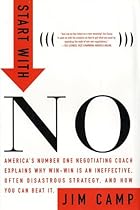
Start With NO...The Negotiating Tools That The Pros Don't Want You To Know By Jim Camp

Start with NO...The Negotiating Tools that the Pros Don't Want You to Know

Start With NO...The Negotiating Tools That The Pros Don't Want You To Know By Jim Camp

List Price: $22.95
Price: $14.07 & eligible for FREE Super Saver Shipping on orders over $25. Details

Availability: Usually ships in 24 hours
Ships from and sold by Amazon.com

88 new or used available from $3.76

Average customer review:
(48 customer reviews)

Product Description

Think win-win is the best way to make the deal? Think again. It's the worst possible way to get the best deal. This is the dirty little secret of corporate America.

For years now, win-win has been the paradigm for business negotiation—the "fair" way for all concerned. But don't believe it. Today, win-win is just the seductive mantra used by the toughest negotiators to get the other side to compromise unnecessarily, early, and often. Have you ever heard someone on the other side of the table say, "Let's team up on this, partner"? It all sounds so good, but these negotiators take their naive "partners" to the cleaners, deal after deal. Start with No shows you how they accomplish this. It shows you how such negotiations end up as win-lose. It exposes the scam for what it really is. And it guarantees that you'll never be a victim again.

Win-win plays to your emotions. It takes advantage of your instinct and desire to make the deal. Start with No teaches you how to understand and control these emotions. It teaches you how to ignore the siren call of the final result, which you can't really control, and how to focus instead on the activities and behavior that you can and must control in order to negotiate with the pros.

Start with No introduces a system of decision-based negotiation. Never again will you be out there on a wing and a prayer. Never again will you feel out of control. Never again will you compromise unnecessarily. Never again will you lose a negotiation.
The best negotiators:
* aren't interested in "yes"—they prefer "no"
* never, ever rush to close, but always let the other side feel comfortable and secure
* are never needy; they take advantage of the other party's neediness
* create a "blank slate" to ensure they ask questions and listen to the answers, to make sure they have no assumptions and expectations
* always have a mission and purpose that guides their decisions
* don't send so much as an e-mail without an agenda for what they want to accomplish
* know the four "budgets" for themselves and for the other side: time, energy, money, and emotion
* never waste time with people who don't really make the decision

Start with No offers a contrarian, counterintuitive system for negotiating any kind of deal in any kind of situation—the purchase of a new house, a multimillion-dollar business deal, or where to take the kids for dinner. It is full of dozens of business as well as personal stories illustrating each point of the system. It will change your life as a negotiator. If you put to good use the principles and practices revealed here, you will become an immeasurably better negotiator.

Product Details
  • Amazon Sales Rank: #62211 in Books
  • Published on: 2002-07-15
  • Released on: 2002-07-09
  • Original language: English
  • Number of items: 1
  • Dimensions: 8.53" h x .99" w x 5.80" l, .88 pounds
  • Binding: Hardcover
  • 288 pages
Editorial Reviews

Amazon.com Review
Start with No, by negotiation coach Jim Camp, is a tenaciously contrarian guide to the art and science of give-and-take that proposes a viable alternative for today's prevailing "win-win" approach. Beginning with an inverse premise--that having the right to say "no" and veto any agreement is actually the key to favorably concluding the various deals and transactions we face every day--Camp's procedure counters the common emotion-based urge to compromise ("a defeatist mind-set from the first handshake") with a series of less intuitive decision-oriented actions. "My system teaches you how to control what you can control in a negotiation," Camp writes. "When you do so, you can and will succeed (understanding that success sometimes means walking away with a polite good-bye)." Emphasizing the importance of this underlying attitude, his method combines related steps like defining a mission, understanding the adversary, assessing fiscal and emotional investments, preparing an agenda, and tracking behavior. Each is fully explained, as are associated skills such as how to structure a question to elicit a truly helpful response (e.g., "What else do you need?" vs. "Is there anything else you need?"). Despite its unorthodox manner, if diligently applied, the route that Camp details here may indeed produce winning results. --Howard Rothman

From Publishers Weekly
Negotiation coach Camp has been under the radar since 1989, helping clients reach deals at Motorola, Merrill Lynch and IBM. He now brings his advice to the general public. Asserting that the term "win-win" has become a clich‚, he suggests readers enter into every negotiation knowing that if the offer doesn't meet their expectations, they should walk away. He also advocates leaving emotions out of negotiations. "Whether we like it or not, it really is a jungle out there in the world of business, and it's crawling with predators." Camp's solid advice will help people control negotiations and prepare themselves for anything.
Copyright 2002 Cahners Business Information, Inc.

From Booklist
Claiming to be a negotiating coach and not a consultant, Camp has developed a system of negotiating that rejects the common concept of "win-win" and that urges people to get to an agreement as quickly as possible by any means, which in the author's view usually results in "win-lose." We learn that we cannot control the other party in the negotiations but can control and discipline our own actions and decisions. Concentrate not on winning but on the fundamentals of sound decision making. While his ideas are contrary to conventional negotiating wisdom, Camp counsels us to have a good, strong mission and purpose and to know the other party's real pain (why they are negotiating). Also, we learn to assess all the budgets involved, including our time and energy, money and emotional investment as well as our opponent's; to deal only with the real decision-maker; and to have a clear agenda for every contact. This is an excellent book with valuable insight. Mary Whaley
Copyright © American Library Association. All rights reserved

Customer Reviews

Most helpful customer reviews

74 of 76 people found the following review helpful.
4Conventional Wisdom be damned! Bring the Contrarian.
By R. Shaff
Jim Camp is new to me but will most likely become quite a bright albeit controversial figure in management circles. Mr. Camp's new offering, START WITH NO, specifically debunks the methodology we were all taught in Negotiation 101...achieve "win-win" at all costs. Mr. Camp says NO, with a capital N, to this weak, antiquated negotiating objective.

Mr. Camp introduces his theory, "...I believe win-win is hopelessly misguided as a basis for good negotiating, in business or in your personal life or anywhere else." So begins his treatise encapsulated in contrarian thinking toward negotiations of any type. Win-win, posits Mr. Camp, is an invitation to lose. While conventional tutelage is grounded in give-and-take compromise, Mr. Camp's negotiating foundation begins with giving or taking a No. Empowering an opponent to say No is power, according to Camp.

Mr. Camp quotes the ever-popular negotiating gem, GETTING TO YES, and its basic definition of a "wise agreement." A wise agreement meets the legitimate interests of each side to the extent possible, resolves conflicting interests fairly, is durable, and takes community interests into account. Camp's theory is that compromise is implicit within this definition, perhaps explicit. His question: Why in the world compromise before you're certain you have to?

Mr. Camp offers the reader an indepth view of why saying No is beneficial to a negotiator amongst an abundance of wisdom, tactics and observations from years of negotiation coaching. In the end, Mr. Camp leaves us with "The Thirty-three Rules" of negotiating. A few of these, which fly in the face of the conventional win-win theory:

- Your job is not to be liked. Its to be respected and effective.
- Never enter a negotiation-never make a phone call-without a valid agenda.
- You do not need it. You only want it. {a very key attribute regardless the theoretical camp in which one resides}
- The value of the negotiation increase by multiples as time, energy, money, and emotion are spent.
- "No" is good, "yes" is bad, "maybe" is worse.
- "Our greatest strength is our greatest weakness (Emerson).

All this said, Mr. Camp has presented an extremely cogent view of why win-win is outdated and outmoded. However, there are always situations wherein weakness is the position in which one begins providing a gauntlet of hurdles to clear before reaching the proprietary level of success. Consequently, it is my conclusion that, while Mr. Camp's methods are unorthodox and unconventional, they can be of great assistance to a negotiator who understands that each negotiation has its own set of facts and circumstances. No single negotiation exists in a vacuum.

Commingled utilization of Mr. Camp's methodology along with emotion-neutral theories should prove valuable to the negotiating professional. A good solid read that should be part of any negotiators' library.

56 of 58 people found the following review helpful.
5A real eye-opener for anyone negotiating anything
By Joanna Daneman
I was VERY impressed with Jim Camp's "Start with No." In under 300 pages, the author gets his point across succinctly and powerfully; negotiations don't begin with "Yes" (which might even be a lie) or "Maybe" which is worse than useless. They begin with "No" and giving permission for the other party to say "no."

The brilliance of the "no" can be the important "way out" in a negotiation, where one party is offered a graceful exit to avoid the sense of feeling trapped or tricked. And it's also the path to finding out what they really need or really can accept. But it's much more than that.

Camp informs the reader that previous theories of negotiation such as "Win-Win" are pure bunkum; in negotiation, sometimes someone wins and someone else loses. But the long-term outcome may be quite different--what might have been compromised into a mediocre solution by win-win can often be better for both parties when one loses at the outset. Case in point; a contract is drawn up with terms that one party can no longer fulfill. It's time to renegotiate the contract despite the terms and conditions. Why? What if the contract specified that a vendor sell at a price that would drive them out of business? If the buyer NEEDS that product, they'd better negotiate rather than fail to receive the product. Going elsewhere to find it could be more costly than the re-negotiated price.

Camp's experiences are in direct contrast to some of business guru Stephen Covey's "Seven Habits of Highly Successful People", which I thought was quite interesting. To remind you, the habits are:

1- Be Proactive
2- Begin with the End in Mind
3- Put First Things First
4- Think Win/Win
5- Seek First to Understand, Then to Be Understood
6- Synergize
7- Sharpen the Saw

Mr. Camp actually has no issue with the majority of these habits, but he disagrees vehemently with two of the seven principles: #2--begin with the end in mind, and #4 Think Win/Win. In the case of negotiation, sometimes, Mr. Camp informs us, it's better not be so focused on the goal i.e, getting the lowest price, making that sales quota for that month) lest you appear needy. What's more, being too focused on your own goal might cause you to make dangerous assumptions or fail to realize the underlying situation. And Camp scoffs at the idea of win-win, giving the reader plenty of real-life examples where losing either was just that...losing, or was a neutral outcome (no win, but better than other potentially worse outcomes.)

I recommend this book to anyone getting ready to negotiate nearly anything, from extended bedtimes for your kids, to a refinanced mortgage to a multi-million dollar deal. Excellent material here from this experienced contrarian.

41 of 45 people found the following review helpful.
3Advertisements for Himself
By louienapoli
It's probably impossible to accurately review a book on negotiation until you've had time to try the book's ideas. Having just read it, it's difficult to say whether the techniques will be effective. That said, the book is a collection of negotiating tactics--behavior, really. Some sound very useful, e.g., "Blank slate" your mind, meaning take your focus off of the desired outcome and concentrate on the process itself. Which dovetails with another point about never letting yourself be driven by a sense of neediness, only by a detached sense of "I want it but I can live without it if the terms aren't right." The book's tone is slick. You won't find the dispassionate, thoughtful voice in books like Getting To Yes (Camp's nemesis) or Bargaining for Advantage. Camp's unwitting mentor seems to be Herb Cohen's books on negotiating, and he borrows Cohen's slick conversational style. One problem with Camp's approach is that it is his retort to "win-win" negotiating, a style Camp claims is harmful, and for which he blames Getting to Yes for introducing. But if you check Yes, you'll find that nowhere does it advocate the softheaded approach Camp ascribes to it. And whereas Yes advocates preserving the relationship with the other side if possible, Camp asserts that you cannot worry about this and must not let it be a concern. As for the title, Start With No, it never seems to be entirely clear what it means, other than a catchy slogan that seeks to position the book as an answer to Getting to Yes. Camp uses the book as a less-than-subtle advertisement for his training seminars and programs, and hints that while the book is useful, it might not impart real negotiating chops in itself--without further instruction from the master. And his website takes a hardsell approach to getting you to "register" so they can presumably harangue you to buy more material, e.g., CDs, tapes, etc. I came away from the book with the feeling that it contains less useful information than I had hoped, though it does succeed in imparting the view that the person on the other side of the table is not a colleague or "negotiating partner" but your adversary, who must not be trusted. Whether this view is useful depends, I suppose, on the players, the circumstances, etc. Start With No is an interesting addition to your negotiation library, but it doesn't really qualify as a landmark, must-have text on the subject.

http://astore.amazon.com/amazon-book-books-20/detail/0609608002


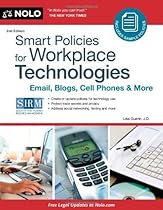
Smart Policies For Workplace Technology: Email, Blogs, Cell Phones & More Second (2nd) Edition By Lisa Guerin J.D.

By Lisa Guerin J.D.: Smart Policies for Workplace Technology: Email, Blogs, Cell Phones & More Second (2nd) Edition

Smart Policies For Workplace Technology: Email, Blogs, Cell Phones & More Second (2nd) Edition By Lisa Guerin J.D.

This item is not available for purchase from this store.
Buy at Amazon


8 new or used available from $41.05

Average customer review:
(1 customer reviews)

Product Details

  • Amazon Sales Rank: #6321100 in Books
  • Published on: 2011-03-17
  • Binding: Paperback
Customer Reviews

Most helpful customer reviews

0 of 0 people found the following review helpful.
5Great book for any business that has any technology use! (unless you are a company of one!)
By JJ
You may think that this book is all common sense. I dare say it is not. You may think your company is too small to worry about such things. I can only encourage you to not think that way. This book is essential to small and mid-size companies that don't have a legal department on top of the latest technologies and equipment.

Of course this book covers the important areas of email, internet use, and personal verses business uses of software, both online and off. That is a given. But do you realize that your company is liable for a employee who uses his OWN cell phone during business hours. And I mean legally and financially liable. Or you could be. And there are ways that you can create policies that can keep you safe. This book by Lisa Guerin, J.D. can save or help protect you in those crazy circumstances that you are currently betting won't happen. (Like a guy who is calling a customer, gets in an accident on the road, and the company is liable. I won't try to summarize all the crazy little things that can happen, but I can tell you that Lisa Guerin has NOT create a useless book... read it for your own benefit.)

Lastly, my book (2nd edition) came with SAMPLE POLICIES ON CD-ROM. These pre-written policies are worth the price of the book. And no, they are not legalese... they are nicely written, but you can tell that they are very descriptive and nuanced and are done so to protect a small to mid-size company. So get the book, order the one with the CD-ROM to save you time typing. By Lisa Guerin J.D.: Smart Policies for Workplace Technology: Email, Blogs, Cell Phones & More Second (2nd) Edition Or if you rather not copy and paste, you can order the book without the CD-ROM Smart Policies for Workplace Technology 2nd (second) edition Text Only.

There are also free legal updates online with the 2nd edition copy that I read. This book may not be thrilling reading, but it is highly important reading... and I think the example cases really add to the book's ability to hold the readers attention. But in a nutshell, the author is supplying you with well thought out policies... and it is those policies that will help your company.
JJ

http://astore.amazon.com/amazon-book-books-20/detail/B004X6SCTS


Sunday, April 29, 2012

Answering Interview Questions Effectively: Tricks Of The Trade

Whether you are in a job interview or you are being interrogated by a mad boss, here is an answering technique that preserves composure and provides clear logical answers to almost any question.

This answering technique, known as the SEER Format®, was developed by Booker Consultants to help executives of large corporations answer journalist questions. The technique works just as well for job interview questions, or any time you need to sound authoritative and knowledgeable about any subject.

S (Summary)

E (Elaboration)

E (Example)

R (Restatement)

Here is an example of the formula is practice. The interviewer asks a perspective employee:

"How can you contribute to our new manufacturing division?"

(S: Summary) Give a simple concise summary of your answer: "During my last position as the assistant division manager of manufacturing, my division cut costs and improved sales by 20%  within a two year period. I can prove equally profitable for your new manufacturing division." While stating the summary, think of the rest of your answer.

(E: Elaborate) This isn't enough; you need to keep talking. Both interview and office etiquette dictate that stopping here would be awkward. So, now you need to elaborate.

"As you know, I was assistant manager for the brush division of Colgate. We faced the difficult challenge of needing to lower the costs of our toothbrush manufacturing in order to stay competitive against low cost imports. Most of the manufacturing processes had already been automated, so the challenge was a huge one."

Stopping your answer here is still too vague, the devil is always in the details. To persuade the person that you know what you are talking about, you will also need to provide an example.

(E: Example) Here is where you toot your own horn.

"I worked with my boss, Mr. Stevens, (show you are a team player) and we analyzed all the separate costs of the tooth brush division. During this process, I realized that our labeling and shipping process would be more efficient if they were combined. Although this produced an initial 15% savings, we still were not able to meet our targeted cost cutting goals. So I had the idea to combine the labeling and shipping of the floss and toothpaste divisions as well. After placing all of these departments together, the net gain was a 25% decrease in shipping and labeling costs. In addition, this actually made it possible for us to improve our division sales by 20%. Simply put, when shipped together, the items were cheaper for the retailers and they tended to buy equal numbers of each thing. Moreover, they also loved the new bundled product packages I developed. They are now a best seller."

R (Restatement): Here, you add closure to your answer.

"Here at Nike you produce a very different product, but manufacturing is manufacturing. I have a proven track record as an innovative thinker and a team player. I can make your new division lean and profitable."

When answering interview questions, there are additional things to keep in mind.

First, there is generally only so much time. Fill the time up with intelligent well-answered questions you know the answers to. This means fewer questions and less time to trip you up.

Second, really listen to the body language of your audience during your answer. If they look bored, upset, or fidgety, make your answers shorter and encourage them to speak instead by asking thoughtful counter questions.

Lastly, practice using this technique on friends and family until is becomes a natural way to answer almost any question. In a difficult situation, SEER can be a real career saver.

Thanks to Six Sigma Online / Careerealism
http://www.careerealism.com/interview-questions-tricks/?utm_source=feedburner&utm_medium=feed&utm_campaign=Feed%3A+careerealism+%28CAREEREALISM%29


Exception Handling Is Complex Work

How is work different in a networked economy? We know that a lot of traditional work is constantly getting automated, from bank tellers, to lawyers to stock brokers. We also know that any work that can be outsourced will go to the place of cheapest labour, wherever that may be. The main reason behind this is the interconnectivity of the Internet. I can easily find freelancers or software as a service to take care of my more routine tasks. Organizations do this all the time.

Known Problems

Let's look at a knowledge worker and how things can get done in such an interconnected environment. Any situation can first be looked at from the perspective of, "is this a known problem or not?" If it's known, then the answer can be looked up or the correct person found to deal with it. That answer may have been automated or even outsourced.

Known problems require access to the right information to solve them. This information can be mapped, and frameworks such as knowledge management (KM) help us to map it. We can also create tools, especially electronic performance support systems (EPSS) to do work and not have to learn all the background knowledge in order to accomplish the task. This is how simple and complicated knowledge continuously gets automated.

Exceptions

But if it's a new problem or an exception, then the knowledge worker has to deal with it in a unique way. This is why we hire knowledge workers, to deal with exceptions. Complex, new problems need tacit knowledge to solve them. Exception-handling is becoming more important in the networked workplace. While the system handles the routine stuff, people, usually working together, deal with the exceptions. Exceptions require collaborative approaches to solve.

Once an exception is dealt with, it is no longer new. It is now known. As exceptions get addressed, some or all of the solution can get automated, and so the process evolves.

The challenge for organizational design is to make it easy to move new problems into the knowable space. This is where three principles of net work come into play:

  1. Transparency
  2. Narration of Work
  3. Distribution of power

We cannot know what is known unless the organization, and the entire business ecosystem are transparent. We need to be able find things fast, which is the main benefit of using social media: increasing speed of access to knowledge. Social media enable us to be transparent in our work but transparency is not enough. Each knowledge worker must also narrate his or her own work. For example, just adding finished reports to a knowledge base does not help others understand how that report was developed. This is where activity streams and micro-blogging have helped organizational learning. We see the flow of sense-making in small bits that over time become a flow and later patterns emerge. We humans are very good at pattern recognition.

Exception handling is complex work, which requires passion, creativity and initiative. These cannot be commoditized. This is where the main value of the networked business is created. It's a constantly moving sweet spot. Today's complex work is tomorrow's merely complicated or even simple work. But with complex work, failure has to be tolerated, as there are no best practices for exceptions (that's why they're called exceptions). Narrating work also means taking ownership of mistakes. Transparency helps the organization learn from mistakes.

Finally, power in the organization must be distributed. Distributed power enables faster reaction time so those closest to the situation can take action. In complex situations there is no time to write a detailed assessment. Those best able to address the situation have marinated in it for some time. They couldn't sufficiently explain it to someone removed from the problem if they wanted to anyway. This shared power is enabled by trust. Power in knowledge-based organizations must be distributed in order to nurture trust. "One of the big challenges for companies is that unlike information or data flows, knowledge does not flow easily – as it relies on long-term trust-based relationships" ~ John Hagel.

Power-sharing and transparency enable work to move out to the edges and away from the comfortable, complicated work that has been the corporate mainstay for decades.  There's nothing left in the safe inner rings anyway, as it's being automated and outsourced.

The high-value work today is in facing complexity, not in addressing problems that have already been solved and for which a formulaic or standardized response has been developed. One challenge for organizations is getting people to realize that what they know already has increasingly diminishing value. How to solve problems together is becoming the real business advantage.


Thanks to Harold Jarche / Jarche / Harold Jarche
http://www.jarche.com/2011/12/exception-handling-is-complex-work/