Wednesday, February 29, 2012

Before You Hire A CFO: 8 Disciplines To Increase Financial Visibility And Control By Troy D. Schrock

Before You Hire a CFO: 8 Disciplines to Increase Financial Visibility and Control

Before You Hire A CFO: 8 Disciplines To Increase Financial Visibility And Control
By Troy D. Schrock

Price: $15.32 & eligible for FREE Super Saver Shipping on orders over $25. Details

Availability: Usually ships in 24 hours
Ships from and sold by Amazon.com

9 new or used available from $11.72

Product Description

Are you a CEO contemplating hiring a full-time CFO? A CEO with an unqualified CFO? A CEO who needs more financial visibility and control for business decisions? An advisor or investor who knows CEOs who fit the above descriptions? Most CEOs don't realize they can implement an effective financial management system that provides the visibility and control required to grow the business without requiring a full-time CFO. This book provides the knowledge to do just that. This forestalls, sometimes for years, the need to hire a full-time CFO, yet still delivers the financial management system that is so critical to success. For business owners who already have a CFO, this book will help them understand what information and disciplines their CFO should be providing them.

Product Details
  • Amazon Sales Rank: #1536771 in Books
  • Published on: 2009-09-29
  • Original language: English
  • Number of items: 1
  • Binding: Paperback
  • 62 pages
Editorial Reviews

About the Author
Troy D. Schrock, CPA, is the developer of The Action CFO Process(tm). The Action CFO Process is used by independent CFO advisors to deliver the Action CFO Financial Visibility and Control System(tm) for business owners. Mr. Schrock has been an independent CFO advisor since 1997. Before becoming an independent CFO advisor, Mr. Schrock was a manager in a CPA firm in Southfield, Michigan. During his time in public accounting, Mr. Schrock was privileged to work with entrepreneurial businesses from start-up through mid-market as an advisor in tax, accounting, and business valuation issues. Mr. Schrock graduated from the University of Illinois with a Bachelor of Science in Accountancy. He lives in southeast Michigan with his wife and three children and devotes his time to three primary passions - the Bible, business, and lifetime effectiveness. Mr. Schrock can be reached at troy.schrock@actioncfo.com.

7 Things Employees Want To Know In A Department Reshuffle

Overheard at a lunchtime conversation in the company cafeteria:

Employee: "That sure was a big announcement by the CEO this morning. They're really moving the boxes on the org chart this time. What's your reaction?

Mid-level manager: (shrugging shoulders, sounding nonchalant) "Meh. I've been around this place for a long time. It's just same monkeys, different trees, as far as I'm concerned."

As a leader, you may have become blasé about corporate restructuring, especially if you're a survivor of numerous downsizing/outsourcing/right-sizing battles. Trust me on this one when I say: You may be feeling chill about the latest company reorg, but the employees who report to you most decidedly are NOT.

There's an old adage out there that says "people resist change". I think that's not quite accurate.  In my opinion, it's not always the actual proposed change that people are resisting. Rather it's the disruption their work lives are about to undergo when they hear of organizational realignment. Even when an announced change is welcome ("Finally, it's about time!"), there is still that period of uncertainty and lack of clarity about "who does what".

If your department is in any way affected by your company's reorganization, there are several things that your team members will want to know before they can move to the task of making the change. Typically, their questions proceed in the following series of steps:

  1. As you might suspect, the first reactions tend to be "Me" questions, like:
    • Where do I fit?
    • Will I like it?
    • What will I be required to do?
  2. Then, once those questions are answered, people expand their curiosity beyond themselves to:
    • Where do others on my team fit?
    • What happens if there's not a place for others?
  3. Then, people start to assimilate how this change might be useful:
    • What are the benefits to me, my team and the company?
  4. And finally (and only after all the other questions have been answered) are people ready to discuss the transition:
    • What's the process for the changeover?

In my experience, leaders often breeze through steps 1 -3, providing only the most cursory of explanations. They want to move as quickly as possible to step #4. Here's the problem with rushing steps 1 – 3: if people aren't comfortable with the answers to the first three steps, then they'll find a way to get the team back to the step for which they require more information.

Don't be a blasé leader. Even if you perceive the organizational change to be a non-issue, be sure to build in time to communicate the changes. You'll probably need to communicate the change numerous times and in several formats in order for it to sink in.

Thanks to Jennifer V. Miller / People-Equation
http://people-equation.com/7-things-employees-want-to-know-in-a-department-shuffle/blank-organization-chart-and-blackboard/


5 Ways To Avoid ‘Death By Meeting’

It may not always seem like meetings serve a purpose, but they do. When handled correctly, meetings can clarify objectives, boost morale, save time, and generate plans of action. The problem is, far too many meetings achieve the opposite. They waste time, bore everyone in the room, and suck the life out of the workday.

Here are five ways to avoid "death by meeting":

  1. Set an agenda and stick to it. Sometimes it's tempting to gather your staff together just to see how things are going. Resist this temptation at all costs. The meeting agenda is your road map from point A to point B. Only schedule a meeting if you have a list of items to review and discuss. To help ensure a productive meeting, distribute the agenda (with specific times allotted to each item) to all participants beforehand.
  2. Start and finish on time. Meetings that start late or get frequently interrupted by late arrivals send a very bad message: Nobody's in charge. Make it clear to all participants that the meeting will take place as scheduled. Avoid the momentum-killing move of bringing a late arrival up to speed. Appoint a timekeeper (i.e., put someone in charge of keeping things moving) who's backed by the boss. That way, people won't be insulted when they're told, "Please wrap up your report in two minutes, thank you." One more thing: People by and large tend to stay focused for about 30 minutes. After that, you're in the land of diminishing returns. If you can't cover everything on the agenda a half hour, schedule another meeting.
  3. Forbid smartphones and laptops. This is a no-brainer. Either you're present at the meeting or you're not. No one ever perished by being separated from their electronic devices for 30 minutes. Ask people to leave their gear at their desks. If the scheduled meeting must go for an extended period of time, let people check their messages during a brief break.
  4. Invite only the people who need to be there. How many meetings end up involving more personnel than necessary? Meetings are more productive when only those employees involved in the topic are invited. Others with only marginal participation can be addressed separately to save time. It's also helpful to send out a brief post-meeting email, so that everyone is kept up-to-date.
  5. Know what type of meeting you want to have. Not all meetings have to accomplish specific objectives. Brainstorming sessions (an exception to rule #1)  may prove useful to your business. But unlike an "action meeting" — in which you address pressing and time-sensitive issues— a creative meeting can be more free-flowing (and even fun). The key here is to encourage imaginative input while still maintaining a grip on time. Suggestions: Have food and drink on hand for longer meetings. Bring props along to get people "thinking outside the box."

Meetings don't have to be long and tedious. When you plan ahead and stay focused, you and your employees can benefit from the opportunity to exchange ideas and strategies. Afterward, people will go back to work recharged and ready to get things done.

Thanks to Lee Polevoi / Blog Intuit / Intuit, Inc.
http://blog.intuit.com/employees/5-ways-to-avoid-death-by-meeting/


How To Figure Out The Actual Cost Of Your Employees

Hiring employees always seems to cost more than entrepreneurs and business owners expect. Besides the hourly wage or salary, there are mandatory taxes and benefits, paid time off, insurance, retirement and so much more that increases the amount you spend to bring on help.

Knowing how much you spend for each employee will help you improve your business results in four key ways:

  1. You will correctly cost their time.

  2. You will price your products and services more profitably.

  3. You'll help your staff understand the entire value of the compensation package you provide.

  4. You can plan for the exact costs you'll incur whether your workforce grows, shrinks, or stays the same.

Time and job costing

To start, let's get on the same page about what "burdened" means. This reflects the total cost of each of your employees, not just their salary or wages. When your employees do work that directly results in the production of goods or services, you should account for their time on a burdened basis.

For example, let's assume you have an employee earning $20/hour. You determine that this employee's burden rate is 30 percent of their hourly wage, or $6.00 per hour, resulting in a burdened rate of $26.00/hour.

If it normally takes this employee two hours to assemble a product, then the total direct labor cost is $52.00 per product. If, however, your employee requires three hours to assemble the product, knowing the burdened rate will help you understand how much the extra hour will impact the profit you make on that product.

It is important to set up your accounting software to properly capture the wages and the payroll burden as direct costs so that you can correctly track and understand your gross margin.

Preferred pricing

You should never create a price for your products or services without understanding all of the costs it takes to create, sell and deliver them. Labor is almost always the first or second largest expense in that equation, meaning it has a lot to do with how you should price your products or services. How much profit you make will, ultimately, have a lot to do with where you set your prices in relation your labor expenses.

Continuing with the $26/hour burdened labor rate, let's assume labor is the only cost directly related to delivering services to your customers.

If you desire a 50 percent gross margin after direct costs, then you should charge your customers $52/hour ($26/50 percent = $52) for the use of every one hour of your employee's time. If you have other material costs associated with manufacturing a product, then you add the burdened labor cost to the material and scrap costs to determine your total cost to manufacture the product. By determining your price in this manner, you will know exactly what your margins should be.

Total compensation package

In addition to understanding your labor costs and setting your prices accordingly, knowing the total you spend on each employee is helpful when you communicate with them about the overall compensation they receive. Many employees do not understand how much more it costs you than the net paycheck amount that gets directly deposited to their bank account every two weeks. Whenever you discuss compensation with your employees, you should know their total compensation and be willing to show it to them.

If the employee in the example above gets an offer to work somewhere else for $21/hour, he may consider leaving for more money. But is it really more money when you consider the total benefits program? If you pay 100 percent of health insurance costs and offer a generous match for 401(k) contributions while the prospective employer does neither, the employee may need help understanding that the new job may not really be a step ahead financially.

Accurate forecasts

Since labor is likely the first or second largest expense you incur, and since the total costs of each employee can be calculated exactly, there is no reason you should forecast your labor expenses blindly.

Keeping a spreadsheet of all of your employees, their annual wages, payroll taxes, benefit costs and so on is a powerful tool for forecasting the future. And, if you ever realize a variance in your budgeted labor and the actual expenses incurred, this tool will help you find the problem immediately.

I created a free spreadsheet to help you assess the total cost of each employee. It is a simple tool, but it can make all the difference as you strive to recruit and retain top employees and use their skills and talents to help your business grow and improve its cash flow and profitability.

Ken Kaufman is the President & CFO of Aribex®, an innovator of handheld devices disrupting medical imaging globally. As an award-winning executive with almost two decades of experience starting, growing, leading, and financing dozens of organizations, Ken is a highly sought-after speaker and author, including a best-seller, Impact Your Business.

Thanks to Ken Kaufman / Open Forum / American Express Company
http://www.openforum.com/articles/how-to-figure-out-the-actual-cost-of-your-employees?cid=em-openf-SBweekly-20120228-06&extlink=em-openf-SBweekly-20120228-06


Nylon

Nylon Nylon Nylon 6,6 unit
Density 1.15 g/cm3
Electrical conductivity (σ) 10−12 S/m
Thermal conductivity 0.25 W/(m·K)
Melting point 463–624 K
190–350 °C
374–663 °F

Nylon is a generic designation for a family of synthetic polymers known generically as polyamides, first produced on February 28, 1935, by Wallace Carothers at DuPont's research facility at the DuPont Experimental Station. Nylon is one of the most commonly used polymers.

Overview

Nylon is a thermoplastic silky material, first used commercially in a nylon-bristled toothbrush (1938), followed more famously by women's stockings ("nylons"; 1940). It is made of repeating units linked by amide bonds and is frequently referred to as polyamide (PA). Nylon was the first commercially successful synthetic polymer. There are two common methods of making nylon for fiber applications. In one approach, molecules with an acid (COOH) group on each end are reacted with molecules containing amine (NH2) groups on each end. The resulting nylon is named on the basis of the number of carbon atoms separating the two acid groups and the two amines. These are formed into monomers of intermediate molecular weight, which are then reacted to form long polymer chains.

Nylon was intended to be a synthetic replacement for silk and substituted for it in many different products after silk became scarce during World War II. It replaced silk in military applications such as parachutes and flak vests, and was used in many types of vehicle tires.

Nylon fibres are used in many applications, including fabrics, bridal veils, carpets, musical strings, and rope.

Solid nylon is used for mechanical parts such as machine screws, gears and other low- to medium-stress components previously cast in metal. Engineering-grade nylon is processed by extrusion, casting, and injection molding. Solid nylon is used in hair combs. Type 6,6 Nylon 101 is the most common commercial grade of nylon, and Nylon 6 is the most common commercial grade of molded nylon. Nylon is available in glass-filled variants which increase structural and impact strength and rigidity, and molybdenum sulfide-filled variants which increase lubricity.

Aramids are another type of polyamide with quite different chain structures which include aromatic groups in the main chain. Such polymers make excellent ballistic fibres.

Chemistry

Nylons are condensation copolymers formed by reacting equal parts of a diamine and a dicarboxylic acid, so that amides are formed at both ends of each monomer in a process analogous to polypeptide biopolymers. Chemical elements included are carbon, hydrogen, nitrogen, and oxygen. The numerical suffix specifies the numbers of carbons donated by the monomers; the diamine first and the diacid second. The most common variant is nylon 6-6 which refers to the fact that the diamine (hexamethylene diamine, IUPAC name: 1,6-diaminohexane) and the diacid (adipic acid, IUPAC name: hexane-1,6-dicarboxylic acid) each donate 6 carbons to the polymer chain. As with other regular copolymers like polyesters and polyurethanes, the "repeating unit" consists of one of each monomer, so that they alternate in the chain. Since each monomer in this copolymer has the same reactive group on both ends, the direction of the amide bond reverses between each monomer, unlike natural polyamide proteins which have overall directionality: C terminal → N terminal. In the laboratory, nylon 6-6 can also be made using adipoyl chloride instead of adipic.

It is difficult to get the proportions exactly correct, and deviations can lead to chain termination at molecular weights less than a desirable 10,000 daltons (u). To overcome this problem, a crystalline, solid "nylon salt" can be formed at room temperature, using an exact 1:1 ratio of the acid and the base to neutralize each other. Heated to 285 °C (545 °F), the salt reacts to form nylon polymer. Above 20,000 daltons, it is impossible to spin the chains into yarn, so to combat this, some acetic acid is added to react with a free amine end group during polymer elongation to limit the molecular weight. In practice, and especially for 6,6, the monomers are often combined in a water solution. The water used to make the solution is evaporated under controlled conditions, and the increasing concentration of "salt" is polymerized to the final molecular weight.

DuPont patented[1] nylon 6,6, so in order to compete, other companies (particularly the German BASF) developed the homopolymer nylon 6, or polycaprolactam — not a condensation polymer, but formed by a ring-opening polymerization (alternatively made by polymerizing aminocaproic acid). The peptide bond within the caprolactam is broken with the exposed active groups on each side being incorporated into two new bonds as the monomer becomes part of the polymer backbone. In this case, all amide bonds lie in the same direction, but the properties of nylon 6 are sometimes indistinguishable from those of nylon 6,6 — except for melt temperature and some fiber properties in products like carpets and textiles. There is also nylon 9.

The 428 °F (220 °C) melting point of nylon 6 is lower than the 509 °F (265 °C) melting point of nylon 6,6.[2]

Nylon 5,10, made from pentamethylene diamine and sebacic acid, was studied by Carothers even before nylon 6,6 and has superior properties, but is more expensive to make. In keeping with this naming convention, "nylon 6,12" (N-6,12) or "PA-6,12" is a copolymer of a 6C diamine and a 12C diacid. Similarly for N-5,10 N-6,11; N-10,12, etc. Other nylons include copolymerized dicarboxylic acid/diamine products that are not based upon the monomers listed above. For example, some aromatic nylons are polymerized with the addition of diacids like terephthalic acid (→ Kevlar Twaron) or isophthalic acid (→ Nomex), more commonly associated with polyesters. There are copolymers of N-6,6/N6; copolymers of N-6,6/N-6/N-12; and others. Because of the way polyamides are formed, nylon would seem to be limited to unbranched, straight chains. But "star" branched nylon can be produced by the condensation of dicarboxylic acids with polyamines having three or more amino groups.

The general reaction is:

Condensation polymerization diacid diamine.svg

A molecule of water is given off and the nylon is formed. Its properties are determined by the R and R' groups in the monomers. In nylon 6,6, R = 4C and R' = 6C alkanes, but one also has to include the two carboxyl carbons in the diacid to get the number it donates to the chain. In Kevlar, both R and R' are benzene rings.

Concepts of nylon production

The first approach: combining molecules with an acid (COOH) group on each end are reacted with two chemicals that contain amine (NH2) groups on each end. This process creates nylon 6,6, made of hexamethylene diamine with six carbon atoms and adipic acid.

The second approach: a compound has an acid at one end and an amine at the other and is polymerized to form a chain with repeating units of (-NH-[CH2]n-CO-)x. In other words, nylon 6 is made from a single six-carbon substance called caprolactam. In this equation, if n=5, then nylon 6 is the assigned name (may also be referred to as polymer).

The characteristic features of nylon 6,6 include:

  • Pleats and creases can be heat-set at higher temperatures
  • More compact molecular structure
  • Better weathering properties; better sunlight resistance
  • Softer "Hand"
  • Higher melting point (256 °C / 492.8 °F)
  • Superior colorfastness
  • Excellent abrasion resistance

On the other hand, nylon 6 is easy to dye, more readily fades; it has a higher impact resistance, a more rapid moisture absorption, greater elasticity and elastic recovery.

Characteristics

  • Variation of luster: nylon has the ability to be very lustrous, semilustrous or dull.
  • Durability: its high tenacity fibers are used for seatbelts, tire cords, ballistic cloth and other uses.
  • High elongation
  • Excellent abrasion resistance
  • Highly resilient (nylon fabrics are heat-set)
  • Paved the way for easy-care garments
  • High resistance to insects, fungi, animals, as well as molds, mildew, rot and many chemicals
  • Used in carpets and nylon stockings
  • Melts instead of burning
  • Used in many military applications
  • Good specific strength
  • Transparent under infrared light (-12dB)[3]

Bulk properties

Above their melting temperatures, Tm, thermoplastics like nylon are amorphous solids or viscous fluids in which the chains approximate random coils. Below Tm, amorphous regions alternate with regions which are lamellar crystals.[2] The amorphous regions contribute elasticity and the crystalline regions contribute strength and rigidity. The planar amide (-CO-NH-) groups are very polar, so nylon forms multiple hydrogen bonds among adjacent strands. Because the nylon backbone is so regular and symmetrical, especially if all the amide bonds are in the trans configuration, nylons often have high crystallinity and make excellent fibers. The amount of crystallinity depends on the details of formation, as well as on the kind of nylon. Apparently it can never be quenched from a melt as a completely amorphous solid.

Nylon 6,6 can have multiple parallel strands aligned with their neighboring peptide bonds at coordinated separations of exactly 6 and 4 carbons for considerable lengths, so the carbonyl oxygens and amide hydrogens can line up to form interchain hydrogen bonds repeatedly, without interruption. Nylon 5,10 can have coordinated runs of 5 and 8 carbons. Thus parallel (but not antiparallel) strands can participate in extended, unbroken, multi-chain β-pleated sheets, a strong and tough supermolecular structure similar to that found in natural silk fibroin and the β-keratins in feathers. (Proteins have only an amino acid α-carbon separating sequential -CO-NH- groups.) Nylon 6 will form uninterrupted H-bonded sheets with mixed directionalities, but the β-sheet wrinkling is somewhat different. The three-dimensional disposition of each alkane hydrocarbon chain depends on rotations about the 109.47° tetrahedral bonds of singly-bonded carbon atoms.

When extruded into fibers through pores in an industrial spinneret, the individual polymer chains tend to align because of viscous flow. If subjected to cold drawing afterwards, the fibers align further, increasing their crystallinity, and the material acquires additional tensile strength.[3] In practice, nylon fibers are most often drawn using heated rolls at high speeds.

Block nylon tends to be less crystalline, except near the surfaces due to shearing stresses during formation. Nylon is clear and colorless, or milky, but is easily dyed. Multistranded nylon cord and rope is slippery and tends to unravel. The ends can be melted and fused with a heat source such as a flame or electrode to prevent this.

When dry, polyamide is a good electrical insulator. However, polyamide is hygroscopic. The absorption of water will change some of the material's properties such as its electrical resistance. Nylon is less absorbent than wool or cotton.

Historical uses

Bill Pittendreigh, DuPont, and other individuals and corporations worked diligently during the first few months of World War II to find a way to replace Asian silk and hemp with nylon in parachutes. It was also used to make tires, tents, ropes, ponchos, and other military supplies. It was even used in the production of a high-grade paper for U.S. currency. At the outset of the war, cotton accounted for more than 80% of all fibers used and manufactured, and wool fibers accounted for the remaining 20%. By August 1945, manufactured fibers had taken a market share of 25% and cotton had dropped.

Some of the terpolymers based upon nylon are used every day in packaging. Nylon has been used for meat wrappings and sausage sheaths.

Use in composites

Nylon can be used as the matrix material in composite materials, with reinforcing fibres like glass or carbon fiber, and has a higher density than pure nylon. Such thermoplastic composites (25% glass fibre) are frequently used in car components next to the engine, such as intake manifolds, where the good heat resistance of such materials makes them feasible competitors to metals.

Hydrolysis and degradation

All nylons are susceptible to hydrolysis, especially by strong acids, a reaction essentially the reverse of the synthetic reaction shown above. The molecular weight of nylon products so attacked drops fast, and cracks form quickly at the affected zones. Lower members of the nylons (such as nylon 6) are affected more than higher members such as nylon 12. This means that nylon parts cannot be used in contact with sulfuric acid for example, such as the electrolyte used in lead-acid batteries. When being molded, nylon must be dried to prevent hydrolysis in the molding machine barrel since water at high temperatures can also degrade the polymer. The reaction is of the type:

Amide hydrolysis.png

Incineration and recycling

Various nylons break down in fire and form hazardous smoke, and toxic fumes or ash, typically containing hydrogen cyanide. Incinerating nylons to recover the high energy used to create them is usually expensive, so most nylons reach the garbage dumps, decaying very slowly.[4] Some recycling is done on nylon, usually creating pellets for reuse in the industry, but this is done at a much lower scale.[5]

Etymology

In 1940, John W. Eckelberry of DuPont stated that the letters "nyl" were arbitrary and the "on" was copied from the suffixes of other fibers such as cotton and rayon. A later publication by DuPont explained that the name was originally intended to be "No-Run" ("run" meaning "unravel"), but was modified to avoid making such an unjustified claim and to make the word sound better.[6] An apocryphal tale is that Nylon is a conflation of "New York" and "London". Equally spurious is the backronym for "Now You've Lost, Old Nippon" referring to the supposed loss of demand for Japanese silk.

This article is copied from an article on Wikipedia® - the free encyclopedia created and edited by online user community. The text was not checked or edited by anyone on our staff. Although the vast majority of the Wikipedia® encyclopedia articles provide accurate and timely information please do not assume the accuracy of any particular article. This article is distributed under the terms of GNU Free Documentation License.

 
Thanks to Encyclopedia The Free Dictionary / Farlex, Inc.
http://encyclopedia.thefreedictionary.com/p/nylon


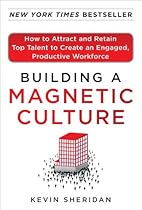
Building A Magnetic Culture: How To Attract And Retain Top Talent To Create An Engaged, Productive Workforce By Kevin Sheridan

Building a Magnetic Culture:  How to Attract and Retain Top Talent to Create an Engaged, Productive Workforce

Building A Magnetic Culture: How To Attract And Retain Top Talent To Create An Engaged, Productive Workforce By Kevin Sheridan

List Price: $28.00
Price: $16.76 & eligible for FREE Super Saver Shipping on orders over $25. Details

Availability: Usually ships in 24 hours
Ships from and sold by Amazon.com

48 new or used available from $11.99

Average customer review:
(49 customer reviews)

Product Description

Attract top talent and energize your workforce with a MAGNETIC CULTURE

"Sheridan outlines simple but powerful steps to take in creating and maintaining an organization that fosters an environment with similar attraction."
—Marshall Goldsmith, Ph.D., international bestselling author of MOJO and What Got You Here Won't Get You There

"A compelling case for and guide to the creation of a high engagement/high performance workforce."
—Douglas R. Conant, retired president and CEO, Campbell Soup Company; New York Times bestselling author of TouchPoints

"It's impossible for any company to have a monopoly on talent. But it is possible to have the best culture. Sheridan shares insights and best practices for creating an engaging culture where associates can grow and thrive."
—Frits van Paassche n, president and CEO, Starwood Hotels & Resorts Worldwide, Inc.

"A long time ago I discovered that when employees are passionate about their work, customers are passionate about the company. Kevin Sheridan knows that secret too. His insights on finding the right people and getting them engaged can change your culture forever."
—Quint Studer, founder of Studer Group, 2010 Malcolm Baldrige National Quality Award recipient

"This book is filled with practical ideas, illuminating case stories, and fresh perspectives to stir employee engagement in any organization."
—Pamela Meyer, Ph.D., author of From Workplace to Playspace: Innovating, Learning and Changing through Dynamic Engagement

About the Book:

The perils of a disengaged workforce are well known—low productivity, high employee turnover, and failure to meet organization-wide goals. Less well known is what to do about it. How do you create a workforce that is always ready, able, and eager to take the organization to the next level?

You have to create a MAGNETIC CULTURE.

As CEO of leading employee survey and HR consulting firm HR Solutions, Inc., Kevin Sheridan knows how it's done—and in Building a Magnetic Culture, he shares all his secrets.

Building a Magnetic Culture explains what engages and motivates employees and how to create an environment in which employees can thrive. Drawing on years of research and real-world examples from his consulting experience, Sheridan gives you the strategies and tactics you need to transform your company by creating and sustaining a Magnetic Culture.

Providing benchmarking and best practices, as well as interviews with executives and HR professionals at companies that boast the highest levels of employee engagement, Sheridan outlines an easy-to-follow plan that:

  • Attracts the most talented people—and retains them
  • Makes employees feel they are part of the value that their organization creates
  • Increases Employee Engagement and drives productivity
  • Boosts creativity and problem solving

According to HR Solutions' own employee survey results, actively engaged employees show four times more satisfaction in their work and are four times less likely to leave than disengaged employees are. Is there a reason not to make building a Magnetic Culture your top priority?

Simply put, organizations that place a high value on actively cultivating a culture of engagement stand apart from their competition and enjoy superior business results.

Product Details
  • Amazon Sales Rank: #46643 in Books
  • Published on: 2012-01-09
  • Original language: English
  • Number of items: 1
  • Binding: Hardcover
  • 256 pages
Editorial Reviews

About the Author

Kevin Sheridan is Chief Engagement Officer (CEO) and Chief Consultant of HR Solutions, Inc., a Human Capital Management Consulting Firm specializing in Employee Engagement Survey and Exit Survey design, implementation, analysis, and results. Sheridan has extensive experience in the field, having cofounded three successful survey-related organizations.

Customer Reviews

Most helpful customer reviews

32 of 32 people found the following review helpful.
5How to build a great corporate culture across generations
By Joanna Daneman
This is a fascinating book--not only ideas for building a corporate culture that attracts top talent, but also a guidebook for working across generations; Traditionalists, Baby Boomers, Gen-X and now, Millennials (1980-1992) all of whom are motivated by different incentives, work with or without constant feedback and supervision, and who have different defining moments in their lives. According to the author, Baby Boomers and Millennials couldn't be more different; Millennials grew up being kept constantly busy by their parents, require more positive feedback, work less to deadlines, and career is just one component of their lives--not the defining component.

Using the ideas in this book, a hiring team can look to attracting and motivating the kind of talent that can create a desirable and productive work environment. This is a refreshing book written during a time when mere survival on a job would seem the most that could be hoped for; this book says "There is talent out there and you can foster and profit from that talent."

At the very least, a must-read for anyone puzzled by managing a generation older or younger than themselves.

16 of 16 people found the following review helpful.
4Digging a little deeper
By Mrs. Langley
I was impressed at the level of detail on employee engagement this book covers. It went beyond the mere idea of improving employee performance to the science behind making this a reality. From how to measure an employee's engagement level, to how to maintain it, Building a Magnetic culture provides a plan that is realistic and doable.
Many companies say they want to improve the culture of their organization, but only those that are willing to take steps like those taught here will truly achieve the high performance level of commitment from their employees they need to remain competitive.

15 of 15 people found the following review helpful.
4Not just for those in leadership
By B.
I was impressed at just how much practical advice is in this book. It not only offers a clear look at basic concepts, but also advice that is very specific on engaging employees of today's generation. Though I am not in a leadership position, as an employee I still gained valuable insight into the part I can play in my own engagement level. Reading this has made me question whether or not I am highly engaged in my work, and helped me better understand why I may or may not be. I would recommend it to anyone looking to gain a greater sense of fulfillment from their work, as well as any leader who wants to learn how to inspire the best performance possible from their employees.

http://astore.amazon.com/amazon-book-books-20/detail/0071773991


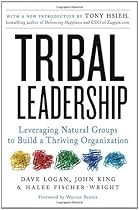
Tribal Leadership: Leveraging Natural Groups To Build A Thriving Organization By Dave Logan, John King, Halee Fischer-Wright

Tribal Leadership: Leveraging Natural Groups to Build a Thriving Organization

Tribal Leadership: Leveraging Natural Groups To Build A Thriving Organization
By Dave Logan, John King, Halee Fischer-Wright

List Price: $16.99
Price: $11.55 & eligible for FREE Super Saver Shipping on orders over $25. Details

Availability: Usually ships in 24 hours
Ships from and sold by Amazon.com

52 new or used available from $9.64

Average customer review:
(79 customer reviews)

Product Description

Every organization is composed of tribes—naturally occurring groups of between 20 and 150 people. Until now, only a few leaders could identify and develop their tribes, and those rare individuals were rewarded with loyalty, productivity, and industry-changing innovation. Tribal Leadership shows leaders how to assess, identify, and upgrade their tribes' cultures, one stage at a time. The result is an organization that can thrive in any economy.

Product Details
  • Amazon Sales Rank: #2116 in Books
  • Published on: 2011-06-07
  • Released on: 2011-06-07
  • Original language: English
  • Number of items: 1
  • Dimensions: .70" h x 5.30" w x 7.90" l, .53 pounds
  • Binding: Paperback
  • 320 pages
Editorial Reviews

From Publishers Weekly
The authors, management consultants and partners of JeffersonLarsonSmith, offer a fascinating look at corporate tribes—groups of 20–150 people within a company that come together on their own rather than through management decisions—and how executives can use tribes to maximize productivity and profit. Drawing upon research from a 10-year study of more than 24,000 people in two dozen organizations, they argue that tribes have the greatest influence in determining how much and what quality work gets done. The authors identify the five stages of employee tribal development—Life sucks, My life sucks, I'm great and you're not, We're great and Life is great—and offer advice on how to manage these groups. They also share insights from the health care, philanthropic, engineering, biotechnology and other industries and include key points lists for each chapter. Particularly useful is the Tribal Leader's Cheat Sheet, which helps determine and assess success indicators. Well written and enlightening, this book will be of interest to business professionals at all levels. (Feb.)
Copyright © Reed Business Information, a division of Reed Elsevier Inc. All rights reserved.

Review
"[T]he most thorough and unique book to come along pertaining to organizational dynamics in quite some time....Whether you're trying to move an organization forward or trying to move forward yourself, Tribal Leadership is a great place to begin your efforts. (Business Lexington )

"Leaders of both for profit and non-profit organizations, including politicians, and can benefit from perusing Tribal Leadership." (McClatchy-Tribune News Service )

"[A]n unusually nuanced view of high-performance cultures. . . . [S]hare the book with your Type A's and prima donnas, as it expertly describes the tension between loners who perform exceptionally and those who perform exceptionally but who measure success as part of a team." (Inc. )

"Tribal Leadership gives amazingly insightful perspective on how people interact and succeed. I learned about myself and learned lessons I will carry with me and reflect on for the rest of my life." (John W. Fanning, Founding Chairman and CEO napster Inc. )

About the Author

Dave Logan is cofounder and senior partner of the management-consulting firm CultureSync, which specializes in strategy, cultural design, and high performance. He is the coauthor of the bestselling Three Laws of Performance. In addition, he is a faculty member at USC's Marshall School of Business.

Customer Reviews

Most helpful customer reviews

40 of 47 people found the following review helpful.
5If you only read one book on organizational culture, this should be it
By Russell Gonnering
To all those wondering "Why?" and "How?" certain organizations are more productive than their peers, Logan, King and Fischer-Wright have some concrete answers. In their landmark book, "Tribal Leadership", they explore the essence of organizational culture. What they have uncovered is a dynamic at least 15,000 years in the making, and at the heart of all human organizations: the tribe. We operate in a "tribe"-a group of 20 to 150 people- in which important decisions are made and productivity is determined. Larger organizations are "tribes of tribes". Five stages describe the evolution of the tribe, from savage and dysfunctional to innovative and powerfully inspirational. What sets this work apart is its practical advice on both identifying the stage of the tribe and the means to advance to the next stage. Laced with real-life examples, the book is eminently readable. There is no doubt it will transform the reader, no matter where their own tribe finds itself. They will understand the difference between leading and commanding.

23 of 26 people found the following review helpful.
5What stage are you and your company? How do you get to the next level?
By Rich
The most insightful management book I've read since business school.

The book starts with an accessible framework for evaluating corporate cultures, each with instantly recognizable traits -- from the DMV to Apple to your company. Stage 1: Life sucks. Stage 2: My life sucks. Stage 3: I'm great (and you're not). Stage 4: We're great (and they're not). Stage 5: Life is great.

While the vast majority of the working world is stuck in stages 2 and 3, Tribal Leadership delivers tools to help individuals and organizations break through to the next evolutionary stage. I found this a powerful, pragmatic and surprisingly fun read.

23 of 27 people found the following review helpful.
4Insightful but not necessarily rigorous
By Mr Likeable
What I liked:
Rich insights into human behaviour, group dynamics and individual motivation.
Very useful, structured and specific suggestions - in essence, management tips that can be applied.
More readable than the average business book - well written.

I would have liked:
Less of a "consultant hard sell" tone. I think there's an emerging pattern of consultant academics writing books that over-sell the observations within, and verge on style exceeding substance. There is good stuff in this book, and the tips appear sensible, but the constant "move up one level at a time" to "the fifth level that we don't even know yet" ...maybe it's just me, but I think this book would benefit by turning down the volume; not every set of consultants' observations needs to promise a transformed world - it's not going to happen. I think this is a common problem in current business literature.

Summary:
In my view, a very accessible and useful book that possibly over-estimates its own "system".
I'd recommend it to young managers as a very good introduction to organisational dynamics, and to entrepreneurs who need a little help understanding the motivations of their employees.
This book probably augments "Good To Great" quite nicely - if you liked that, you might like this; I'd read "Good To Great" first.

http://astore.amazon.com/amazon-book-books-20/detail/0061251321